B2B Platform for Sustainability Technologies in the Textiles Industry
Download MarkDownThe Challenge
India’s textiles industry is one of the most resource-intensive sectors, facing urgent sustainability challenges including excessive water consumption, hazardous chemical use, high energy demands, and significant waste generation. While large companies were implementing sustainability solutions, Micro, Small, and Medium Enterprises (MSMEs) — the backbone of India’s textile sector — lacked access to sustainable technology solutions, benchmarking tools, and expert networks.
Fairtrade India identified a critical market gap:
- No centralized platform existed for textile MSMEs to discover, evaluate, and connect with sustainability solution providers
- MSMEs lacked self-assessment tools to understand their carbon footprint, water footprint, and overall sustainability performance
- No benchmarking system allowed companies to compare their sustainability metrics against industry standards
- Fragmented knowledge ecosystem with case studies, research, and best practices scattered across multiple sources
- Brands and buyers had no way to view sustainability data of factories in their supply chains
- Solution providers had no dedicated marketplace to showcase their sustainability technologies to the textile sector
- Multi-language requirement (English, Tamil, Gujarati) for reaching textile MSMEs across India’s key manufacturing clusters
- AI-powered assistance was needed to help users navigate sustainability options, including the ability to search for solutions across the internet when not available on the platform
Velocity’s Solution
Scope of Work
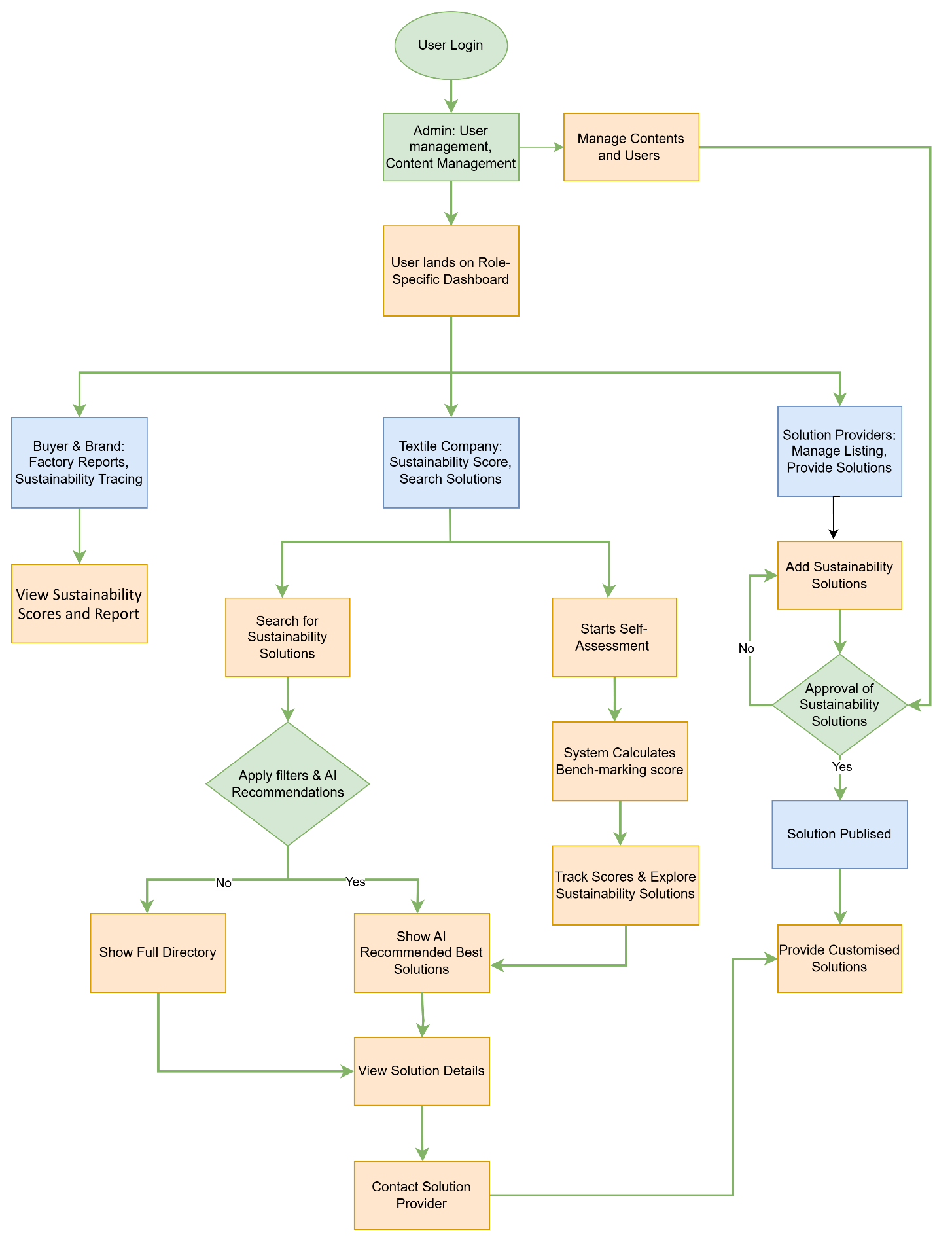
Velocity developed a comprehensive B2B digital platform that connects textile MSMEs and large corporations with sustainability technology solutions, self-assessment tools, expert consultations, and a knowledge hub — all powered by AI-driven matchmaking and multi-language accessibility.
Key Features & Deliverables
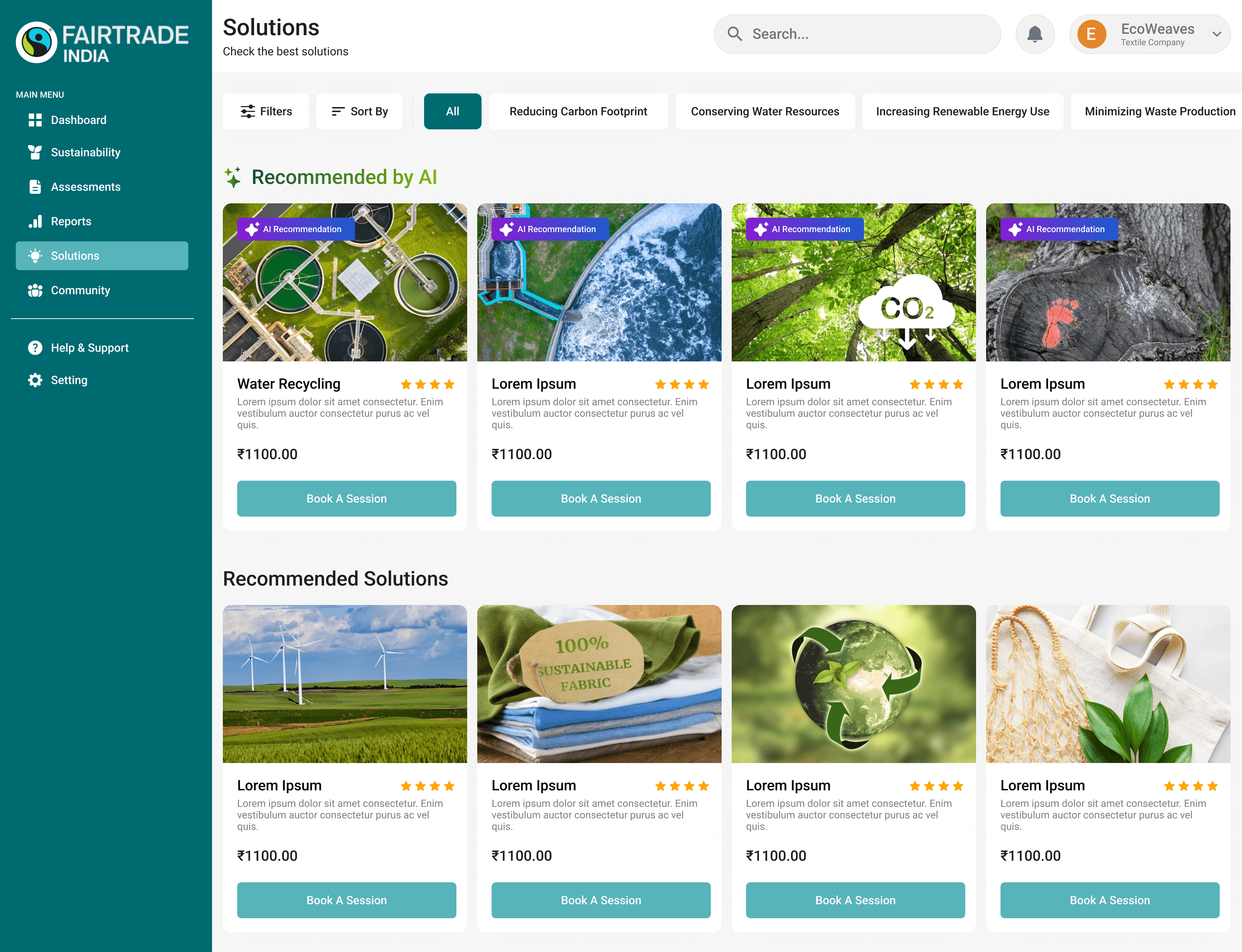
- Solution Discovery & Matchmaking
- Comprehensive directory of sustainability solutions categorized by Water Management, Chemical Management, Energy Efficiency, and Waste Reduction
- Detailed solution listings with images, videos, descriptions, certifications, cost estimates, and provider contact information
- Interactive Needs Assessment Tool (questionnaire-based) providing personalized solution recommendations
- Advanced search and filter functionality by technology type, application area, budget, and implementation complexity
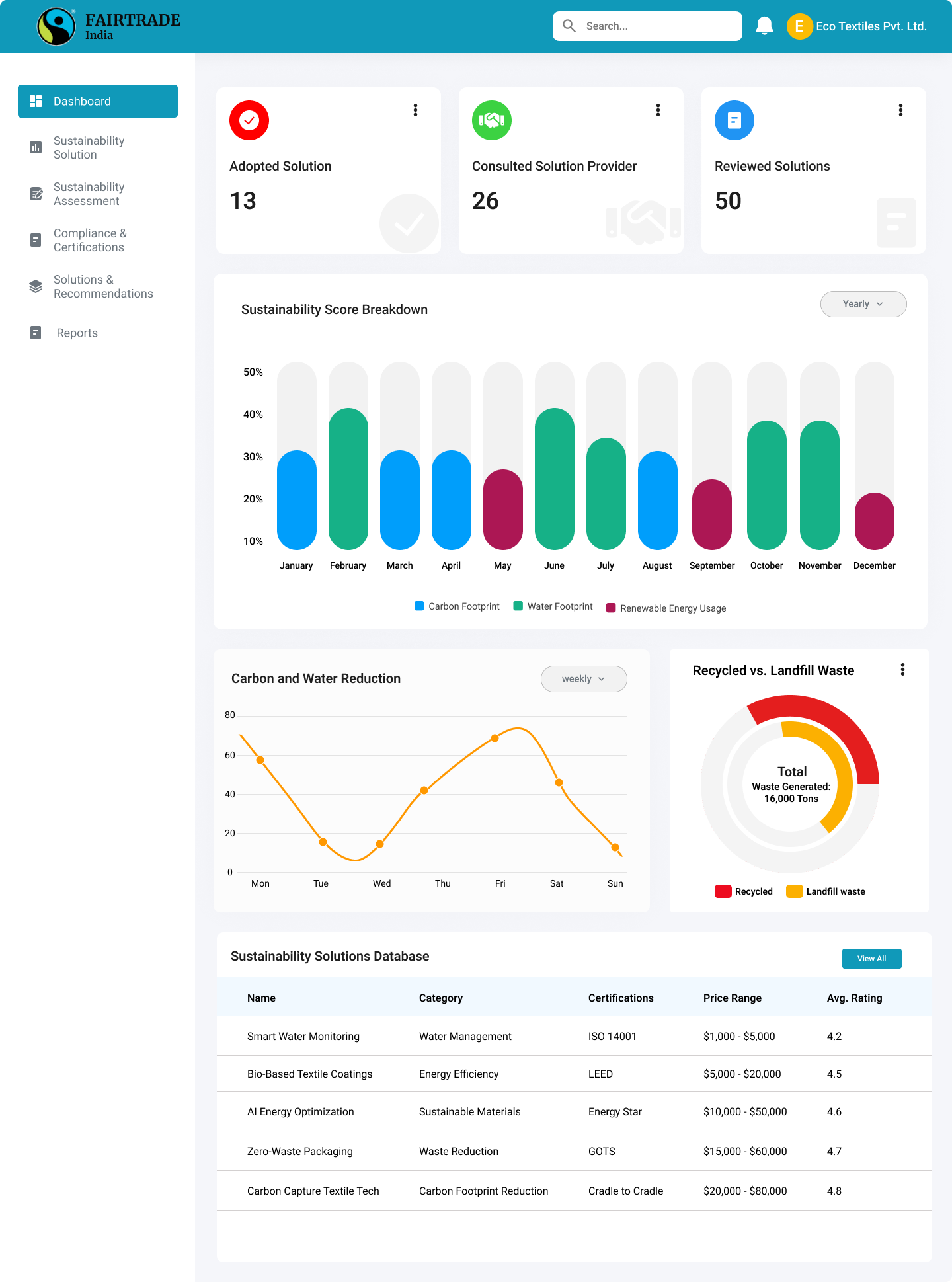
- Sustainability Self-Assessment & Benchmarking Tools
- Carbon Footprint Calculator: Scope 1, 2, and 3 emissions tracking with data input, monitoring, and reporting
- Water Footprint Calculator: Comprehensive water usage tracking and reduction planning
- Benchmarking system for comparing sustainability scores against industry standards
- Data upload and evidence storage for each assessment parameter
- Unit-level reporting with verifiable data behind metrics
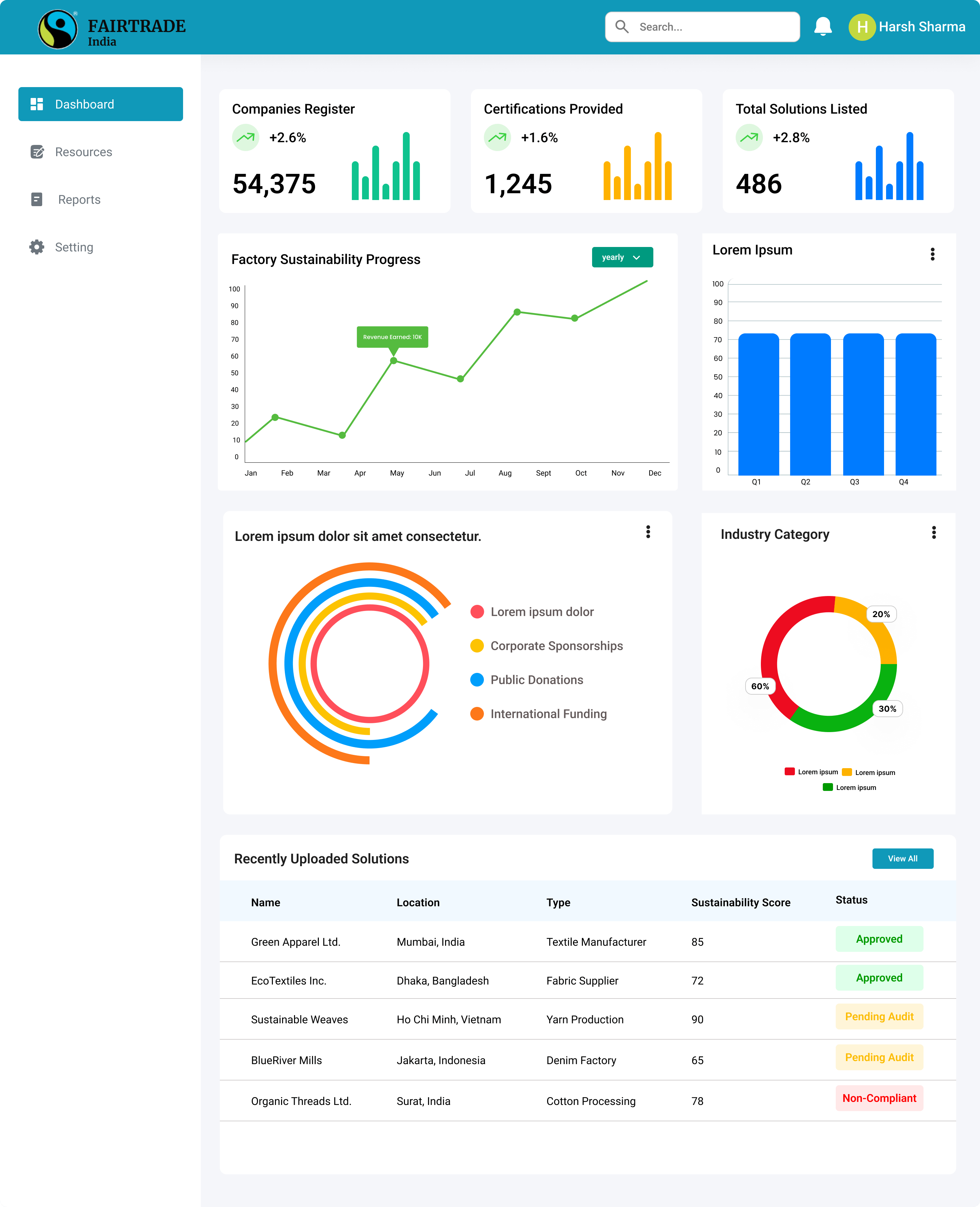
- Multi-Stakeholder User Accounts
- MSME/Large Corporation Accounts: Profile management, solution tracking, sustainability reports, multi-unit carbon/water footprint scores
- Solution Provider Accounts: Self-managed profiles, engagement statistics, upload capabilities
- Brand & Buyer Accounts: Supply chain factory visibility, product category-specific sustainability data (with factory approval), BI and analytics interface
- Admin Accounts: Three-level administration (Content Manager, User Manager, Super Admin) with comprehensive dashboards
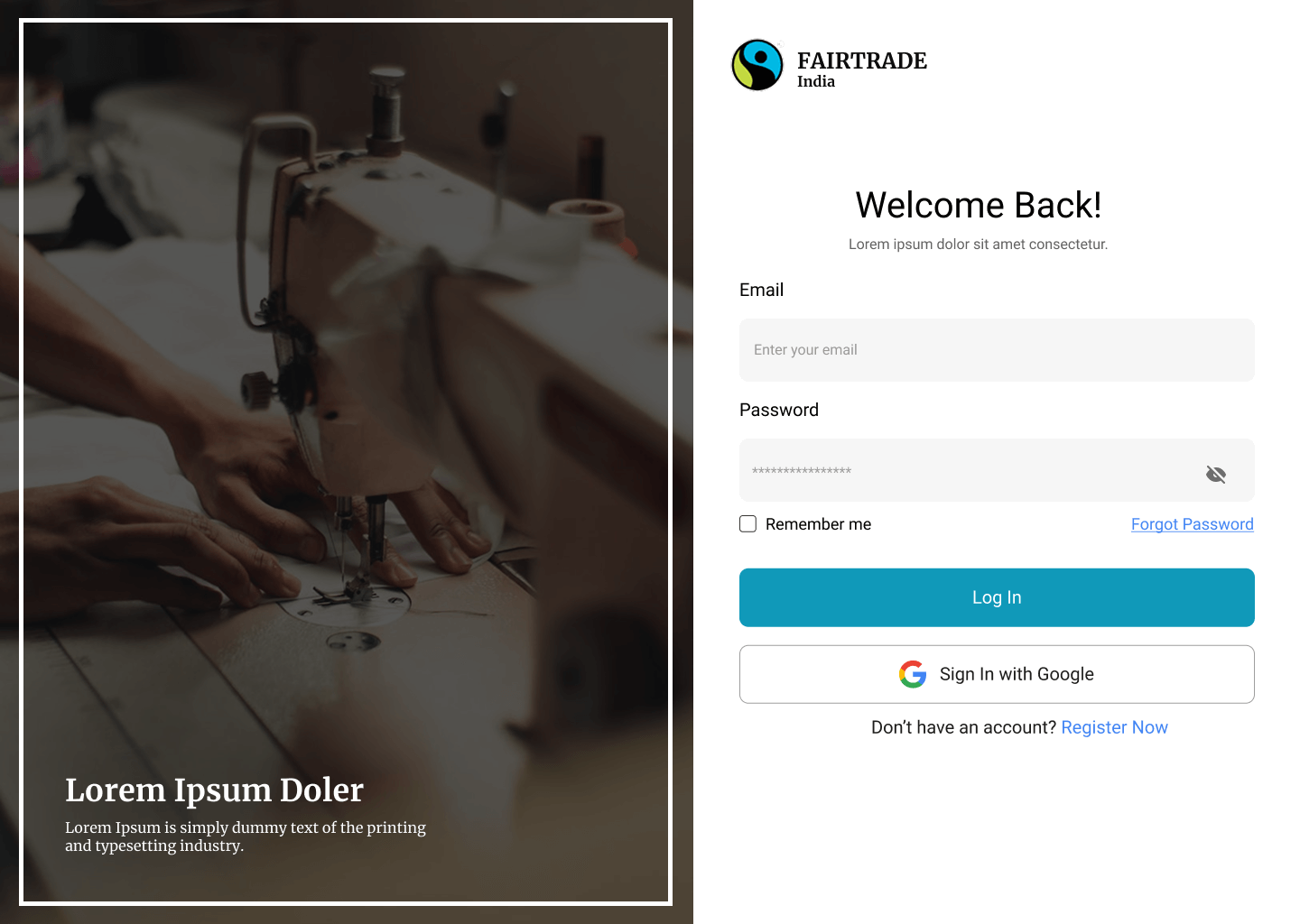
- User Reviews & Ratings System
- Verified purchase reviews and feedback on sustainability solutions
- Community-driven evaluation contributing to solution rankings
- Educational Resources & Knowledge Hub
- Video and blog-based case study repository
- Article library, research papers, and webinar archive
- Best practices documentation with regular updates
- Success metrics and testimonials from implementations
- Community & Collaboration Features
- Interactive community forum for peer-to-peer learning and support
- CSM Sustainability Clinic integration for expert consultations
- Scheduling tools for booking consultations with follow-up reminders
-
News and events section with upcoming webinars, workshops, and industry events
-
AI-Powered Chatbot
- FAQ-trained chatbot for sustainability queries and platform navigation
- AI learning function for increasingly complex question handling
- Multi-language support exploration (Tamil and Hindi)
-
Internet search capability for solutions not available on the platform
-
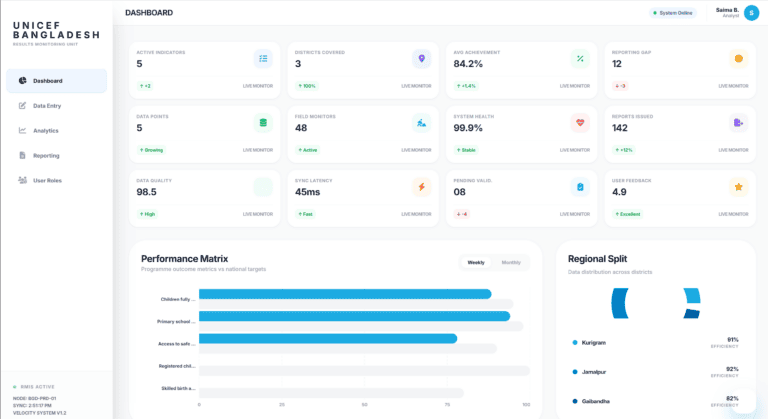
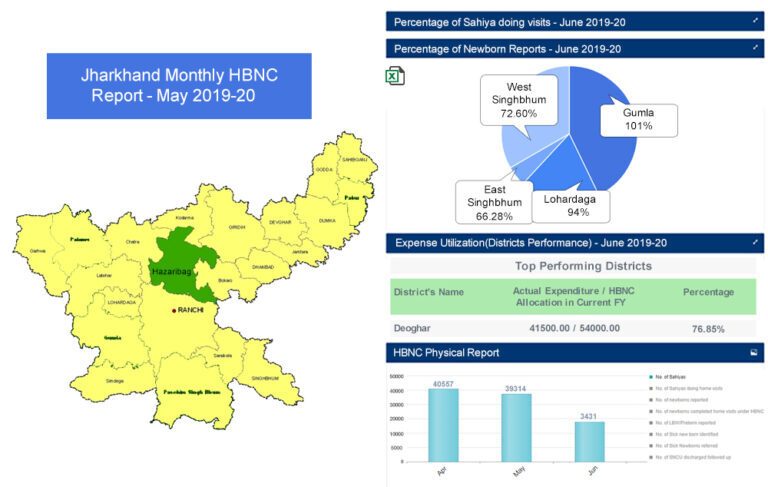
Analytics & Administration Dashboard
- User engagement monitoring and usage pattern tracking
- Custom report generation with saveable report templates
- Platform performance KPIs and maintenance monitoring
- Content management system for regular updates
Technology Stack
- Full-stack web development (front-end and back-end)
- AI/ML-powered chatbot with natural language processing
- Carbon and water footprint calculation engines
- Business Intelligence and analytics framework
- Content Management System
- Secure payment gateway integration
- Multi-language support infrastructure
- Responsive design with mobile optimization
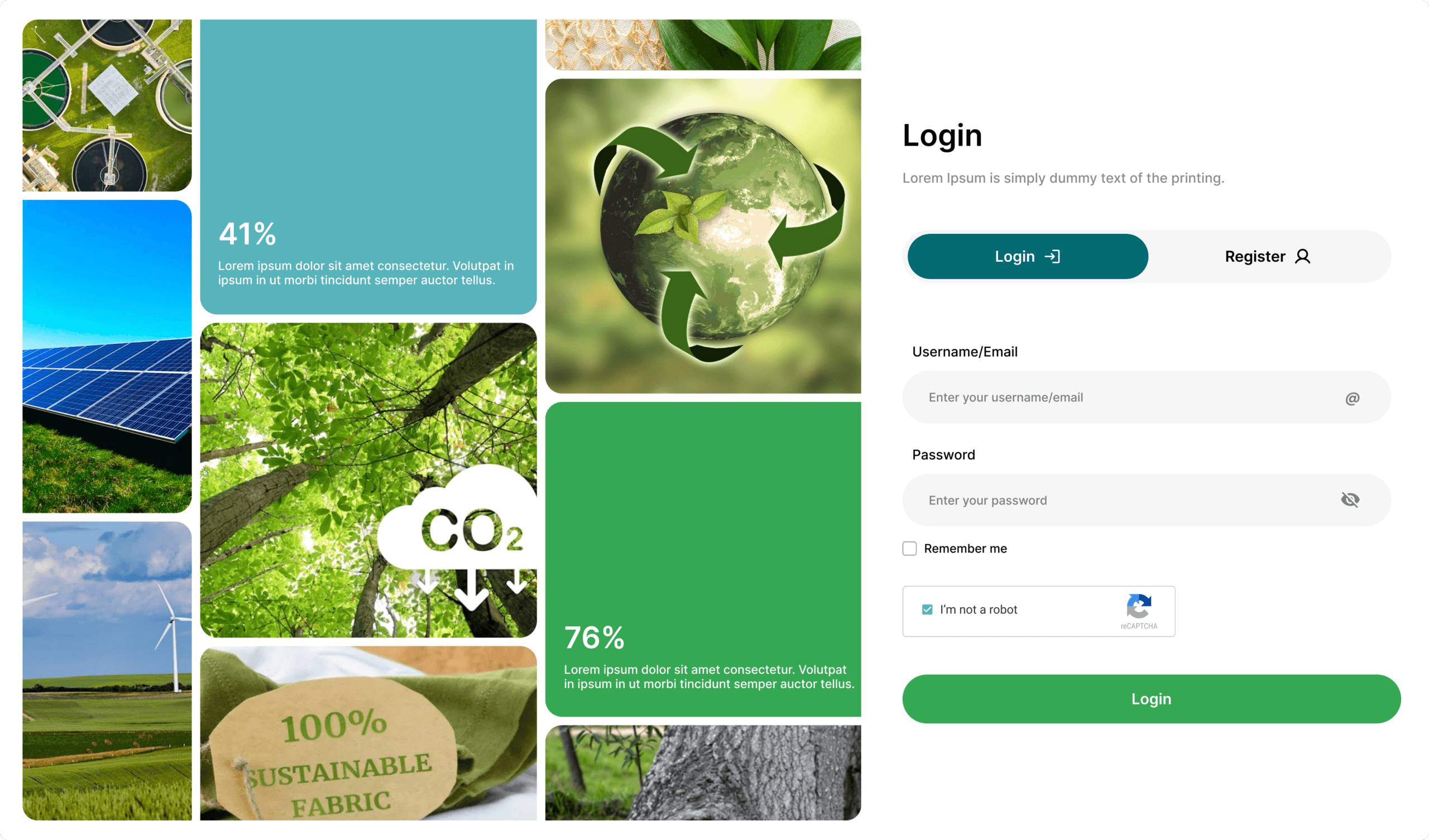
- Multi-Factor Authentication
- Role-based access control system
- Load-tested architecture (10,000+ concurrent visitors, 1,000+ simultaneous logins)
Implementation Approach
Phase 1 – Requirements Gathering (1 Month)
– Stakeholder interviews and workshops with MSMEs, large corporations, brands, and industry experts
– Detailed requirements documentation for all platform features
– User journey mapping for each stakeholder category
Phase 2 – Design and Development (3-6 Months)
– Wireframe and prototype creation with iterative feedback
– Front-end and back-end development
– AI chatbot training and integration
– Carbon/water footprint calculator development
– Multi-language support implementation
Phase 3 – Testing and Quality Assurance (1 Month)
– Unit testing, integration testing, load testing, and security testing
– User Acceptance Testing (UAT) with real MSME users
– Performance benchmarking for 10,000+ concurrent visitor capacity
– Security testing with role-based access validation
Phase 4 – Launch and Training (1 Month)
– Platform deployment and go-live
– User and administrator training sessions
– Documentation including user manuals, API documentation, and training materials
Phase 5 – Post-Launch Support (12 Months)
– Ongoing technical support and bug fixes
– Regular security updates and performance optimization
– Platform enhancement based on user feedback
Key Outcomes & Impact
- India’s First Textile Sustainability B2B Platform: Created a pioneering marketplace connecting textile MSMEs with sustainability technology providers, filling a critical market gap
- Democratized Sustainability Access: MSMEs gained access to the same sustainability tools, benchmarking data, and expert networks previously available only to large corporations
- Quantified Environmental Impact: Carbon and water footprint calculators enabled thousands of textile companies to measure, track, and reduce their environmental impact for the first time
- Supply Chain Transparency: Brands and buyers gained visibility into the sustainability performance of their supply chain factories, enabling informed sourcing decisions
- AI-Driven Discovery: The intelligent chatbot and needs assessment tool reduced the time for MSMEs to identify relevant sustainability solutions from weeks to minutes
- Knowledge Democratization: The centralized knowledge hub made case studies, research, and best practices accessible to the entire textile ecosystem
- Multi-Language Reach: Tamil and Gujarati language support ensured adoption in India’s largest textile manufacturing clusters
Why Velocity
- Full-stack platform development expertise covering front-end, back-end, AI integration, payment systems, and multi-language support under a single engagement
- AI and machine learning capabilities for developing the intelligent chatbot with learning functions and internet search capability
- Experience building scalable B2B marketplaces with complex user role hierarchies, review systems, and matchmaking algorithms
- Strong UI/UX design approach ensuring accessibility for MSME users with varying levels of technical sophistication
- Understanding of sustainability metrics enabling accurate development of carbon and water footprint calculation tools
- Enterprise-grade security implementation including multi-factor authentication, role-based access control, and robust data protection
- Full source code and copyright transfer policy aligned with CSM’s requirement for complete IP ownership