
8 Tips That Can Improve The Website Structure Of Your E-Commerce Site
Download MarkDown
Last reviewed: November 2026.
Ecommerce Site Structure for SEO: The 2026 Checklist
A well-architected ecommerce site structure is the single biggest determinant of how much organic traffic your store captures relative to its catalog size. Search engines understand the structure first — your products and pricing come second. Stores that hit page one consistently share a small set of structural patterns, and they apply them with discipline.
- Three-click rule with exceptions: aim to put every product within three clicks of the homepage, except where category depth genuinely helps users (a 50,000-SKU store will need four clicks for tail products and that is fine if breadcrumbs are clear).
- Hierarchical category tree, not a tag soup: the URL of every product should reflect its parent category:
/category/subcategory/product. Flat URLs hide hierarchy from crawlers. - Faceted filter URLs set to noindex, follow: color, size, and price filters create thousands of near-duplicate URLs. Block indexing while keeping the crawl path open for equity.
- Canonical tags on every variant page pointing to the parent product, especially when you sell the same SKU in multiple sizes.
- Breadcrumbs with BreadcrumbList schema: rich-result eligibility and stronger internal crawl trails.
- Category landing pages as buying guides: 300-500 words of category-specific copy above the product grid. This is what differentiates a category that ranks for “buy X” intent versus one that does not.
- Related-product internal linking: distribute equity from high-traffic products downstream to long-tail SKUs.
- XML sitemap segmented by content type: separate sitemaps for products, categories, and brand pages so you can monitor indexation per segment in Search Console.
- Mobile-first navigation that mirrors desktop: if your mobile users see a hamburger that hides half the categories, Google’s mobile-first index sees those categories as deprioritized.
- Page-speed budget per template: category pages under 2.5s LCP, product pages under 2.5s LCP. Larger Contentful Paint is the single Core Web Vital most ecommerce stores fail.
The eight original tips below this section dig into each of these structural patterns. Apply them in order — categories first, products second, filters third. Stores that try to fix everything at once usually end up shipping nothing.
In this world where internet and mobile technology are expanding rapidly, the absence of a strong eCommerce site can be devastating for the growth of your online business. Without the presence of an appealing and robust site, you can’t expect of making the desired outcomes in terms of conversion rates and product sales. Only a strong robust site can handle the large volume of onsite traffic without getting being crashed. Here are the tips that can help you in getting the effective website structure for your online business.
1. Pay adequate attention to the initial structure of your website-
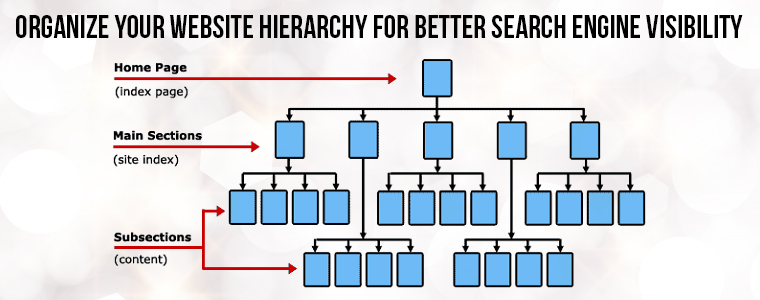
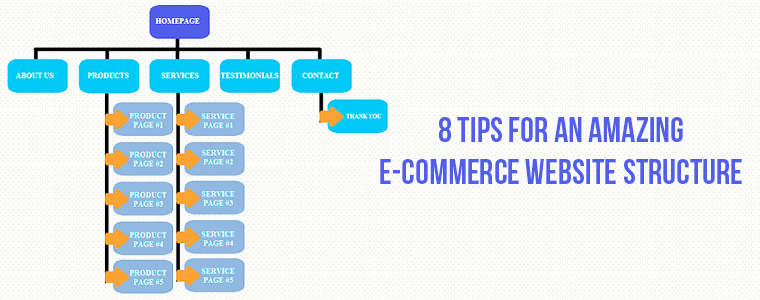
The effective management of a website makes a tremendous impact on its conversion rates, site traffic and product sales. You need to get your website designed in such a way that all your category and subcategory pages are properly organized. Follow an effective top-down approach during the crucial task of website designing and development. An effective division of category and subcategory pages will facilitate the proper organization of the available products. Further, it will make the searching of a particular product a much easier task for improving your customer engagement and conversion rates. There are various eCommerce website development services providing companies like Velocity that has an exceptional track record of providing out- of- the- box website to numerous online businesses.
2. Utilize the concept of keyword researching and targeting for your website-
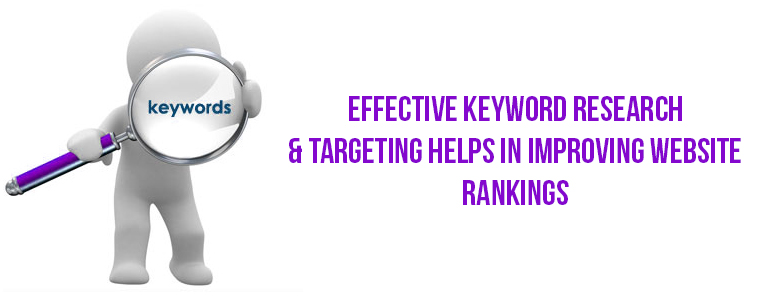
A website could not drive the required number of customer attention if it does not have a strong online presence and visibility. To accomplish this task, online businesses need to focus on keyword researching and targeting. First, you need to look out for all those organic keywords that are provided with the Google Analytics data. Once, you are familiar with them, you need to target these keywords in the most effective manner for improving the online visibility and presence of your eCommerce site. Focus effectively on both the short tail and long tail keywords for increasing the online visibility of your eCommerce website. Use these mostly used keywords in your website content at appropriate place for improving its online rankings in the search engine results pages (SERPs). Apart from this, you can also avail the paid traffic towards your site through PPC campaigns, search ads, adwords and other such methods. However, beware of just stuffing the unnecessary keywords into your website content as the focus has been reshifted to the content meaning than the plain keyword stuffing due to the Hummingbird algorithm of Google.
3. Focus on the effective URL structure for your eCommerce website-
Create a strong URL structure for your website that is robust in nature and can effectively point to the desired location or pages on your website. Analyze that your internal URL structure is based according to the hierarchy of your website so that people can be easily navigated to your particular eCommerce site. Your links should contain an effective usage of relevant keywords and meaningful words that can be indexed by the search engine crawlers for higher online rankings. A search engine friendly URL can help in improving the online visibility and presence of your website for better conversions.
4. Use HTML or CSS coding for the navigation of your website-
While designing the navigation structure of your website, you need to choose a simple platform like HTML and CSS which can be easily modified and worked upon by basic to moderate programming professionals. Further, these platforms can be easily understood and indexed by the search engine crawlers of various search engines like Google, Yahoo, Bing and such others. Making coding on platforms like Flash, JavaScript, Ajax and others will require extensive knowledge and will make the process of site modification and indexing a much complicated task.
5. Design a strong header that provides information about your main and sub navigation pages-
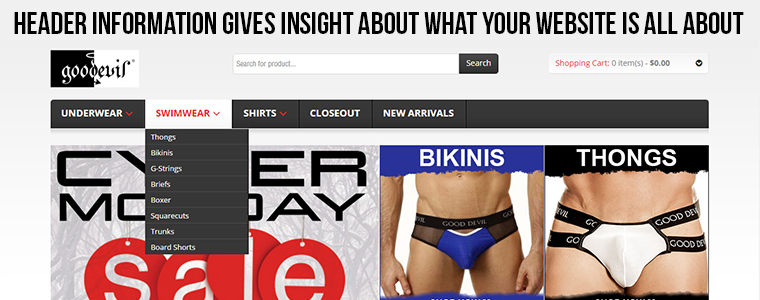
If you want to grab the instant attention of your targeted customers towards your website, you need to have an informative header that can provide detailed information about all the pages of your website. Show all the including pages of your site in your header so that visitors can get a fair idea about what all information are you going to provide. You can also use a dropdown menu style for your headers for giving a sneak peek about your category and sub- category pages. Take a look at the Good Devil site above which has a clear header that describes the various category and sub- category pages on the site for seamless navigation of the site visitors. But, remember your header will do the needful only if it is effectively linked to your category and sub-category pages. Include CSS effect into your website designing process for utilizing site header for improving the user experience of your targeted customers.
6. Make your internal link structure more strong and effective-
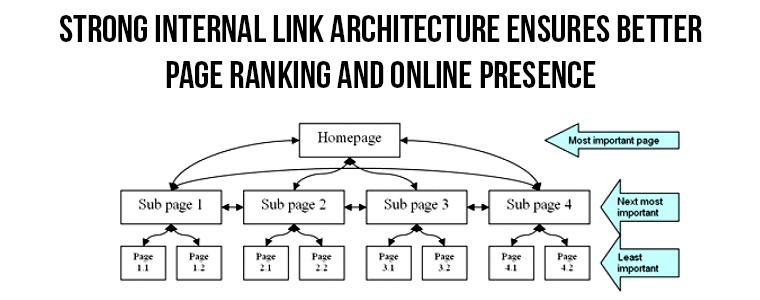
For improving your onsite visibility and presence, you need to have a strong internal link architecture that can facilitate the seamless navigation from one page to another. With a robust and unfailing internal link structure, online businesses can effortlessly improve their page rankings and domain related rankings by sharing them across their linked pages and sub pages. A strong inter- connection between different pages of your website ensure all your pages are effectively indexed by your search engine crawlers for boosting your website rankings on search engine result pages (SERPs). Link your category and sub- category pages with each other and do check that there are no broken links for a better site navigation.
7. Show equal concern on other metrics like shallow depth navigation structure, site maps and others-
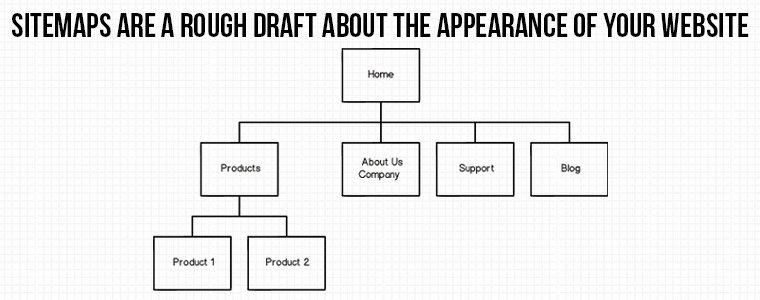
Websites that are aiming for a powerful site structure should give added emphasis on the navigation depth of their website for ensuring an easy indexing and website usability. Don’t add important web pages at the much later stage of your internal link architecture as it will affect their chances of getting indexed by the search engine crawlers. Don’t forget to use a shallow depth navigation for your website so that your website content gets the required online visibility and recognition on various search engines. Further, there are XML site maps that contain informative website content that needs to be indexed for facilitating better site navigation and online site presence. Site maps help site owners to understand their website navigational structure and can help them in making desired swift changes in their website according to their business and user requirements.
8. Don’t ignore the breadcrumbs of your site-
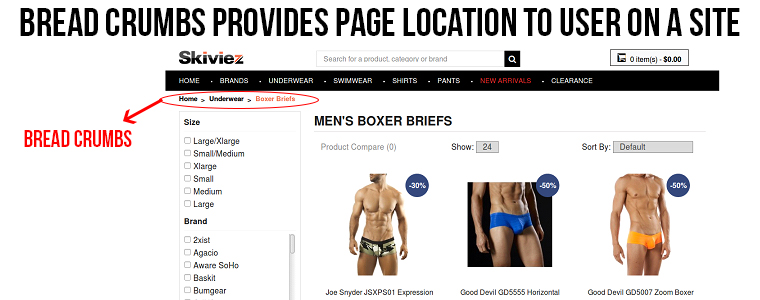
With the help of breadcrumbs, site developers can effortlessly retrace their steps from the home page of their site to a particular page or location of their site. They play a key role in guiding the search engine bots while indexing your website content and reflects the structure of your eCommerce site. These breadcrumbs helps in influencing the SEO activity of your site drastically for better online visibility and search engine rankings. It can also help in improving the internal link architecture for better navigation of visitors throughout your site.
Enhanced traffic

We already mentioned that SEO helps a website get a lot of organic traffic. Well, you should know that having the top position in the SERPs come with the advantages like increased clicks. One of the tasks of SEO is to focus on creating keyword-relevant title tags and meta descriptions that are displayed in the search results. As a result, the optimized title tags and description are what increases the click-through rate and finally enhances the quality traffic.
Increased sales

Well, sales are exactly why you would want to optimize your website for. That’s the end product of having one in the first place. Having optimized your website with the right SEO strategies and avoiding mistakes, you can actually take the path where the website will be optimized in a way that customers would convert and the sales will go up.
Brand awareness
Having the top positions in the search engine rankings is definitely very beneficial for your online store. One of them is that when you rank among the top positions, you’re more likely to have more exposure for your website. In addition, being on the first page for your targeted keywords not only helps users to connect your brand with those keywords ranking in the search engines. This is a way that you start building trust among the consumers. And, trust is something that goes a long way when you want your first customers to be the repeated customers. With more keywords ranking in the top positions, you have chances that the brand awareness goes up a level.
Enhanced site usability

Have you been trying to make it easier for your customers to navigate through the website, reach the spots that you want them to reach out to? Moreover, you also want the search engines to easily navigate your website. SEO simultaneously helps both the users and the search engines to navigate your website effortlessly. SEO consists of rearranging the site’s architecture and links to make pages within the website easier to find and navigate. That’s not it. SEO does much more in order to make the search engines to crawl your website and its content.
Once, you can master all these tips, you can be sure of getting an effective structure for your eCommerce site. A sound high ranking and robust website can surely improve your conversion rates and product sales to a great extent.