How to hire a Magento Development Company?
Download MarkDown
Magento is a quiet popular eCommerce website platform. With all the necessary features and functionalities already provided in the default installation, it has the ability to build a huge eCommerce site for your online business. But sometimes you need to perform some advance development on the default version to make it compatible with the growing needs and competition. For this a Magento development company is the best place to seek. Hiring a Magento development company seeks the same kind of research that is required by someone who is seeking for any other web development company. A similar article I have published which explains the suggestions that you should follow while choosing a web development company “ 10 things I wish I ‘d known before choosing a Web Development Company ” In addition to these important checklists mentioned in the article, you should take special care to certain points while hiring a Magento development company for your site. This whole article can be considered as an extension to this earlier post.
Checklist for deciding your Magento development company:
1. Think about why you need a Magento development company- Do you want to create a whole new site? Or you want someone to work on your ongoing project? It might also be possible that you want someone to add a new feature to your current Magento site. Each kind of Magento development requires its own level of expertise and investment. So before starting to hire a Magento development company, it is always advised to study the nature of your project carefully.
2. Check if the company is licensed to provide the software services- This checklist item is added to the list not because a licensing is important, but it is because the licenses are provided only after a comprehensive verification of all the points that I am going to provide in this checklist. So, a licensed company should be your first choice.
3. Check the support services and quality- It is not just about the Magento development company, a competent support system is necessary for all kind of services provided by a company. If your chosen company lags a proper system for supporting their customers then it is always better to avoid them.
4. Check about the previous Magento Projects undertaken by the company- A proper research about the previous Magento projects undertaken by the company would help you to understand the kind and level of all the other Magento related services the company provides. You can consider this point as same as product education by any company.
5. Check the performance level of the on-field projects- you should check how the projects undertaken by the company are actually performing in the real time. This can be done by referring to the previous clients and know their feedback.
6. Check modest operand of the Magento development services- A company can provide the Magento services in multiple ways. You should always verify the nature of these services. Say, a custom develops project is different from a module purchase. A module provider sells the ready-made Magento extensions to the customers while a custom module development includes the development of a completely new module according to the needs and requirements of the client.
7. Check if the developers are certified by the Magento- There are various levels of Magento certifications. Any developer who is working on a Magento project must possess these certifications. You should strictly verify if the company have the developers who are certified to work on your Magento Project.
8. Go for custom module development if you have a truck of ideas- The Magento custom module development services can be a bit heavy on pockets but if you have a pile of ideas that you want to be implemented on your site then it is always advised to go for the long term investment.
9. If all your requirements can be fulfilled through the ready made module then go for it- Sometimes, you might find an already developed module by the company that can meet all your requirements. In such cases going for custom, modules are not advised. Just buy the license of the module and start using it in no time.
10. Check if the modules developed by the company are being liked by the people-

This can be called as a feedback research and it will help a lot while deciding the best Magento development company for your project. Clients using the modules developed by the company can give a proper feedback. You can check the online ratings and reviews of the modules and decide which module is good for use.
11. It would be great if they have their modules on the Magento Connect- Magento Connect is the official extension store of Magento. Modules sited on it are generally the best in class. If your Magento development company has its modules featured on this site, then it is a favorable sign.
12. Not only the modules, check if they provide any other Magento services- The range of Magento services provided by a Magento development company is diverse. The class of Magento development services includes the service like:
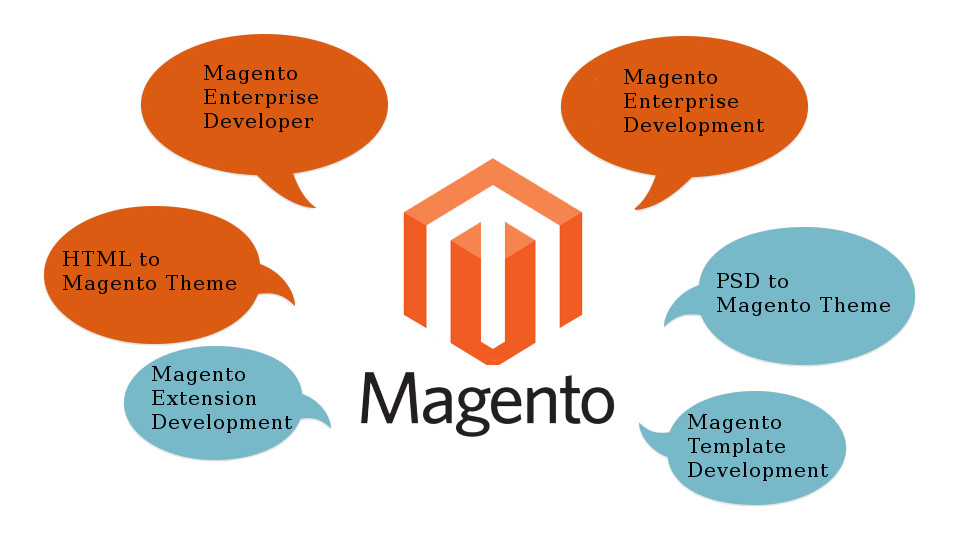
- Magento Template Development– In this category of Magento services, the Magento development company provides a solution to develop the custom Magento templates for your website.
- Magento Extension Development– As explain the Magento extension development services are the services for providing the ready-made or custom module development.
- HTML to Magento Theme– The customer might bring his own HTML design which would be later converted to a fully functional and responsive Magento theme for the site.
- PSD to Magento Theme– The themes can also be developed by the certified designers and coders using your Photoshop design. This service is also called as PSD to Magento theme conversion.
- Magento Enterprise Development– There are two types of Magento platforms. One is community edition which is an open-source solution while other is the enterprise version which is a more advanced and paid version of the Magento platform. The services for these two platforms are also different.
- Magento Enterprise Developer– As mentioned above you need a Magento enterprise developer to work on your site if it is built on the enterprise version of Magento.
To Conclude
In the wake of considering the above focuses, you will unquestionably have the capacity to enlist the best Magento development company for your eCommerce venture. An expansive number of Magento developers who have a huge involvement in Magento development services can help you in this. You can interface with them and contract the best for your organization. You can contact us, Velocity can help you in any kind of counseling regarding this.
Frequently Asked Questions
What does a Magento module development company do?
A Magento module development company builds custom extensions (also called modules) that add new functionality to a Magento or Adobe Commerce store. Common examples: custom payment gateways for region-specific processors, advanced shipping calculators with carrier-specific rules, ERP/CRM integrations (NetSuite, SAP, Salesforce), multi-warehouse inventory connectors, product configurators, B2B quote workflows, and headless storefront APIs. A specialist module developer differs from a generalist Magento agency in that they ship reusable code following Magento’s coding standards, write unit tests, package the module for the Magento Marketplace if appropriate, and provide ongoing version-upgrade support as new Magento releases drop.
How do I choose the right Magento module development company in 2026?
Beyond the standard “check portfolio + read reviews” advice, focus on five technical signals: (1) Adobe Certified Magento Developers on staff — at minimum one Adobe Certified Expert. (2) Public GitHub or Magento Marketplace presence with modules you can read source code for. (3) A documented testing workflow — they should run PHPUnit, Magento Functional Tests (MFT), and integration tests as standard. (4) Experience with the Magento version you’re on (Magento 2.4.7 is current as of 2026; older Magento 2.3.x is end-of-life). (5) Clear answers about ongoing maintenance — Magento security patches drop quarterly, and your custom modules need to track them. Avoid agencies that quote a flat one-time price without specifying support terms.
What’s the difference between a Magento development agency and a Magento module developer?
A Magento development agency typically delivers full ecommerce builds — site design, theme implementation, third-party integrations, performance tuning, go-live support, and ongoing managed hosting. They’re best for greenfield store launches or major redesigns. A Magento module developer specializes in writing custom Magento extensions — discrete chunks of functionality that plug into an existing store. They’re best when you have a working Magento site but need a specific feature that no off-the-shelf module provides. Many module developers also do agency work, but the inverse is less common — full-service agencies may outsource deep module work to specialists.
How much does it cost to hire a Magento development company?
Pricing varies widely by region and scope. In 2026 typical ranges: (1) Custom Magento module development: $5,000–$50,000 depending on complexity. A simple shipping carrier module is at the low end; a full ERP integration is at the high end. (2) Full Magento store build: $25,000–$250,000+ for an enterprise rollout. (3) Magento 1 → Magento 2 migration: $15,000–$100,000 depending on data volume and custom-code count. (4) Hourly rates: $30–60/hr in India and Eastern Europe; $80–150/hr in Western Europe; $100–250/hr in the US. Always ask for a fixed-scope quote with milestone payments — avoid pure time-and-materials unless you have an in-house Magento technical lead managing the engagement.
How long does Magento module development typically take?
Discovery and requirements: 1–2 weeks. A typical custom module of moderate complexity takes 3–8 weeks from kickoff to production: 1 week for architecture and design, 2–4 weeks for development, 1 week for unit testing and code review, 1–2 weeks for UAT (user acceptance testing) on your staging environment, then a 1-week post-launch monitoring window. More complex modules with deep third-party integrations can take 3–6 months. Always budget for one extra release cycle for unexpected Magento version compatibility issues — Magento’s API surface is wide and edge cases reveal themselves only during integration testing.
What should I look for when hiring a Magento development agency?
The hard-to-find signals: (1) Performance experience — Magento is notoriously demanding on infrastructure. Ask for case studies showing Lighthouse scores and Time-to-First-Byte improvements. (2) Adobe Commerce vs Magento Open Source experience — the licensed enterprise version has features (B2B quotes, page builder, customer segments) that Open Source doesn’t. (3) Hyvä Theme experience — the leading 2026 Magento frontend framework, dramatically faster than the legacy Luma theme. (4) Headless and PWA Studio experience if you’re considering decoupling the frontend. (5) Composer-first workflow — modules installed via composer.json, no copying files into app/code/. (6) Code review process — they should review your in-house developers’ merge requests, not just write code in isolation.
Can a Magento development company also handle ongoing support and maintenance?
Most do, but the structure varies. Common arrangements: (1) Retainer support — a fixed monthly fee for X hours of work plus 24/7 incident response. Best for production-critical stores. (2) Time-and-materials — pay only for hours used. Best when issues are infrequent. (3) Managed Magento hosting + support — the agency hosts your store on their infrastructure (or AWS/MagentoCloud) and handles all operational concerns. Best for non-technical store owners. Whichever model you choose, get a written SLA defining response times for critical incidents (site down, payments failing), and confirm what’s included in “support” versus billed as new development work.