Flood Reporting and Information Management System for Assam
Download MarkDownThe Challenge
Assam experiences devastating floods almost every year, often in multiple phases, affecting millions of lives and causing widespread damage to infrastructure, agriculture, and livelihoods. Flood governance is a critical agenda for the state’s sustainable development, and effective disaster response depends fundamentally on timely, accurate information.
The existing flood reporting system faced significant challenges:
– Daily situation reports required manual compilation through multiple layers of verification from village level through Revenue Circle, Sub-Division, District, to State Emergency Operation Centre
– Information sharing happened primarily through emails, with manual compilation at each level, making the process extremely time-intensive
– Manual processes introduced high probability of data errors, required additional human resources for compilation, and proved inadequate for real-time decision making
– Cumulative reporting was particularly challenging due to the highly dynamic nature of flood information
– Critical information from multiple external sources — Indian Meteorological Department (rainfall), Central Water Commission (river flow), NESAC/FLEWS (flood early warning) — resided on separate platforms requiring lengthy consultation processes
– Phase compilation for damage reporting and verification of damage claims was cumbersome with manual systems
– The wide range of stakeholders across village, Revenue Circle, Sub-Division, District, and State levels needed different access levels and reporting interfaces
Velocity’s Solution
Scope of Work
Velocity developed a comprehensive flood reporting and information management system comprising a mobile application, web portal, and integrated dashboard to transform Assam’s manual flood reporting system into a real-time digital platform, including assessment, framework development, pilot deployment, user training in multiple languages, handholding support during actual flood operations, and migration to government servers.
Key Features & Deliverables
Mobile Application
– Cross-Platform Compatibility: Workable on all major mobile platforms
- Multi-Language Support: Full support for English, Assamese, Bodo, and Bengali for all forms and instructions
- Offline Data Entry: Offline saving capability for multiple records during emergencies with no-internet scenarios, with server synchronization when connectivity resumes
- GPS Location Capture: Geo-tagging of data entry points with 20-50 meter accuracy, with admin-configurable toggle
- Image Upload: Photo attachment capability for damage documentation and field reporting
- User-Friendly Data Collection Interface: Intuitive design optimized for around 300 concurrent users during flood events
- Multi-Level Approval System: User ID and password-based access with hierarchical approval workflows
- Pre-Populated Administrative Data: Districts, blocks, Gram Panchayats/ULBs, and revenue villages/wards pre-loaded from official government lists
- Admin Panel: User-friendly frontend for adding/editing/deleting questionnaires, data entry forms, and dynamic information
- Scalability: Architecture designed for future form additions and functional expansion
Web Portal
– HTML5 Dynamic Interface: Modern, responsive design working across all operating systems (Windows, Linux, Mac) and browsers (Firefox, IE7+, Opera, Safari, Chrome)
– Government URL Hosting: Final deployment on Assam government URL with HTTPS protocol
– User Management System: Role-based access with granular permissions
– Content Management: Full CMS capabilities for documents, videos, and pictures
– Data Entry Alternative: Web-based data collection forms for users without mobile application access
- GIGW Compliance: Meeting Guidelines for Indian Government Websites standards
- SEO Optimization: SEO-friendly URLs, unique page titles, meta tags, and Google Analytics integration
- Security Audit: Third-party security audit by CERT-IN empanelled auditor
- Print Functionality: Print page capability on every web page
- Document Management: Support for PDF, Excel, and DOC formats with media gallery
Integrated Dashboard
– Real-Time Rainfall Data: Linked to IMD for real-time, cumulative, and projected rainfall with maps
– River Flow Data: Hydrographs for critical locations linked to CWC portal
- FLEWS Alert Integration: Linked to NESAC/FLEWS portal for early warning alerts
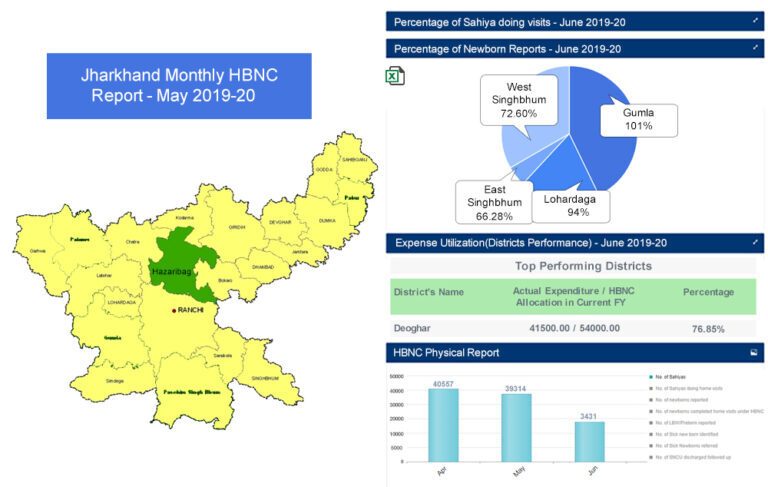
- Inundation Maps: Based on field data for daily and cumulative phase/year visualization
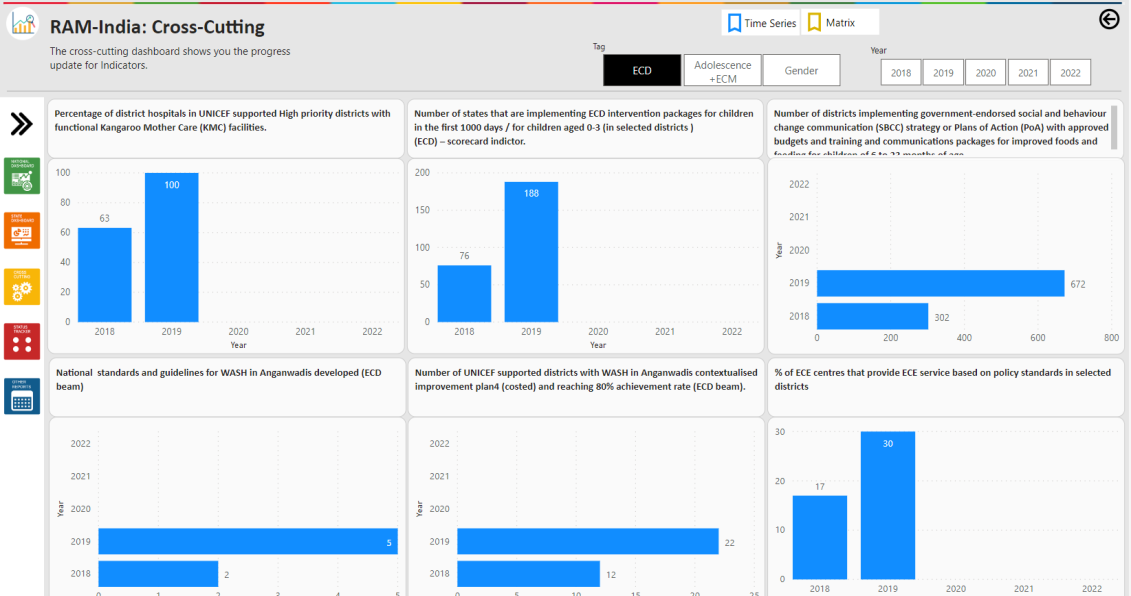
- Interactive Graphs & Charts: Trends linked to field data with daily and cumulative views
- Relief Camp Management: Age, gender, and disability-segregated data from camp registers and real-time monitoring
- District Comparison: Visual representations allowing comparison between districts on key indicators
- Action Tracking: District-wise reporting of on-ground actions taken
- Category-Wise Damage Reports: Departmental impact reporting as per government formats
- Export Capabilities: Downloadable reports in PDF and Excel formats
- Search & Filter: Advanced search and selection/filter facilities
- Open Source: All dashboards developed using open-source technologies
Supporting Deliverables
– Assessment Report: Detailed information needs assessment of existing flood governance systems with proposed digital framework
– User Manual: Comprehensive pictorial user guide in English, Assamese, Bodo, and Bengali for all user levels
– Training & Orientation: Remote orientation sessions for key functionaries with pre/post training tests, observations, and feedback
– Handholding Support: On-ground technical support during actual 2021 flood season for real-time system modifications
– Source Code Transfer: Complete source code handover with knowledge transfer documentation
Technology Stack
- Frontend: HTML5, CSS3, PHP with responsive design
- Backend: PHP with MySQL/PostgreSQL database
- Mobile: Cross-platform mobile application
- Dashboard: Open-source visualization technologies
- Data Standards: Government of India defined Metadata and Data Standards compliance
- Security: SSL encryption, application authentication, session management
- Localization: ISO/IEC 14496-OFF Open Font Format for all 22 constitutionally recognized languages, MEITY localization guidelines for mobile web applications
- Hosting: UNICEF vendor server during development; ASDMA/NIC government server post security audit
Implementation Approach
The project was executed across two fiscal years with five major deliverable phases:
Year 1 (October – December 2020)
Phase 1: Assessment & Framework (by October 30, 2020 – 20% payment)
– 5 days of field travel to understand reporting patterns, issues, and users
– Detailed information needs assessment of current flood governance systems
– Framework development for digital flood reporting and information management
– Technical expert placement at ASDMA for coordination and handholding
– Feedback incorporation from ASDMA and UNICEF
Phase 2: System Development & Pilot (by December 15, 2020 – 80% payment)
– Development of mobile application, web portal, and integrated dashboard
– Pilot run in selected districts with structured feedback from DDMAs
– Bug fixes and system finalization based on user feedback
– Partial project handover with source code and knowledge transfer
Year 2 (January – September 2021)
Phase 3: Documentation & Training (by March 31, 2021 – 20% payment)
– User manual development in document and video formats
– Translation of manuals into Assamese, Bodo, and Bengali
– Remote orientation of key functionaries
– Training report with observations, test results, and feedback
Phase 4: Live Operations Support (by August 31, 2021 – 30% payment)
– 10 days of field travel for direct support
– Handholding during actual 2021 flood season operations
– Real-time modifications to templates, forms, and addressing dynamic requirements
– System adaptation based on operational experience
Phase 5: Government Server Migration (by September 15, 2021 – 50% payment)
– Third-party security audit by CERT-IN empanelled agency
– Migration to NIC platform
– Final source code transfer and knowledge transfer
– Complete project handover
Key Outcomes & Impact
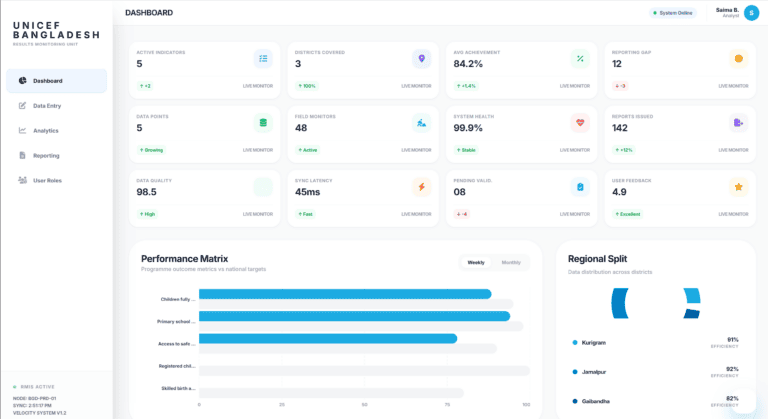
- Transformed Flood Reporting: Converted Assam’s entire flood reporting system from manual email-and-spreadsheet processes to a real-time digital platform accessible at all administrative levels
- Real-Time Decision Making: Enabled faster, evidence-based decisions through automated data compilation, visualization, and dashboard analytics during flood events
- Reduced Data Errors: Digital data entry with validation rules and GPS tagging significantly reduced the errors inherent in manual compilation processes
- Multi-Source Integration: Consolidated critical flood information from IMD (rainfall), CWC (river flow), and NESAC/FLEWS (early warning) into a single dashboard, eliminating the need to consult multiple platforms
- Inclusive Design: Multi-language support (English, Assamese, Bodo, Bengali) ensured accessibility for all government functionaries across Assam’s diverse linguistic landscape
- Operational Validation: The system was tested during actual 2021 flood operations, with real-time modifications based on ground experience ensuring practical functionality
- Disaster Preparedness Foundation: The platform was designed to feed into a broader state disaster management information system as part of Assam’s DRR Road Map, creating a foundation for comprehensive disaster management digitization
- Concurrent Scalability: Architecture supporting 300 simultaneous users during peak flood events ensured system reliability during critical disaster periods
Why Velocity
Velocity was selected through UNICEF’s LTA (Long-Term Agreement) process based on:
- Disaster Management Domain Understanding: Proven work and solid background in digital systems related to emergency response, preparedness, and disaster risk reduction
- Government MIS Development: Demonstrated experience developing management information systems for government organizations
- UNICEF LTA Holder: Existing long-term agreement with UNICEF, reflecting established trust and procurement efficiency
- Multi-Disciplinary Team: Presence of a team capable of addressing programmatic, technological, and administrative aspects of the assignment
- Multi-Language Capability: Ability to develop applications in English, Assamese, Bodo, and Bengali with MEITY-compliant localization
- Field Presence: Local team presence enabling direct coordination with ASDMA in Guwahati
- Government Server Migration Experience: Experience navigating NIC security audit and hosting processes
- Handholding Commitment: Willingness to provide on-ground technical support during live flood operations