
5 Key Elements of a Successful Mobile App Development Strategy
Download MarkDown

Mobile apps have become an integral part of everyday life from shopping and banking to entertainment and communication. However, not every app achieves long-term success. Behind every high-performing mobile application lies a well-structured development strategy.
Let’s explore the five key elements that contribute to a successful mobile app development strategy.
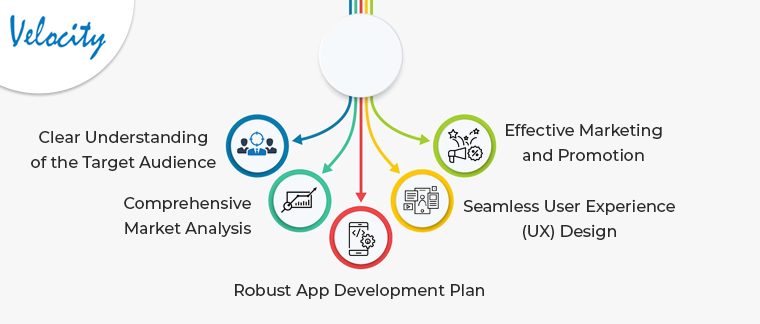
1. Clear Understanding of the Target Audience
A successful strategy begins with understanding who your users are.
Before development starts, you must identify:
- User demographics
- Behavior patterns
- Preferences
- Pain points
- Device usage habits
Conducting market research, surveys, competitor analysis, and user interviews helps shape a user-centric app. When you design features around real user needs, you increase engagement, satisfaction, and retention.
A deep understanding of your audience ensures your app solves real problems and not assumptions.
2. Comprehensive Market Analysis
The mobile app market is highly competitive. Conducting thorough market analysis helps you:
- Identify key competitors
- Study their strengths and weaknesses
- Discover gaps in the market
- Define your Unique Selling Proposition (USP)
Analyzing app store reviews, user complaints, and feature requests can reveal opportunities for innovation.
Staying updated on emerging technologies (AI, AR, blockchain, etc.) and evolving user trends ensures your app remains future-ready and competitive.
3. Robust App Development Plan
A detailed development plan acts as a roadmap for your team.
Your plan should include:
- Feature list and technical requirements
- UI/UX guidelines
- Development framework selection (iOS, Android, Cross-platform)
- Timeline and milestones
- Budget allocation
- Testing strategy
Breaking the project into manageable phases (MVP → Testing → Iteration → Launch) improves efficiency and reduces risk.
A structured approach ensures smoother execution and alignment with business objectives.
4. Seamless User Experience (UX) Design
User experience can make or break your app.
An intuitive and visually appealing design increases:
- User engagement
- Session duration
- Retention rates
- Customer satisfaction
The UX process involves:
- Wireframing
- Prototyping
- Usability testing
- Accessibility optimization
- Performance tuning
Focus on simple navigation, fast load times, consistent branding, and minimal friction. A smooth UX keeps users coming back.
5. Effective Marketing and Promotion

Even the best app needs visibility to succeed.
An effective marketing strategy should include:
- App Store Optimization (ASO)
- Social media marketing
- Influencer collaborations
- Paid advertising campaigns
- Content marketing
- Email marketing
Post-launch marketing is equally important. Use analytics tools to track downloads, user behavior, and retention rates. Continuously optimize campaigns to improve user acquisition and engagement.
Marketing is not a one-time activity – it’s an ongoing process.
Conclusion
Building a successful mobile app requires more than just great coding. It demands a strategic approach that includes:
- Clear audience understanding
- Detailed market research
- Structured development planning
- Intuitive UX design
- Continuous marketing efforts
When these five elements work together, they significantly increase the chances of launching a high-performing and sustainable mobile app.
If you’re planning to develop a mobile application and need expert guidance, feel free to contact us at [email protected]. Our experienced team is ready to help you turn your app idea into a successful digital product.