UNICEF Jammu & Kashmir – Out-of-School Children (OOSC) Digital Application “Talaash”
Download MarkDownThe Challenge
Jammu & Kashmir, with its unique geographical and socio-political landscape, faces distinct challenges in ensuring every child has access to education. A significant number of children remain out of school due to factors including remote terrain, seasonal disruptions, conflict-affected areas, and marginalized communities with limited access to educational infrastructure. UNICEF, in partnership with the Education Department of J&K, required a dedicated digital application — named “Talaash” (meaning “Search”) — to systematically identify, track, and mainstream out-of-school children across the union territory.
The Talaash application had been previously developed and deployed, but continued support was essential to ensure sustained functionality, incorporate government-requested modifications, train field-level education functionaries, and prepare for a structured handover to the Education Department.
Key challenges included:
– Operating and maintaining a digital application across the challenging terrain and connectivity landscape of J&K
– Training government education staff and master trainers on application usage in a region with unique logistical constraints
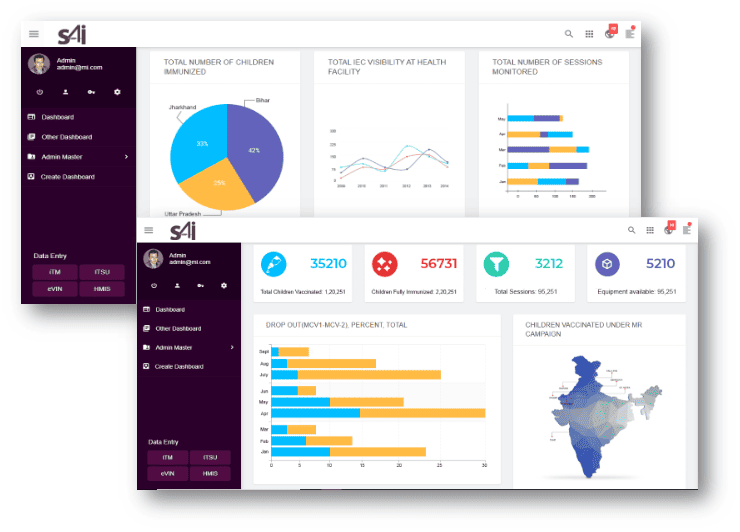
– Generating actionable reports at state, district, and sub-district levels
– Supporting data interoperability through API-based data exchange
– Building government capacity for long-term independent maintenance of the application
– Ensuring data security during server transitions in a sensitive region
– Providing responsive technical support despite geographical challenges
Velocity’s Solution
Scope of Work
Velocity Software Solutions provided comprehensive maintenance, enhancement, training, and handover support for the Talaash OOSC application in Jammu & Kashmir. The engagement covered application maintenance, stakeholder training, documentation, multi-level reporting, and a structured technology transfer to the Education Department.
Key Features & Deliverables
- Application Maintenance: Continuous updating, monitoring, and optimization of the Talaash application to ensure reliable performance across J&K’s varied connectivity conditions
- User Training Programs: Training for OoSC teams and Alternative Learning Support Coordinators (ALSCos) on application usage, including master trainer development through face-to-face sessions
- User Manual & Video Documentation: Comprehensive user manuals and video tutorials with YouTube links for self-paced learning by field staff
- Multi-Level Report Generation: On-demand generation of reports at state, district, and block levels for evidence-based planning and intervention
- API-Based Data Integration: Import and export capabilities in API format to support department data workflows
- Source Code Handover: Complete transfer of the digital application and source code to the Education Department with formal handover procedures
- Regular Stakeholder Engagement: Monthly face-to-face meetings with OoSC teams, IT teams, and senior officials for application internalization
- Technical Staff Capacity Building: Training of government-nominated technical personnel to maintain the application independently
- Dedicated Help Desk: Technical support help desk with designated contact personnel for issue resolution
- Adaptive Modifications: Implementation of modifications and enhancements based on department feedback and evolving requirements
- Server Transition Assistance: Technical support for server migration with full data security assurance
Technology Stack
- Web-based application with offline-capable features (for low-connectivity areas)
- RESTful API architecture for data integration
- Cloud/server-hosted infrastructure
- Open-source technologies
- Optimized for low-bandwidth environments
Implementation Approach
Velocity implemented a phased support and knowledge transfer methodology tailored to J&K’s unique context:
- Assessment & Stabilization Phase: Evaluated the existing application performance in J&K’s operational context, addressed critical bugs, and optimized for local infrastructure conditions
- Training & Documentation Phase: Conducted face-to-face training workshops with master trainers and field functionaries, developed comprehensive user documentation including video tutorials
- Reporting & Analytics Phase: Configured multi-level reporting at state, district, and block levels, enabled API-based data exchange with departmental systems
- Stakeholder Alignment Phase: Facilitated monthly meetings with government officials and IT teams over six months for thorough application internalization and buy-in
- Handover & Sustainability Phase: Executed systematic transfer of source code, documentation, and operational knowledge to government-nominated technical staff, ensuring long-term sustainability
Key Outcomes & Impact
- Comprehensive Coverage: Successfully maintained and supported the Talaash application across all districts of Jammu & Kashmir, enabling systematic OOSC identification and tracking
- Government Ownership: Built capacity within the Education Department’s technical team to independently operate and maintain the application
- Evidence-Based Interventions: Multi-level reporting empowered state and district officials to plan targeted interventions for the most marginalized out-of-school children
- Sustainable Handover: Complete technology transfer with source code, documentation, and trained personnel ensured continuity beyond the project period
- Field-Level Adoption: Trained master trainers and field functionaries ensured widespread adoption and effective use of the digital tool
- Responsive Support Delivery: Dedicated help desk maintained system reliability and user confidence despite geographical and logistical challenges
Why Velocity
Velocity Software Solutions was the natural choice for this engagement due to:
– Multi-State OOSC Experience: Proven track record of developing and maintaining OOSC applications across multiple Indian states, with deep understanding of the unique challenges in each context
– UNICEF Partnership: Established LTA (Long-Term Agreement) relationship with UNICEF for IT services, ensuring seamless contractual and operational processes
– Challenging Geography Expertise: Experience working in states with difficult terrain and connectivity constraints, including adaptation of solutions for low-bandwidth environments
– Government Training Proficiency: Demonstrated ability to train government functionaries at multiple levels, including in regions with unique operational challenges
– End-to-End Service Delivery: Comprehensive capabilities spanning development, maintenance, training, documentation, help desk support, and structured handover
– Information Security Standards: ISO 27001:2013 certification ensuring data security — particularly critical in the sensitive J&K context