SDG Localisation Dashboard for Government of Mizoram
Download MarkDownThe Challenge
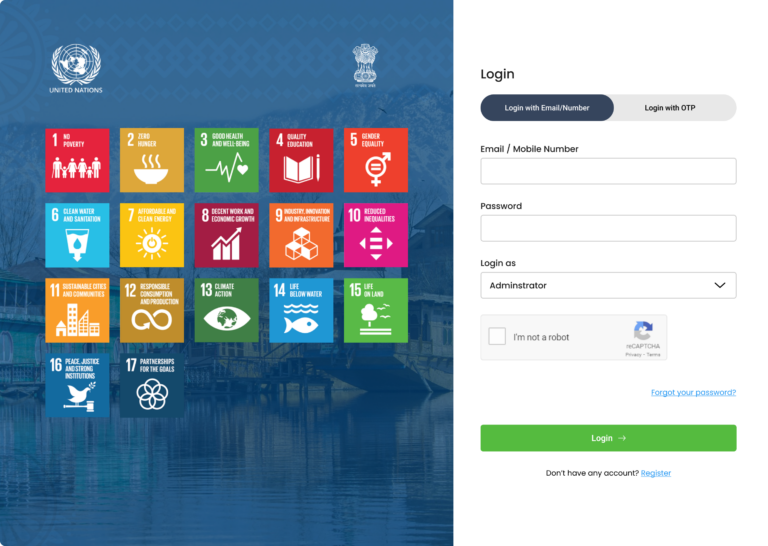
The UN General Assembly’s 2030 Agenda for Sustainable Development established 17 SDGs and 169 targets requiring monitoring at global, national, and sub-national levels. In India, NITI Aayog coordinates SDG efforts nationally, while MoSPI provides the National Indicator Framework (NIF). The Ministry of Panchayati Raj developed a Local Indicator Framework (LIF) mapped to nine thematic areas aligned with the 17 SDGs.
The State of Mizoram faced several challenges in SDG monitoring and implementation:
- No Digital Monitoring Infrastructure: Despite having drafted its State Indicator Framework (SIF), District Indicator Framework (DIF), and Local Indicator Framework (LIF), Mizoram lacked a digital platform to monitor progress across these multiple levels.
- Multi-Level Monitoring Gap: Progress needed to be tracked at state, district, Urban Local Body (ULB), and village levels, requiring a sophisticated data architecture that could handle hierarchical data aggregation.
- Limited Stakeholder Access: Administrative secretaries, policymakers, departments, external partners, and citizens had no unified tool to assess SDG progress, make course corrections, or report to NITI Aayog.
- No Mobile Access: Field-level officials and district administrators needed mobile access to SDG data, requiring both web and mobile application development (Android and iOS).
- Data Entry Infrastructure: A data input tool was needed to enable departments and state officials to systematically contribute data at multiple administrative levels.
The Government of Mizoram requested UNDP’s support in designing and developing a comprehensive SDG Dashboard for localized monitoring, prompting this engagement.
Velocity’s Solution
Scope of Work
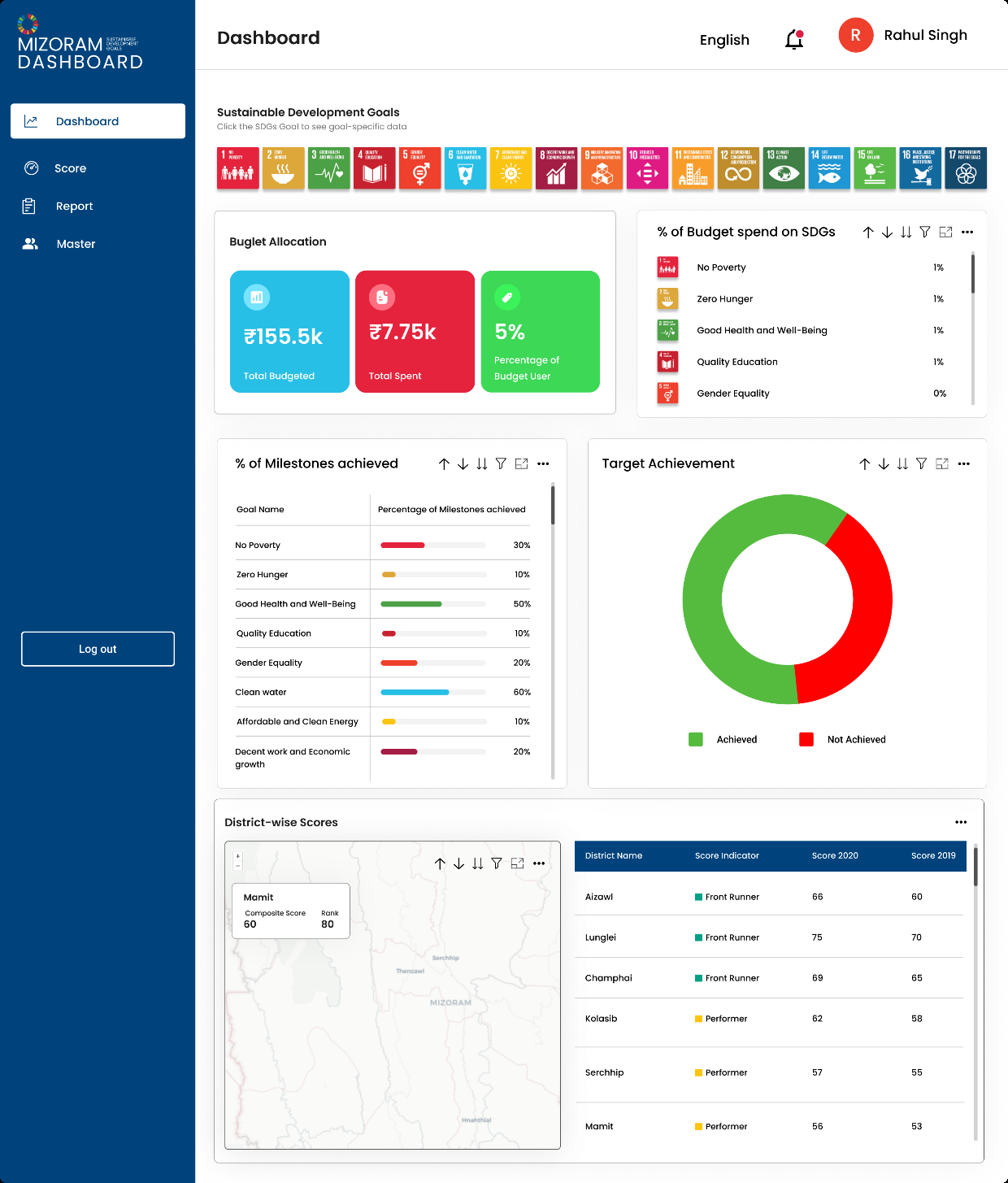
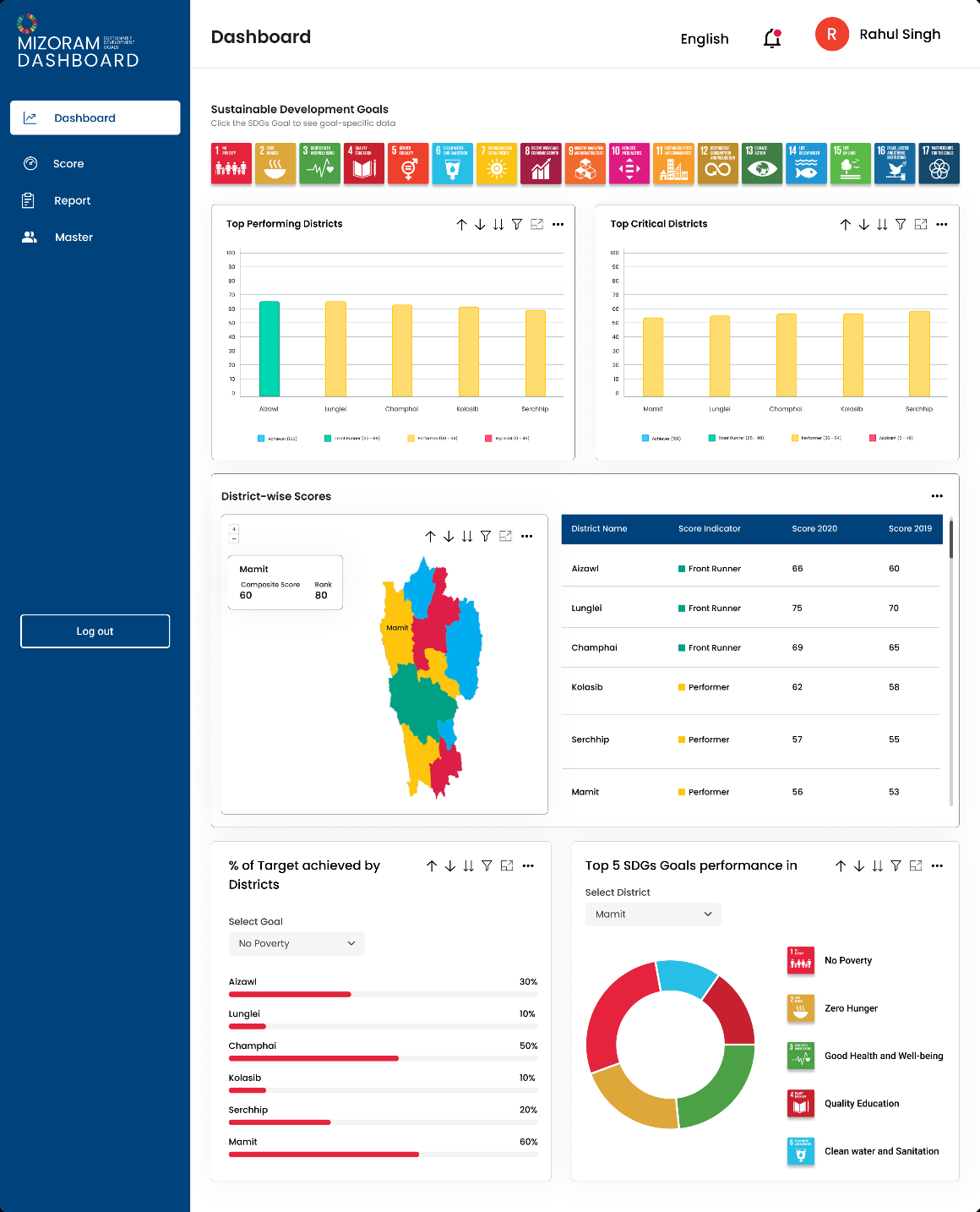
Velocity designed, developed, and deployed an interactive SDG Localisation Dashboard as both a web application and mobile application (Android and iOS) for the Government of Mizoram, enabling comprehensive multi-level SDG monitoring from state down to village level with data entry, visualization, analytics, and reporting capabilities.
Key Features & Deliverables
Web Application – SDG Dashboard
– Interactive dashboard displaying progress on all 17 SDGs across state, district, ULB, and village levels
– Data visualization through charts, graphs, interactive maps, and tables
– Goal-wise, target-wise, and indicator-wise progress tracking
– Comparative analysis between districts, blocks, and villages
– Time-series analysis showing progress trends
– Responsive design for access across desktops, tablets, and mobile browsers
Mobile Applications (Android & iOS)
– Native mobile applications mirroring web dashboard functionality
– Field-level data access for district administrators and government officials
– Offline capability considerations for areas with limited connectivity
– Push notification support for data updates and alerts
Data Entry & Management System
– Structured data input tool for departments and state officials
– Multi-level data entry (state, district, ULB, village)
– Excel/CSV bulk upload capabilities
– Data validation and quality assurance mechanisms
– Role-based access for data contributors
Analytics & Reporting
– SDG progress scoring and ranking at all administrative levels
– Target achievement status with color-coded indicators
– Custom report generation capabilities
– Open APIs for integration with external applications (NITI Aayog national dashboard)
– Data extraction and download functionality
Phase-wise Implementation
– Phase I: Core SDG Dashboard with state and district level indicators, basic data entry, and primary visualizations
- Phase II: Enhanced features including village-level monitoring, advanced analytics, and mobile applications
- Phase III: Full integration, API connections, advanced reporting, and optimization
Technical & Documentation Deliverables
– System Requirement Specification (SRS)
– Design documents with code structure
– Database architecture with E-R diagrams
– System manual (updated per version)
– User manual (updated per version)
– Security audit report
– Application installation guide with infrastructure recommendations
– Working copy of source code with data flow diagrams
– Complete documentation of external dependencies
– Open APIs documentation
Capacity Building
– Training of DES/District admin staff on data management and dashboard maintenance
– Training of department/state officials on data input tools
– Technical training/support to operationalize the software
Technology Stack
- Web Application: Open-source technologies with responsive design
- Mobile: Native Android and iOS application development
- Frontend: Interactive UI with data visualization libraries, geospatial mapping
- Backend: Open-source framework with API integration capabilities
- Database: Open-source RDBMS with hierarchical data management
- APIs: RESTful APIs for external application integration
- Security: Third-party security audit compliance
- Hosting: Initial hosting by vendor with planned migration to NIC/government server
Implementation Approach
The project followed a four-phase delivery model over 12 months:
- Phase I – Foundation (30%): Core SDG Dashboard development with state and district level indicators, primary data entry functionality, and base visualizations. Beta version delivery within the first month.
- Phase II – Enhancement (30%): Extended functionality including village-level monitoring, mobile applications, advanced analytics, and comprehensive API integrations.
- Phase III – Optimization (30%): Full system integration, advanced reporting, performance optimization, user acceptance testing, and deployment on production infrastructure.
- Phase IV – Post-Deployment Support (10%): Maintenance and bug fixing, hosting services until deployment on NIC/government server, small customizations and changes, and technical training on a need basis.
The project team comprised:
– Team Leader: Post-Graduate/Graduate in IT with 7+ years in IT system development, strong knowledge in development sectors, project management, and team leadership.
– Product/Project Management Expert: 5+ years with experience as UI developer, business analyst, frontend/backend developer, with full-stack capabilities.
– Software Development Expert: 4+ years specializing in IT system development, MIS, dashboard development, and mobile application development.
– Data Visualizer/Analyst: Expertise in interactive data presentation and geospatial mapping.
Key Outcomes & Impact
- Localized SDG Monitoring: Established Mizoram as one of the leading states in SDG localization by enabling monitoring at state, district, ULB, and village levels — going significantly deeper than most state-level dashboards.
- Data-Driven Governance: Empowered administrative secretaries and policymakers with real-time SDG progress data, enabling evidence-based course corrections and resource allocation.
- National Reporting Capability: Provided a systematic mechanism for Mizoram to report SDG progress to NITI Aayog, strengthening the state’s contribution to India’s global SDG reporting.
- Field-Level Access: Mobile applications enabled district administrators and field officials to access and contribute SDG data from anywhere in the state, critical for Mizoram’s geographically challenging terrain.
- Multi-Stakeholder Transparency: The public-facing dashboard enhanced transparency, enabling citizens, external partners, and civil society to independently assess the state’s development progress.
- Foundation for CSR Integration: The dashboard established the data infrastructure that would later power the CSR Matchmaking Platform, creating a comprehensive SDG-CSR ecosystem for Mizoram.
Why Velocity
Velocity was selected through UNDP’s competitive evaluation (70% technical, 30% financial) based on:
- End-to-End Technology Solution Experience: Demonstrated expertise in managing complete technology solution development, deployment, and management for government and UN technology projects.
- Mobile Application Development: Proven capabilities in both Android and iOS native application development, meeting the critical requirement for mobile SDG monitoring tools.
- Data Dashboard Excellence: Track record in developing interactive, responsive web-based dashboards with complex data visualization requirements for government clients.
- Open-Source Technology Proficiency: Deep expertise in open-source technologies with minimum 3 years of team experience in frontend UI development, backend development, full-stack development, and data visualization.
- API Integration Experience: Demonstrated capability in building applications with API integrations to external platforms, essential for connecting with NITI Aayog’s national SDG dashboard.
- Government & UN Project Track Record: Prior execution of data-driven dashboard projects for central/state governments, UN organizations, and international institutions.