
Node JS Development Services
We build backends that don't fall over at 2 AM. Our Node.js team has been shipping production APIs, real-time systems, and microservices since 2013 — for companies that simply can't afford downtime. Express, Fastify, NestJS — we pick the right tool, not the trendy one.
Talk to Our Backend TeamCompanies We've Built Backends For










What Our Clients Say
What We Build with Node.js
Backend work isn't glamorous, but it's where things go wrong if you cut corners. Here's what we do.
REST & GraphQL APIs
Clean, well-documented APIs that your frontend team (or third-party integrators) will actually enjoy working with. We use NestJS or Fastify depending on complexity.
Microservices
We help teams break monoliths into services that can be deployed, scaled, and maintained independently. But we'll also tell you if you don't actually need microservices yet — premature decomposition causes more problems than it solves.
Real-Time Systems
Chat, live notifications, collaborative editing, price feeds — anything where data needs to arrive in milliseconds, not on the next page refresh. WebSockets, Socket.io, or SSE depending on the use case.
Serverless Functions
For workloads that are spiky or unpredictable, serverless makes a lot of sense financially. We build on AWS Lambda, Google Cloud Functions, and Vercel Edge — keeping cold starts low and costs predictable.
Enterprise Platforms
Multi-tenant systems with proper RBAC, audit trails, and the kind of boring-but-critical infrastructure that ent<a href="/erp-crm-solutions/">erp</a>rises need. Not exciting, but it's what keeps production running.
Migration & Performance Tuning
Running a slow <a href="/php-development/">PHP</a> or Java backend? We can migrate you to Node.js — or sometimes just fix the bottleneck in your existing stack. We're pragmatic, not dogmatic.
Where We Go Deep
Backend development has a lot of surface area. These are the areas where we've built real depth.
NestJS & Structured Backend Architecture
For anything beyond a small API, we reach for NestJS. Dependency injection, decorators, guards, pipes — it brings the structure that Node.js projects desperately need once you get past 20 endpoints. We pair it with Prisma or Drizzle for type-safe database queries.
Databases & Data Engineering
Postgres for most things. MongoDB when the data is genuinely document-shaped. Redis for caching, sessions, and queues. Elasticsearch when you need full-text search. We handle connection pooling, query optimization, and migrations — the unglamorous work that keeps your app from grinding to a halt.
DevOps & Deployment Pipelines
Every project gets Docker, a proper CI/CD pipeline, health checks, and structured logging from day one. Not as an afterthought, not "we'll add it later." We've seen too many projects go to production with manual SSH deploys. Never again.
Why Teams Choose Us for Node.js
P95 Latency Under 100ms
OWASP Top 10 Covered
TypeScript Everywhere
CI/CD on Every Project
Same Team, Start to Finish
We Write the Tests Too
Honest Take on Node.js
Node.js isn't the right tool for every backend — and anyone who tells you otherwise is selling something. But for a very large class of problems, it's genuinely the best option available.
Where Node.js shines
Node.js was built for I/O. If your server spends most of its time waiting — waiting for database queries, waiting for API responses, waiting for file reads — Node.js handles that better than almost anything else. A single Node process can juggle thousands of these concurrent operations without breaking a sweat, because it never blocks on any single one.
This makes it a natural fit for APIs, real-time apps, and microservices. It's why Netflix moved to Node — they cut their startup time from 40 minutes to under a minute. It's why PayPal saw a 35% decrease in response time after switching from Java.
Where it doesn't
CPU-heavy work — video encoding, complex mathematical computations, heavy image processing — will choke a Node.js event loop. For those workloads, we use worker threads, offload to a queue, or recommend a Python development/Go service alongside Node. Being honest about this upfront saves our clients time and money.
We've learned the hard way that the best architecture is the one your team can actually maintain at 3 AM when something breaks. We optimise for debuggability and simplicity, not cleverness.
Our Node.js stack in practice
- NestJS for structured APIs — because Express apps turn into spaghetti past a certain size
- Prisma or Drizzle for database access — type-safe queries catch bugs before they reach production
- Redis for caching and rate limiting — the performance difference is immediate and dramatic
- Bull/BullMQ for background jobs — emails, reports, heavy processing off the request path
- Pino for logging — structured JSON logs that your observability stack can actually parse
Every project gets the same foundation: TypeScript, automated tests, Docker, CI/CD, and health checks. It's not optional. We've been doing this long enough to know that skipping these "extras" always costs more later.
Trading Platform — 50K Price Updates Per Second
A fintech client needed their trading interface to show live prices from 12 exchanges simultaneously. We built the data pipeline in Node.js with WebSockets and Redis Pub/Sub. The hard part wasn't the throughput — it was graceful degradation. When an exchange feed drops, users see stale data with a clear indicator, not a crash. We built automatic reconnection, message deduplication, and circuit breakers for each feed.

SaaS Platform Serving 200+ B2B Clients
Each client needed their own data isolation, custom rate limits, and usage-based billing. We built it with NestJS, PostgreSQL with row-level security, and a custom API gateway that handles authentication, request routing, and metering. The system has been running for 18 months with zero data leaks between tenants — which, in multi-tenant land, is the only metric that matters.
IoT Pipeline — 100K Sensors Reporting Every 10 Seconds
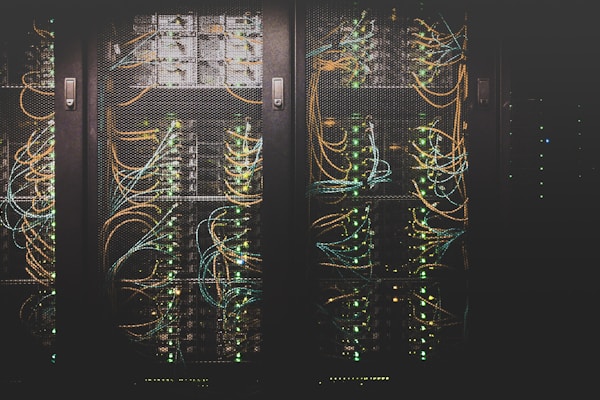
A manufacturing client had sensors on their factory floor generating a firehose of telemetry data. We built the ingestion layer in Node.js (it handles bursty I/O beautifully), pushed events through Kafka for processing, and stored time-series data in TimescaleDB. The dashboard shows real-time equipment health, and the alerting system has caught 3 potential failures before they caused downtime.

Our Latest Case Studies
Common Questions
Need a Backend That Actually Scales?
Let's have a real conversation about your project. We'll tell you if Node.js is the right fit — and if it isn't, we'll point you in the right direction.
Book a Free Call