Web-Enabled eProcurement and Inventory Management System
Download MarkDownThe Challenge
The client organization was managing its entire procurement lifecycle and inventory operations through manual, paper-based processes and disconnected spreadsheet-based tracking systems. As procurement volumes grew and organizational complexity increased, the limitations of these manual processes became unsustainable:
- Fragmented Procurement Process: The procurement lifecycle — from budgeting and purchase requisition through supplier selection, purchase orders, goods receipt, and payment — was managed through disconnected manual processes with no centralized visibility or control.
- No Budget Control Mechanism: Without a digital budgeting module linked to procurement activities, there was no real-time visibility into budget utilization, leading to overspending risks and delayed procurement decisions.
- Inefficient Supplier Management: Supplier onboarding, qualification, and performance tracking were handled manually, making it difficult to maintain a qualified vendor pool and ensure competitive sourcing.
- Manual Approval Bottlenecks: Paper-based approval workflows for purchase requisitions and payment vouchers created bottlenecks, with documents frequently delayed, lost, or stuck at approver desks.
- Inventory Tracking Gaps: Without a digital inventory management system, the organization had poor visibility into stock levels, consumption patterns, and reorder requirements, leading to both stockouts and excess inventory.
- Goods Receipt Discrepancies: Manual goods receipt note (GRN) processes were prone to errors in quantity verification, quality checks, and three-way matching (PO-GRN-Invoice), creating payment disputes and supplier relationship issues.
- Reporting Limitations: Management lacked comprehensive, real-time reports on procurement spend, supplier performance, inventory status, and process efficiency metrics needed for data-driven decision making.
- Audit and Compliance Risks: Manual processes made it difficult to maintain audit trails, enforce compliance with procurement policies, and demonstrate governance to internal and external auditors.
Velocity’s Solution
Scope of Work
Velocity Software Solutions designed, developed, and deployed a comprehensive web-enabled Procurement and Inventory Management System covering the complete procure-to-pay lifecycle. The system was built from the ground up as a modular, configurable platform that could adapt to the organization’s specific procurement policies and approval hierarchies.
Key Features & Deliverables
Budgeting Module:
– Annual and project-based budget creation and allocation.
– Budget head hierarchy supporting multi-level budget structures (department, category, project).
– Real-time budget utilization tracking with visual dashboards showing allocated, committed, and available budgets.
– Budget transfer and revision workflows with approval mechanisms.
– Budget alerts and thresholds to prevent over-commitment.
– Year-on-year budget comparison and trend analysis.
Admin Masters:
– Comprehensive master data management for all reference entities:
– Department master
– Category and sub-category master
– Unit of measurement master
– Tax configuration master
– Location/warehouse master
– Currency master
– Payment terms master
– Import/export capabilities for bulk master data management.
– Audit logging for all master data changes.
Purchase Requisition Module:
– Digital purchase requisition creation with item details, quantities, estimated costs, and justification.
– Linkage to budget heads for automatic budget check and fund availability verification.
– Multi-level approval workflow with configurable approval hierarchies based on amount, category, and department.
– Requisition tracking dashboard showing status across the approval chain.
– Requisition consolidation for demand aggregation across departments.
– Attachment support for specifications, drawings, and supporting documents.
Supplier Onboarding Module:
– Online supplier registration portal with self-service capabilities.
– Supplier profile management (business details, bank information, certifications, capabilities, tax registrations).
– Supplier document upload and verification workflow.
– Supplier categorization by product/service category, geographic location, and qualification level.
– Supplier blacklisting and debarment management.
– Supplier communication portal for queries and updates.
Business Rules Definition Engine:
– Configurable business rules for procurement thresholds, approval hierarchies, and policy enforcement.
– Rules for automatic routing based on procurement value, category, and urgency.
– Delegation of authority rules for approval workflows.
– Validation rules for data quality enforcement across all modules.
– Rule versioning and audit trail.
Goods Receipt Note (GRN) Module:
– Digital GRN creation against purchase orders.
– Quantity verification with tolerance-based acceptance/rejection rules.
– Quality inspection recording with pass/fail status and remarks.
– Three-way matching (PO-GRN-Invoice) for payment authorization.
– Partial receipt management for staggered deliveries.
– GRN printing and supplier acknowledgment.
– Integration with inventory module for automatic stock updates.
Approval Workflow Engine:
– Configurable multi-level approval workflows for requisitions, purchase orders, GRNs, and payment vouchers.
– Parallel and sequential approval routing.
– Delegation and escalation mechanisms for approver absence.
– Email and SMS notifications at each approval step.
– Mobile-friendly approval interface for on-the-go approvals.
– Complete approval history and audit trail.
Payment Voucher Module:
– Payment voucher generation linked to approved GRNs and invoices.
– Three-way match verification before payment authorization.
– Tax calculation and deduction (TDS, GST) integration.
– Payment scheduling and batch processing.
– Payment status tracking and reconciliation.
– Integration with accounting systems for financial posting.
Inventory Management Module:
– Real-time inventory tracking across multiple locations/warehouses.
– Stock receipt, issue, transfer, and adjustment transactions.
– Minimum/maximum stock level management with reorder point alerts.
– Inventory valuation (FIFO, weighted average, standard cost).
– Stock aging analysis and slow-moving/obsolete inventory identification.
– Inventory audit and cycle counting support.
– Barcode integration for stock operations.
– Consumption analysis and forecasting.
Reporting and Analytics:
– Comprehensive report templates covering procurement spend, supplier performance, inventory status, budget utilization, and process efficiency.
– Customizable report builder for ad-hoc analysis.
– Dashboard with KPIs and visual analytics (charts, graphs, trend lines).
– Export capabilities (Excel, PDF, CSV).
– Scheduled report generation and email distribution.
– Drill-down capabilities from summary to transaction-level detail.
Data Integration:
– Database design for capturing data from third-party applications.
– API endpoints for integration with existing ERP, accounting, and financial systems.
– Data import/export utilities for bulk operations.
Technology Stack
- Backend: PHP (Laravel/CakePHP framework)
- Frontend: HTML5, CSS3, JavaScript, jQuery, Bootstrap (responsive design)
- Database: MySQL / PostgreSQL
- Server: Linux (Apache/Nginx), cloud-hosted
- Reporting: Custom dashboard with Chart.js/D3.js visualizations
- Workflow Engine: Custom-built configurable workflow engine
- Notifications: Email and SMS integration
- Security: SSL/TLS, role-based access control, session management, audit logging
- Testing: Automated and manual testing across all modules
Implementation Approach
- Requirement Document Preparation: Detailed business requirements specification prepared through extensive stakeholder consultations, documenting current processes, pain points, and desired workflows for each module.
- Wireframe Design: Interactive wireframes and report template designs created and validated with stakeholders before development commenced.
- Database Architecture: Comprehensive database design created to support all modules, integration points, and reporting requirements, with consideration for data from third-party applications.
- Admin Masters Development: Foundation module built first, establishing all master data structures that other modules would depend on.
- Budgeting Module Development: Budget management module developed with allocation, tracking, and reporting capabilities.
- Business Rules Configuration: Rules engine developed and configured with organization-specific procurement policies, thresholds, and approval hierarchies.
- Purchase Requisition and Supplier Modules: Core procurement modules developed with requisition creation, budget linking, and supplier onboarding capabilities.
- GRN and Approval Workflow Development: Goods receipt and multi-level approval workflow modules developed with three-way matching logic.
- Payment Voucher Module: Payment processing module developed with tax calculations, matching verification, and accounting integration.
- Inventory Management Module: Comprehensive inventory tracking module developed with multi-location support, stock operations, and analytics.
- Reporting Module: Dashboard and reporting system developed with standard templates and custom report builder.
- User Acceptance Testing: Comprehensive UAT conducted with end-users from each department, testing all workflows, edge cases, and integration points.
- Deployment: System deployed on production servers with security hardening, performance optimization, and data migration from existing systems.
- Training and Handover: Staff training conducted across all user roles (requestors, approvers, procurement officers, inventory managers, finance team, administrators).
Key Outcomes & Impact
- End-to-End Digital Procurement: The organization transitioned from manual, paper-based procurement to a fully digital procure-to-pay lifecycle, eliminating paper trails and manual handoffs.
- Real-Time Budget Control: Procurement activities were directly linked to budgets, providing real-time visibility into fund utilization and preventing over-commitment.
- Accelerated Approval Cycles: Digital approval workflows with email/SMS notifications reduced procurement approval cycle times by over 50%, eliminating paper-based bottlenecks.
- Improved Supplier Management: Structured supplier onboarding and management processes expanded the qualified vendor pool while maintaining rigorous qualification standards.
- Accurate Inventory Tracking: Real-time inventory management eliminated stockout situations and reduced excess inventory carrying costs through better demand visibility and reorder management.
- Three-Way Match Accuracy: Automated PO-GRN-Invoice matching significantly reduced payment discrepancies and disputes, improving supplier relationships and financial accuracy.
- Comprehensive Audit Trail: Every procurement transaction, approval decision, and inventory movement was logged with timestamps and user identification, providing complete audit readiness.
- Data-Driven Procurement Intelligence: Management dashboards and custom reports provided actionable insights into spend patterns, supplier performance, process efficiency, and inventory health.
- Policy Compliance: Configurable business rules ensured automatic enforcement of procurement policies, reducing compliance violations and governance risks.
Why Velocity?
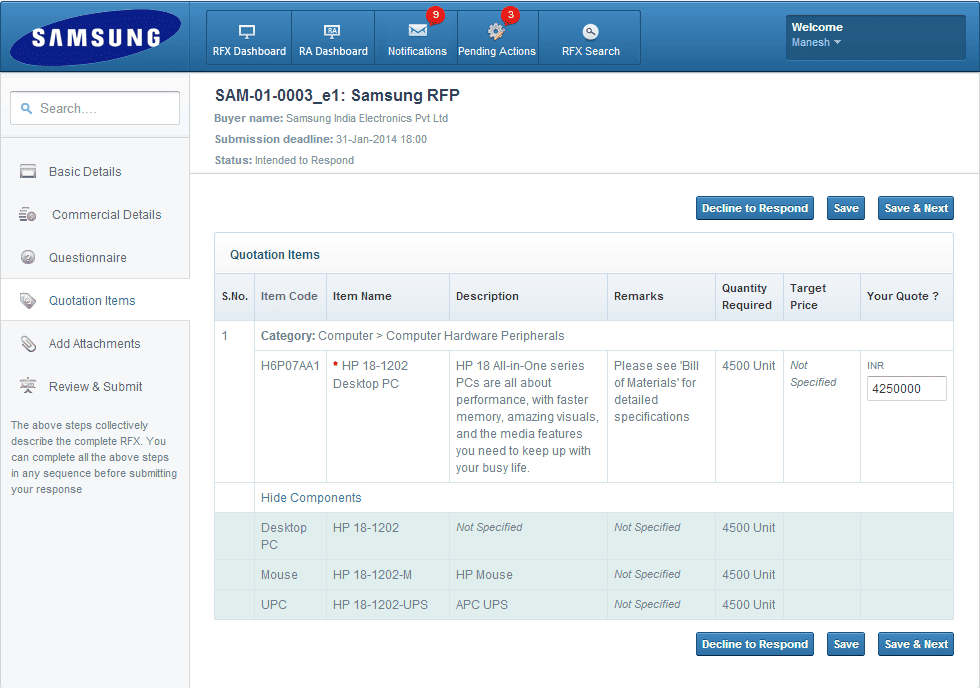
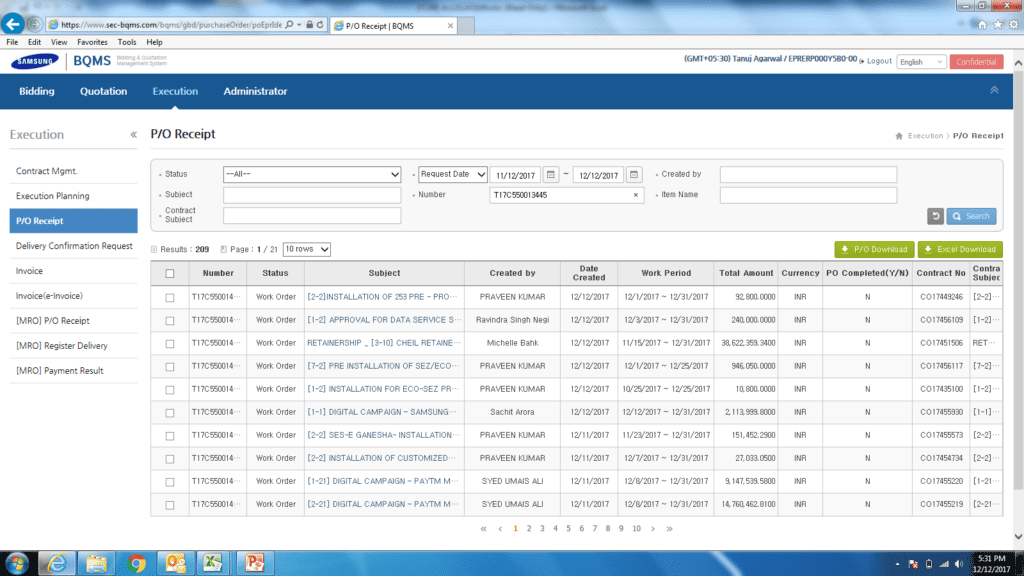
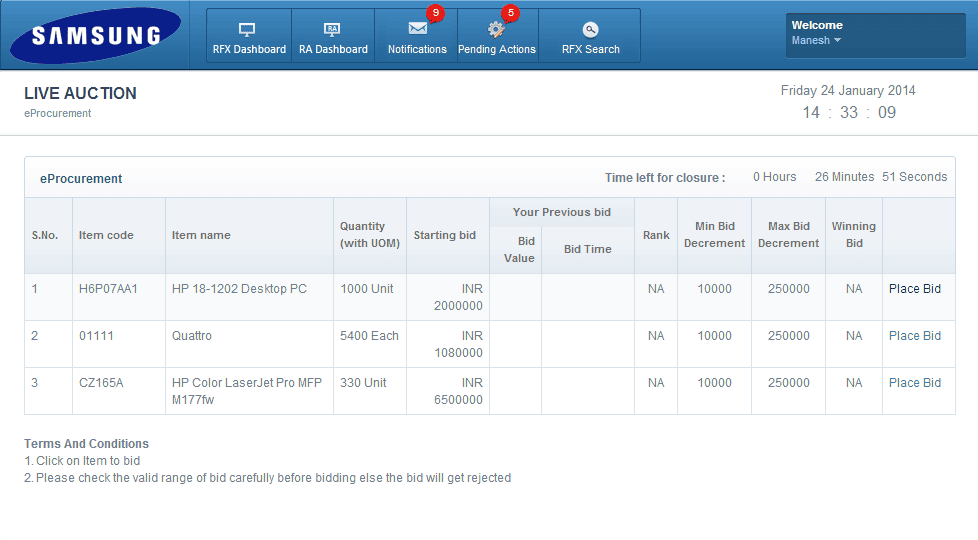
- Proven Procurement Domain Expertise: Velocity had built Samsung’s global eProcurement platform — one of the most comprehensive procurement systems in the industry — giving the team deep domain knowledge of procurement workflows, auction mechanisms, supplier management, and audit requirements.
- Full Lifecycle Development Capability: From requirements analysis through database design, development, testing, deployment, and training, Velocity provided end-to-end delivery capability under a single contract.
- Configurable Architecture Approach: Velocity’s emphasis on configurable workflows, business rules, and approval hierarchies ensured the system could adapt to the organization’s evolving procurement policies without code changes.
- Integration Experience: Experience building integration layers for Samsung, UNICEF, and other enterprises ensured smooth connectivity with existing ERP and financial systems.
- Security and Compliance Focus: ISO 27001:2013 certification and experience building audit-friendly systems for Samsung and government agencies ensured the platform met the highest security and compliance standards.
- Post-Deployment Support: Velocity’s structured application maintenance and support framework, including a dedicated test server for 12 months, ensured the system remained stable and optimized after launch.
Velocity Software Solutions — Digitizing procurement and inventory operations for transparency, efficiency, and control.