UNICEF New Delhi – RCH 2.0 (Reproductive and Child Health) Stack Development & Support
Download MarkDownThe Challenge
The Reproductive and Child Health (RCH) registry is India’s master repository for beneficiary health data under the Government of India Ministry of Health and Family Welfare (MoHFW) programmes, covering Immunization, ANC (Antenatal Care), and non-ANC services for pregnant women, mothers, and children up to age 5. As of 2022, RCH 1.0 was based on paper entry and MS Desktop technology, accessed via web login and through an intermediary mobile application called ANMOL (developed around 2019).
The MoHFW identified critical needs for a comprehensive platform reimagination:
- Outdated Technology Stack: RCH 1.0 used legacy paper-entry and desktop-based technology that could not meet modern digital health requirements
- CoWIN/UWIN Integration: The platform needed to integrate with CoWIN 2.0 and function as a mirror, data analytics platform, and record repository for Universal Immunization (UWIN)
- Multi-Application Interoperability: RCH 2.0 needed to serve as the master repository for multiple government applications including RBSK, NCD, MWMIS, MPDSR, POSHAN, CRS, UDISE, and ICDS-CAS
- Massive Scale: The system needed to support a minimum of 300,000 users per month initially, covering all female citizens and children up to age 5
- AI Enhancement: The reimagined platform required AI-enhanced Content Management System functionality and automated database management
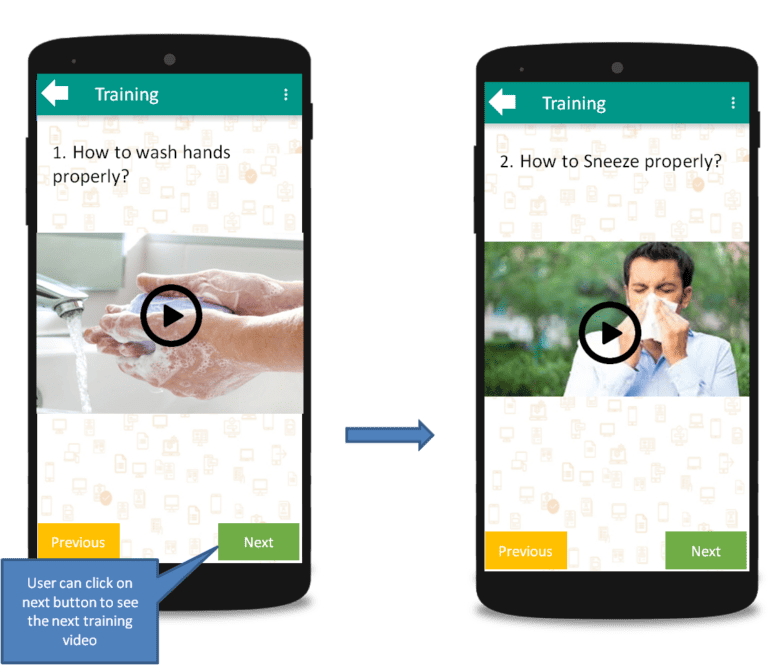
- Mobile-First Approach: The platform needed mobility-led enterprise design for frontline health workers (ANMs, ASHAs) operating in low-bandwidth environments
- Cloud Migration: The stack needed to be cloud-first with hosting, operation, and maintenance capabilities
Velocity’s Solution
Scope of Work
Velocity Software Solutions was engaged for the comprehensive development, deployment, hosting, and long-term support of the RCH 2.0 platform — one of India’s largest and most critical digital health infrastructure projects.
Key Features & Deliverables
RCH 2.0 Five-Bin Stack Architecture
1. Data Repository: Master database controller with storage solution for back-end/repository requirements, including mirror functionality for CoWIN 2.0
2. Visualization/Analytics: Scalable analytics module with real-time cascading dashboards, spatial analytics with ETL, and role-based access
3. AI-Enhanced CMS: Content Management System with intelligence/learning functionality for automated database management
4. Mirror Functionality: Time-bound database updation process with CoWIN 2.0 platform via VPN functionality and session-based logging
5. Mobile App Functionality: Native apps as well as embedded solutions in third-party applications
Core Platform Modules
– LGD (Local Government Directory) Compliance and updation tracking module
– Delivery and Labour Room module with QR code sticker issuance
– ASHA module with data capture, automated service payment tracking, and bank linkage
– Beneficiary self-registration and service tracking module
– ANM referral module with automated triggers to designated facilities
– NFC-enabled smart card module for Digital MCP card and Rupeecard with direct cash transfer facility
– High Risk Pregnancy (HRP) module with automatic tracking
– Blood bank linkage module
– SNCU (Special New Born Care Unit) integration
– NBSU (New Born Stabilization Unit) integration
– NBCC (New Born Care Corners) integration
– NSSK (Navjaat Shishu Suraksha Karyakram) integration
– HBNC (Home Based Newborn Care) integration
– NRC (Nutritional Rehabilitation Centers) integration
– RBSK (Rashtriya Bal Suraksha Karyakram) integration
Mobile Application (Repurposed ANMOL)
– Android ver. 6.0 onwards compatibility
– Desktop application interface for Apple/Windows/Linux
– Embedded mobility solution resident in UWIN interface
– Offline capability with synchronization
– IVR (voice) and SMS functionality alongside data capabilities
– Real-time authentication and OTP-based validation
– GPS-based data collection
Billing Solution Module
– PMJAY and subsidized beneficiary tagging against records
– GoI mandated payment gateway interconnection
– Mobile OTP authentication for beneficiaries
– Future-proofing for national health identification requirements
Interoperability
– CoWIN 2.0 platform integration (mirror and analytics)
– POSHAN, PM-JAY, NIKSHAY, NCD, HMIS integration
– CRS, UDISE, ICDS-CAS integration
– ABDM (Ayushman Bharat Digital Mission) Unique Health Facility ID linkage
– MeITY guidelines compliance for Open Source Software Policy, Open API Policy, Cloud-by-default
Infrastructure & Security
– Cloud-first deployment with DR (Disaster Recovery)
– Database warehousing and integrations on cloud
– VPN functionality for inter-system communication
– Comprehensive security module
– Call centre services
– SMS services for 300,000+ monthly users
Technology Stack
- Backend: Open source technologies — Java, Linux, Kubernetes, Docker, DBMS
- Database: MongoDB, MySQL, PostgreSQL (or similar leading DB stacks)
- Mobile: Android (ver. 6.0+), cross-platform desktop applications
- Cloud: Leading cloud service providers with DR infrastructure
- AI/ML: AI-enhanced CMS with learning functionality
- Integration: REST APIs, SIP, SS7, VPN, HTTP protocols
- Analytics: Real-time dashboards, ETL, spatial analytics, Power BI
- Communication: IVR, SMS gateway, OTP services
- NFC: Smart card module for Digital MCP card
- Standards: MeITY Open Source Software Policy, Open API Policy, National Digital Health Mission compliance
Implementation Approach
The project was executed in carefully sequenced phases:
Phase 1 – Requirements & Architecture (Months 0-1): Finalized requirements with stakeholders (MoHFW, State/UTs, UNICEF), achieved sign-off on technical plan, solution architecture, framework guidance document, and decision tree logic flow.
Phase 2 – Stack Development (Months 0-3): Development of the RCH 2.0 five-bin stack including all core modules, mobile application repurposing, and database migration.
Phase 3 – Deployment & Tweaking (Months 3-6): Hosting, audit, stage testing, cloud migration, and post-deployment adjustments based on real-world usage.
Phase 4 – Iterative Development (Months 6-24): Continued development of features and functionalities as mandated by MoHFW, including integration with additional government applications.
Phase 5 – Operations & Maintenance (Months 3-24+): Hosting, managed services support, analytics support, and call centre services with potential extension for additional 36 months.
The project was managed under the supervision of Dr. Ajay Trakroo, Health Specialist (Policy, Monitoring, Innovation, and Planning) at UNICEF, with regular reporting to MoHFW.
Key Outcomes & Impact
- National-Scale Digital Health Infrastructure: Delivered a reimagined RCH 2.0 platform serving as India’s master repository for reproductive and child health data
- 300,000+ Monthly Users: Built to serve a massive user base of frontline health workers, medical officers, and beneficiaries across India
- Multi-System Integration: Achieved interoperability with more than 10 government health and non-health applications, creating a unified health data ecosystem
- AI-Enhanced Operations: Implemented AI-enhanced CMS and automated database management, reducing manual intervention and improving data quality
- CoWIN/UWIN Integration: Successfully established mirror and analytics functionality with the Universal Immunization platform
- Mobile-First Healthcare: Empowered frontline health workers (ANMs, ASHAs) with mobile-first tools for service delivery in remote, low-bandwidth areas
- Digital MCP Card: Introduced NFC-enabled smart card technology for beneficiary identification and direct cash transfers
Why Velocity
Velocity Software Solutions was selected for this flagship national health technology project because of:
- Large-Scale Health Platform Experience: Demonstrated ability to work with large-format health data and build state/national-scale digital health solutions
- Open Source Technology Mastery: Proven expertise in Java, Linux, Kubernetes, Docker, and leading database technologies (MongoDB, MySQL, PostgreSQL)
- Cloud Deployment Capabilities: Existing agreements with leading cloud service providers and experience in cloud-first deployments with DR infrastructure
- AI and CMS Innovation: Capabilities in AI-enhanced content management systems and intelligent database management
- Government Compliance: Deep understanding of MeITY guidelines, Open Source Software Policy, Open API Policy, and government data standards
- ISO Certification: ISO 9000/9001 certified with minimum 100 employees and 5+ years of operational history
- Integration Expertise: Experience in providing interconnectivity through SIP, SS7, VPN, HTTP protocols and similar technologies
- Long-Term Partnership: Capability and willingness to provide 2+3 year support commitment with clear exit strategy and government handover plan