UNICEF New Delhi – ODK Deployment for Community Based Monitoring (CBM 2.0)
Download MarkDownThe Challenge
The COVID-19 pandemic, starting in March 2020, had disproportionately affected marginalized and vulnerable communities across India in a multi-dimensional way. Lockdowns led to job losses, business closures, declining economic conditions, and rising debt burdens, particularly for families engaged in seasonal employment, cross-border trade, and informal work. The second wave from February 2021 further exacerbated the situation with increased infection and mortality rates.
UNICEF India needed to undertake a comprehensive Community Based Monitoring study (CBM 2.0) to:
- Assess COVID Impact: Gather evidence from communities across multiple sectors on the impact of the pandemic, particularly on marginalized populations
- Monitor Vaccine Acceptance: Understand knowledge, attitudes, behaviors, and practices about prevention and vaccine acceptance
- Track Social Protection: Disseminate information on social protection schemes and programmes to affected communities
- Large-Scale Data Collection: Conduct a cohort-based longitudinal study across 20 districts in 10 states over 3 rounds, each involving approximately 400 enumerators and 12,000 interviews
- Multi-Language Support: Questionnaires needed to be coded in multiple Indian regional languages
- Real-Time Monitoring: Daily monitoring of incoming data with percentage completion tracking by district, volunteer, and CSO
- Technical Platform Management: Set up and manage the ODK (Open Data Kit) platform for all data collection, processing, analysis, and visualization
Velocity’s Solution
Scope of Work
Velocity Software Solutions deployed dedicated technical resources to set up and manage the complete ODK-based data collection ecosystem for the CBM 2.0 study, including platform configuration, capacity building, data monitoring, processing, analysis, and visualization across three rounds.
Key Features & Deliverables
ODK Platform Setup & Management
– Configuration of ODK platform (using UNICEF’s enterprise subscription through ONA) in tandem with the study design
– Questionnaire development and coding on ODK, accessible through mobile application and web browsers
– Multi-language questionnaire coding in Indian regional languages (translated questionnaires provided by UNICEF)
– Integration with Google Forms and ODK
– Creation of ODK connections with RapidPro using the existing RapidPro connector
– Setup of content on RapidPro flow editor as required
Capacity Building & Training
– Participation in approximately 25 cascading training sessions per round with UNICEF programme team
– Training of CSOs (Civil Society Organizations) and CSVs (Community Service Volunteers) on technology-based data collection
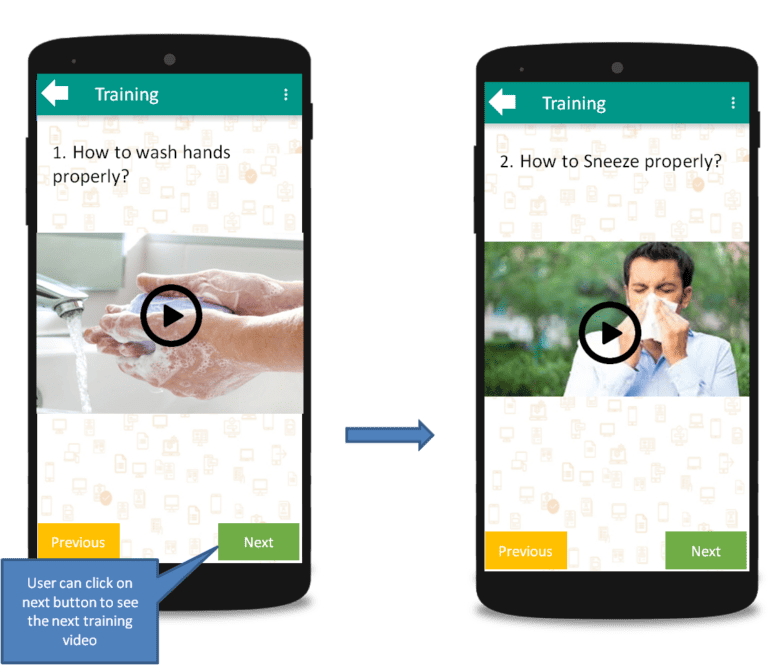
– Creation of presentations and videos demonstrating the platform and mobile app
– Troubleshooting support during training sessions
Real-Time Data Monitoring
– Daily monitoring of incoming data from approximately 400 enumerators per round
– Percentage completion reporting by district, volunteer, and CSO
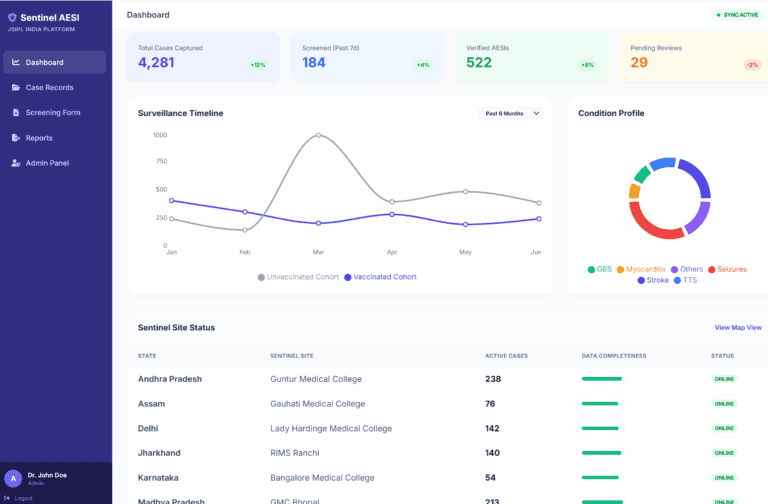
– Dashboard generation for missing data to enable programme follow-up
– Real-time support for registration, validation, and processing of survey respondent information
Data Processing & Analysis
– Data cleaning and processing after each round of collection
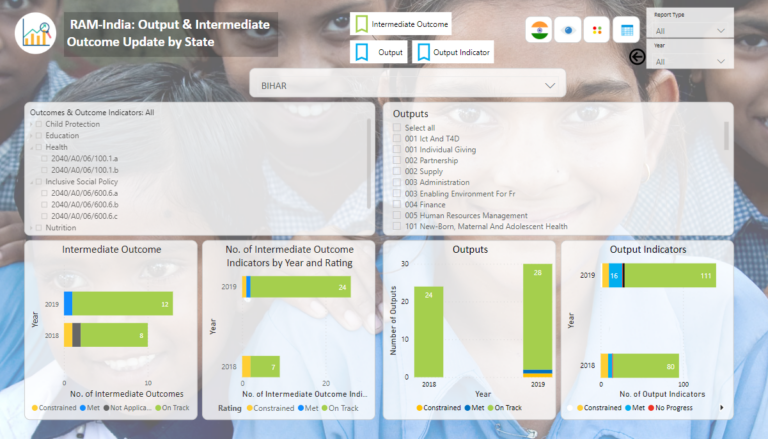
– Development of dashboards for concurrent monitoring of fieldwork
– District, state, and national-level data analysis and visualization
– Output in multiple formats: reports, infographics, dashboards, or combinations
Ongoing Technical Support
– Questionnaire review with programme team for correctness of flow and logic
– Troubleshooting support for all online and offline ODK-related activities
– Platform optimization and maintenance across three rounds
Technology Stack
- Data Collection: Open Data Kit (ODK) via ONA enterprise subscription (SaaS)
- Mobile: ODK mobile application for Android
- Communication: RapidPro (with ODK connector)
- Forms: Google Forms (integrated with ODK)
- Analysis: Advanced MS Excel, Power BI, Google Data Suite, SPSS
- Visualization: Tableau, Infogram, Power BI
- Programming: Python for data analysis
- Dashboard: Custom monitoring dashboards
Implementation Approach
The project was structured around three rounds of data collection, each spanning approximately 3 months:
Round 1 (September – November 2021):
– Platform setup and ODK configuration
– Questionnaire development and multi-language coding
– Capacity building sessions (approximately 25 sessions)
– Data collection with daily monitoring
– Data cleaning, processing, analysis, and visualization
Round 2 (March – May 2022):
– Platform reconfiguration for updated study design
– Refresher training sessions
– Data collection with continuous monitoring
– Analysis and reporting
Round 3 (August – October 2022):
– Final round platform setup
– Training and data collection
– Comprehensive multi-round analysis and final reporting
Each round followed the same cycle: platform setup, capacity building, data collection monitoring, and data cleaning/processing/analysis/visualization. Timelines for rounds 2 and 3 were flexible, depending on the evolving COVID situation and progress of previous rounds.
The work was managed by UNICEF’s Social Policy team and T4D Specialist, with full-time resources deployed during each active round period.
Key Outcomes & Impact
- 20 Districts, 10 States Covered: Successfully collected and analyzed data across 20 districts in 10 states, providing a comprehensive picture of COVID-19’s impact on vulnerable communities
- 36,000+ Interviews: Conducted approximately 12,000 interviews per round across 3 rounds, creating a robust longitudinal dataset
- Real-Time Monitoring: Enabled daily tracking of data collection progress, allowing programme teams to follow up on gaps immediately
- Evidence for Policy: Generated multi-round evidence on the pandemic’s impact across sectors including health, education, livelihoods, and social protection, informing UNICEF’s programmatic response
- Vaccine Hesitancy Insights: Provided critical data on COVID-19 knowledge, attitudes, and vaccine acceptance to guide communication strategies
- Social Protection Awareness: Supported dissemination of information about government social protection schemes to affected communities
- Capacity Built: Trained hundreds of CSO partners and community volunteers on digital data collection, building lasting technical capacity
Why Velocity
Velocity Software Solutions was the right partner for this critical COVID-19 response study because of:
- Extensive ODK Expertise: Deep, prior experience in creating ODK forms, managing ODK platforms, and related data management tasks
- RapidPro Integration Knowledge: Understanding of the RapidPro-ODK ecosystem and existing connector capabilities
- Data Analysis & Visualization Skills: Advanced capabilities in Power BI, Tableau, SPSS, Python, and other analysis/visualization tools
- Large-Scale Survey Management: Experience managing data collection operations involving hundreds of enumerators across multiple states
- Training & Capacity Building: Proven ability to deliver effective technology training to non-technical field staff
- Multi-Language Support: Capability to code and manage questionnaires in multiple Indian regional languages
- UNICEF Partnership: Established working relationship with UNICEF India’s ICT and programme sections
- Rapid Deployment: Ability to quickly deploy skilled resources to meet the urgent timelines driven by the evolving pandemic situation