UNICEF Lucknow – Out-of-School Children (OOSC) Monitoring Application for Uttar Pradesh
Download MarkDownThe Challenge
Uttar Pradesh has the largest share of out-of-school children in India. According to a sample survey by EdCIL, an estimated 1.6 million children (3.9% of all children aged 6-13 years) were not attending school in the state — out of a national total of 6.4 million OOSC. Despite the efforts of the Sarva Shiksha Abhiyan (SSA) and the Right to Education (RTE) Act 2009, several excluded groups of children remained outside the education system.
UNICEF India Country Office identified the reduction of dropout and out-of-school children as the flagship result of its Education programme in the country programme (2018-22). In Uttar Pradesh, UNICEF committed to supporting SSA to conduct door-to-door surveys to map and identify OOSC across approximately 2,18,668 habitations where the most disadvantaged groups reside, covering all 75 districts.
The challenge was massive in scale:
– Mapping 2,18,668 habitations across 75 districts to identify every out-of-school child
– Building a system to collect data from extremely remote and low-bandwidth areas
– Tracking OOSC after enrollment in special training centers to prevent re-dropout
– Creating an interactive dashboard for state and district officials to monitor progress in real-time
– Supporting a user base of 76+ users at state and district levels (75 district-specific + 1 state-level user ID)
– Ensuring the system remains operational for eight years (a complete elementary schooling cycle)
– Making the application work across diverse devices and screen sizes with Hindi language support
Velocity’s Solution
Scope of Work
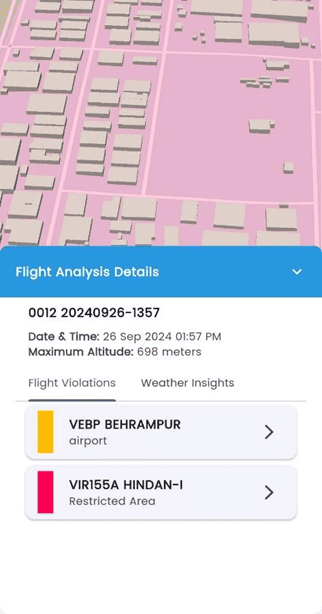
Velocity Software Solutions designed, developed, and deployed a comprehensive web-based application for data collection, monitoring, and tracking of OOSC across all 75 districts of Uttar Pradesh. The solution included data entry modules, a tracking system, an interactive dashboard, reporter modules, a ticketing system, user training, and long-term hosting and maintenance.
Key Features & Deliverables
- Data Entry System for OOSC Mapping: Web-based data entry module with online/offline capability for mapping out-of-school children across all habitations, capturing household, children, and monitoring variables
- OOSC Tracking System: Tracking module to monitor children after enrollment in special training centers, preventing re-dropout through continuous monitoring
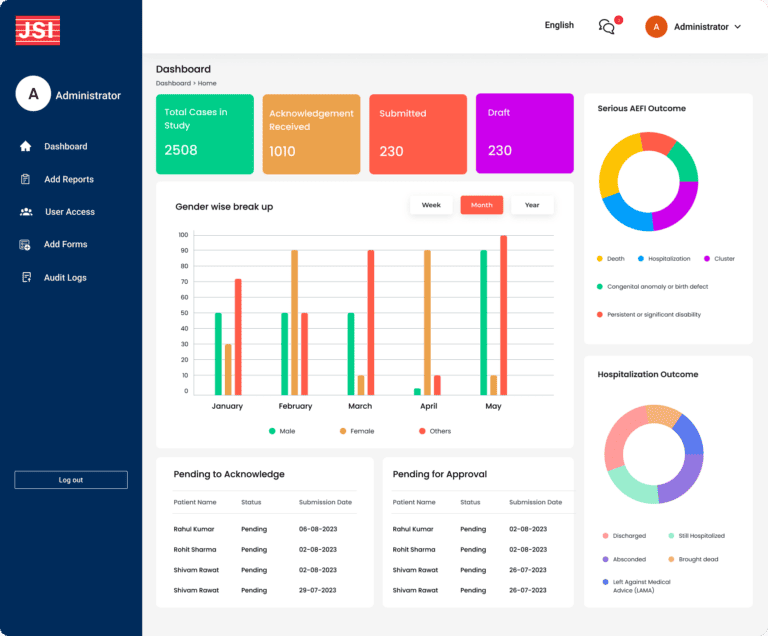
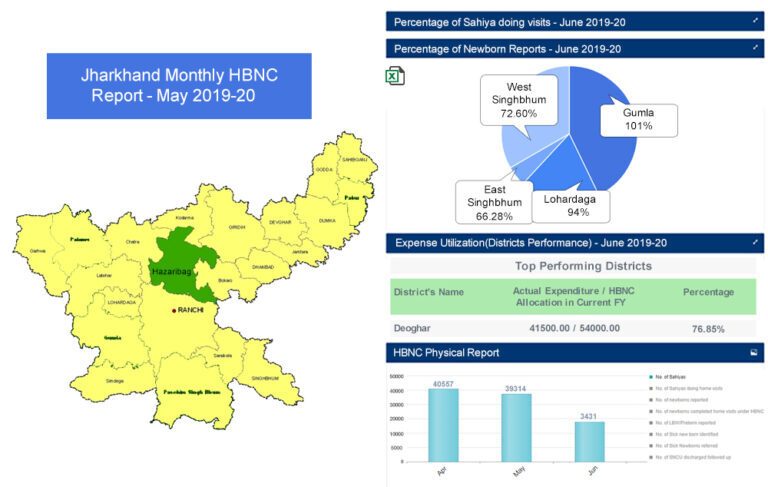
- Dynamic Interactive Dashboard: Comprehensive, interactive dashboard with graphical representations of key indicators, filterable by administrative area (district, block, Nyay Panchayat, Gram Panchayat, habitation, village, ward)
- Reporter Modules: Standard periodic reports and customized report generation capabilities for evidence-based decision making
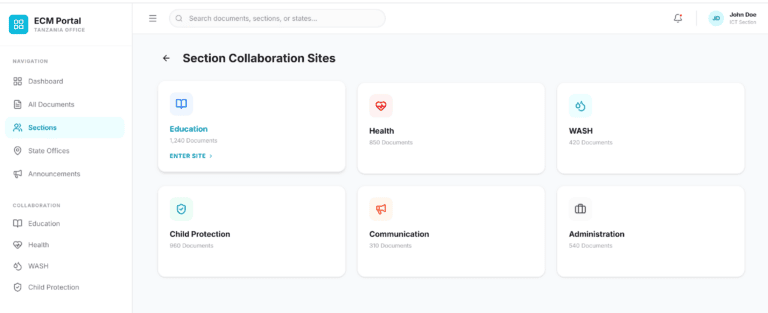
- User Management System: 76 user IDs (75 district-specific + 1 state-level) with role-based access control, user creation, and password management
- Data Verification & Approval: Verification and approval workflows to cross-check data quality and accuracy
- Data Integration: System capable of integrating data from other applications and systems
- Offline Data Sync: Data syncing capability compatible with low-bandwidth internet, enabling data collection from remote areas
- Ticketing System: Technical support system for reporting and resolving user issues
- Multi-Language Support: Hindi language customization for state government users
- Data Export: Download facility for data in MS Excel and PDF formats
- Responsive Design: Size-responsive interface visible across desktop, tablets, mobiles, and other devices
- Server Hosting: Domain purchase, application hosting, and secure data storage for an initial ten-year period
- Security & Backup: Data security measures, periodic backups, and application security protocols
- Capacity Building: Training of master trainers at state-level reviews (twice per year)
- User Manual: Comprehensive documentation for application usage
- Source Code Handover: Complete handover of application and source code to UNICEF and SSA, UP with security certificates
Technology Stack
- Open-source web development frameworks
- Online/offline data synchronization architecture
- RESTful APIs for data integration
- Interactive dashboard and data visualization libraries
- Responsive web design (mobile, tablet, desktop compatible)
- Hindi language localization
- Cloud/server infrastructure with 10-year hosting
- Database management system optimized for large-scale educational datasets
Implementation Approach
Velocity followed a phased, milestone-driven implementation approach:
- Phase 1 – Requirements & Design (Gathering information and discussion with Government partner and UNICEF)
- Prepared programme layout including methodology, technology stack, application design, features, and reporter modules
Pre-populated administrative area data (District, Block, Nyay Panchayat, Gram Panchayat, Schools) provided by UNICEF/Government
Phase 2 – Core Development
- Designed and developed the OOSC data entry system for mapping
- Built the tracking system for monitoring enrolled children
Developed the comprehensive dashboard and reporter modules
Phase 3 – Testing & Deployment
- Testing with dummy data in collaboration with UNICEF and SSA officials
- Server hosting and deployment
User management system with 76 user IDs
Phase 4 – Training & Support Setup
- State-level training and master trainer development
- User manual and video tutorial development
Ticketing system deployment for ongoing support
Phase 5 – Maintenance & Long-Term Support
- Application and database maintenance for the initial two-year contract period
- Long-term web-based data maintenance for eight years (complete elementary schooling cycle)
- Source code handover with security certificates
Team Composition: The project was supervised by Mr. Ritwik Patra, Education Specialist, UNICEF Lucknow, with Velocity providing a full development team including project managers, developers, data analysts, quality assurance specialists, and training coordinators.
Key Outcomes & Impact
- All 75 Districts Covered: Successfully deployed a state-wide OOSC monitoring system reaching every district in India’s most populous state
- 2,18,668 Habitations Mapped: Enabled systematic door-to-door surveys across the most disadvantaged habitations
- Real-Time Monitoring: Interactive dashboard provided state and district officials with real-time visibility into OOSC mapping and tracking progress
- Evidence-Based Planning: Multi-level reporting (district, block, Nyay Panchayat, Gram Panchayat, habitation) enabled targeted interventions for the most excluded children
- Offline-Capable Data Collection: Low-bandwidth compatible design ensured data collection was possible even in the most remote habitations
- Sustainable Infrastructure: 10-year hosting commitment and 8-year maintenance plan ensured long-term sustainability of the platform
- Trained Government Workforce: Master trainers at state level ensured cascading training to district and block-level users
- Data Quality Assurance: Verification and approval workflows maintained high data integrity across the massive dataset
Why Velocity
Velocity Software Solutions was selected through a competitive bidding process for this landmark project due to:
– Education Sector Expertise: Proven track record of developing web-based applications for Government and UN agencies in the education sector
– Large-Scale Deployment Capability: Demonstrated ability to handle state-wide deployments covering 75 districts and 2+ lakh habitations
– Low-Bandwidth Optimization: Technical expertise in building applications that work in remote, low-connectivity areas — critical for reaching India’s most disadvantaged populations
– Government Collaboration Experience: Deep understanding of government workflows, including experience working with NIC and deploying applications on government servers
– Long-Term Partnership Approach: Commitment to 8-year maintenance and 10-year hosting demonstrated long-term reliability
– In-House Technical Resources: Complete internal team including project management, software development, data analysis, mobile/web development, QA, and network administration
– ISO Certified Quality: ISO 9001:2015 and ISO 27001:2013 certifications ensuring quality management and information security
– Capacity Building Track Record: Proven ability to build government capacity for technology adoption and independent maintenance