UNICEF Juvenile Justice Monitoring System
Download MarkDownThe Challenge
The Juvenile Justice (Care and Protection of Children) Act, 2015 is a landmark legislation in India aimed at rehabilitating children in conflict with the law and protecting children in need of care. Effective implementation of this Act is monitored at the highest levels — the Supreme Court of India, through its Committee on Juvenile Justice (SCC-JJ), chaired by Hon’ble Justice Deepak Gupta, oversees compliance across all High Courts in the country.
Despite four rounds of regional consultations across India, data management and monitoring consistently emerged as a critical weakness in the juvenile justice system. Key challenges included:
- Absence of Systematic Data Collection: Most High Courts lacked a mechanism for systematic data collection, collation, and analysis related to juvenile justice indicators.
- No Centralized Monitoring: There was no unified platform for the Supreme Court to monitor progress across all 25+ High Courts and their corresponding districts.
- Sensitive Data Requirements: Juvenile justice data is inherently sensitive — the system needed to track aggregated indicators without capturing individual child-level information to protect children’s identities.
- Complex Indicator Framework: The Supreme Court had defined 17 detailed indicators covering case registration, disposal, pendency, POCSO cases, vacancies in statutory bodies, residential care institutions, and child demographics — each requiring disaggregation by sex, age, social background, and geography.
- Multi-Tier Access Needs: District, state, and national level officials all needed different levels of access and administrative rights.
- Quarterly Reporting Requirement: Data from all High Courts needed to be collected quarterly and presented in actionable dashboard formats.
Velocity’s Solution
Scope of Work
Velocity Software Solutions was engaged to design, develop, and operationalize a comprehensive web-based dashboard monitoring system for the Juvenile Justice System in India, working under the guidance of the Supreme Court Committee on Juvenile Justice and UNICEF India.
Key Features & Deliverables
- Data Entry Module
- Laptop and mobile browser compatible data capture
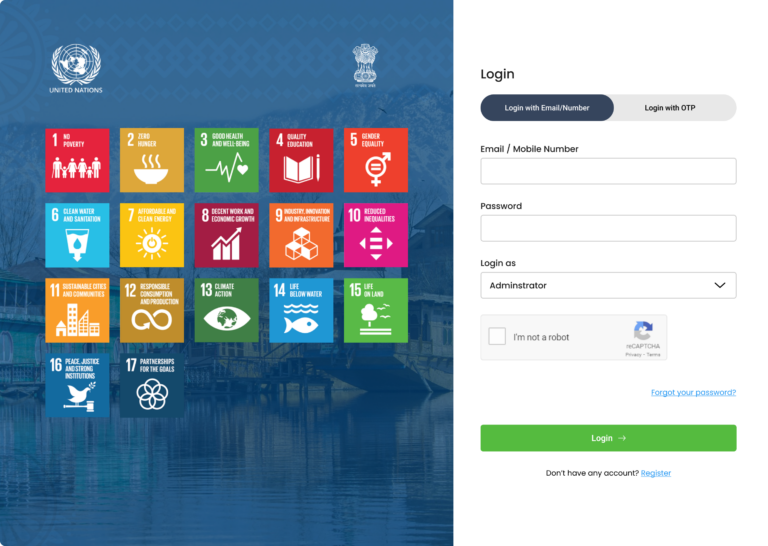
- Tier-based login access for district, state, and national officials
- Role-based administrative rights and functionality restrictions
- Data validation and error feedback mechanisms
- Bulk data upload capabilities
- Dashboard & Visualization
- National-level aggregate dashboard with drill-down to state and district levels
- Trend analysis for key indicators over time
- Spatial/map-based visualization at national, state, and district levels
- Index-based displays and comparative datasets across time periods
- Identification of high-performing areas and areas of concern
- Monitoring & Alert System
- Auto-generated email/SMS alerts for report submission deadlines
- Overdue submission notifications
- Exception reports (e.g., institutions that have not submitted reports by due date)
- Activity audit logging for all user actions
- Reporting Module
- One-two page district/state/national factsheets with pre-defined indicators
- Quarterly reports at national, state, and district levels
- Customized reports by selecting reporting periods and indicators
- Report submission tracking and status monitoring
- Web Portal (CMS)
- Knowledge repository for all Juvenile Justice related content
- Content Management System for uploading JJ Act updates, contact information, and periodic reports
- Customized web portal design for the Juvenile Justice System
- Admin Module
- Create/modify/delete access rights
- Password management (reset/revoke)
- Modify/add indicators and input forms
- Bulk data upload capabilities
Report generation tools
Security & Compliance
- Encrypted data access protocol during data submission and portal access
- Activity audit logging for super admin oversight
- Compliance with Government of India Metadata and Data Standards
- Security and vulnerability audits for government server compliance
Technology Stack
- Web-based application using open industry standards
- Government of India compliant metadata and data standards
- Cloud-based hosting (UNICEF vendor server during development, GOI server post-deployment)
- Mobile-responsive web browsers compatibility
- SMS/Email integration for alerts
- GIS mapping for spatial visualization
- Open standards for architecture, interfaces, and fonts to ensure interoperability
Implementation Approach
The project followed a structured four-phase methodology:
Phase 1: Inception
- Reviewed and finalized indicator list in consultation with the Supreme Court and UNICEF
- Agreed on user-interface and data visualization approaches
- Finalized reporting templates, menu structures, and user roles
- Produced comprehensive System Requirements Specification (SRS) document
- Business analyst travel to 2-3 states for requirements gathering
Phase 2: Design and Development
- Developed the data entry module with tier-based access control
- Built the dashboard with national, state, and district level visualization
- Created map-based spatial visualization features
- Implemented the reporting module with factsheets, quarterly reports, and custom reports
- Built the CMS-based web portal and admin module
- Integrated email/SMS alert systems
Phase 3: Deployment
- Set up cloud-based servers with 99% uptime guarantee
- Complete data backup and security features
- Dashboard for hosting management and monitoring analytics
- User Acceptance Testing (UAT) with GOI and UNICEF
- Bug fixes and refinements based on UAT feedback
Phase 4: Post-Deployment
- Developed e-modules and training manuals with step-by-step descriptions and screenshots
- Conducted Train-the-Trainer (ToT) sessions in Delhi for key functionaries
- Knowledge transfer on system customization, server management, and dashboard code
- Complete handover of source code and IP rights to UNICEF and Government of India
- Ongoing support, troubleshooting, and online/email/telephonic support for field users
- Security and vulnerability audits by GOI empaneled agency for government server migration
The project team was based in the NCR region to enable close coordination with the Supreme Court and UNICEF India at Delhi, supervised by the Child Protection Specialist (M&E) at UNICEF.
Key Outcomes & Impact
- Nationwide Coverage: Deployed a unified monitoring system covering all High Courts across India, enabling the Supreme Court Committee on Juvenile Justice to monitor implementation at an unprecedented scale.
- Evidence-Based Monitoring: Transformed juvenile justice monitoring from ad-hoc manual processes to systematic, data-driven quarterly tracking of 17 key indicators.
- Spatial Intelligence: Map-based visualization enabled identification of geographic disparities, allowing targeted interventions in underperforming districts and states.
- Timely Reporting: Automated alerts and exception reports ensured accountability and timely data submission from all jurisdictions.
- Child Safety: The system was designed with child protection at its core — capturing only aggregated data to protect the identity of vulnerable children while still enabling effective monitoring.
- Sustainability: Complete knowledge transfer, training modules, and government server migration ensured long-term sustainability beyond the project period.
- Stakeholder Empowerment: District, state, and national officials gained tools for evidence-based decision making and proactive intervention.
Why Velocity
Velocity Software Solutions was the right choice for this high-profile, sensitive engagement due to:
- Judiciary-Grade Security: Demonstrated capability to build systems handling sensitive data with the security, confidentiality, and access controls required for judicial monitoring.
- Government Platform Expertise: Proven experience with Government of India standards, NIC compliance requirements, and government server deployment processes.
- Complex Stakeholder Management: Ability to work effectively with the Supreme Court of India, High Courts across multiple states, and UNICEF — navigating complex institutional hierarchies and requirements.
- Dashboard & Analytics Expertise: Strong track record in building data visualization dashboards with GIS mapping, trend analysis, and multi-level drill-down capabilities.
- Scalable Architecture: Technical capability to design systems that serve the entire Indian judiciary — from district courts to the Supreme Court — with appropriate access controls and performance.
- UNICEF Partnership: Established relationship with UNICEF India, understanding the organization’s technical standards, IP requirements, and operational processes.