UNICEF Jharkhand – Home Based Young Child Care (HBYC) MIS Enhancement
Download MarkDownThe Challenge
Reducing neonatal mortality to single digits is a key Sustainable Development Goal (SDG). In Jharkhand, 38% of deliveries were conducted at home, and many mothers returned home within hours of facility deliveries. This meant home-based newborn care was essential for averting neonatal deaths through early detection of danger signs and appropriate care for preterm and low birth weight newborns.
In 2017, UNICEF and the Government of Jharkhand developed the Sahiya Sangi Portal — an online MIS for strengthening Home Based Newborn Care (HBNC). The portal had achieved significant results: 1.5 times more sick newborns referred to Special Newborn Care Units (SNCUs) and 3.8 times increase in follow-ups of low birth weight children by Sahiyas (community health workers).
However, the Government of India converted the HBNC programme to Home Based Young Child Care (HBYC) with expanded objectives to reduce malnutrition and infant mortality. The existing MIS needed significant expansion to accommodate:
- HBYC Component Missing: The portal did not include reporting for the new HBYC programme guidelines
- Maternal Death Reporting Gap: No module for reporting maternal deaths
- Child Death Beyond 42 Days: No tracking of child deaths beyond the initial 42-day period
- Urban Area Exclusion: The system did not cover urban areas
- Technical Support Gap: No dedicated technical cell within government for portal support
- SMS Reminder System: Need for automated SMS reminders to parents and health workers
Velocity’s Solution
Scope of Work
Velocity expanded the existing Sahiya Sangi Portal (HBNC MIS) to incorporate HBYC reporting, maternal death tracking, extended child death monitoring, and urban area coverage, while establishing a technical support cell within the government system.
Key Features & Deliverables
HBYC Module Integration: Expanded the HBNC MIS to include comprehensive Home Based Young Child Care reporting aligned with Government of India guidelines
Maternal Death Reporting: New module for tracking and reporting maternal deaths statewide
Extended Child Death Monitoring: Added capability to report and track child deaths beyond 42 days
Urban Area Reporting: Expanded the system to include reporting from urban health facilities and communities
Technical Support Cell: Established a competent technical person within the Community Mobilization Cell of Government of Jharkhand for:
- Technical support to state, district, and block-level users
- State-level data management and analysis
- Understanding of HBNC operational guidelines
High-Risk Newborn Monitoring: Monthly reports on high-risk newborns including:
- Low Birth Weight (LBW) babies
- SNCU discharged babies
- Home deliveries
- Female babies
- Feedback to implementers and service providers
- SMS Reminder System: Automated reminder SMS to:
- Parents of newborn babies discharged from SNCUs
- Health workers as per follow-up protocol
- Block-Level Data Entry: Technical guidance and regular follow-up for facilitating block-level data entry by State and Block Training Teams (STT/BTT)
- Final Report: Comprehensive end-of-contract report submitted to both UNICEF and government
Technology Stack
- Existing Sahiya Sangi Portal platform (web-based)
- Database management system
- SMS gateway integration
- Dashboard and reporting engine
- Government server infrastructure
- Mobile-compatible responsive design
Implementation Approach
The project was delivered through a milestone-based approach:
- Technical Cell Establishment (10%): Set up a competent technical person within the government’s Community Mobilization Cell for ongoing portal support.
- Maternal & Child Death Reporting (10%): Expanded MIS to include maternal death reporting and child deaths beyond 42 days.
- HBYC Module Development (20%): Integrated Home Based Young Child Care reporting into the existing HBNC MIS.
- Urban Reporting Module (10%): Extended the system to cover urban area reporting.
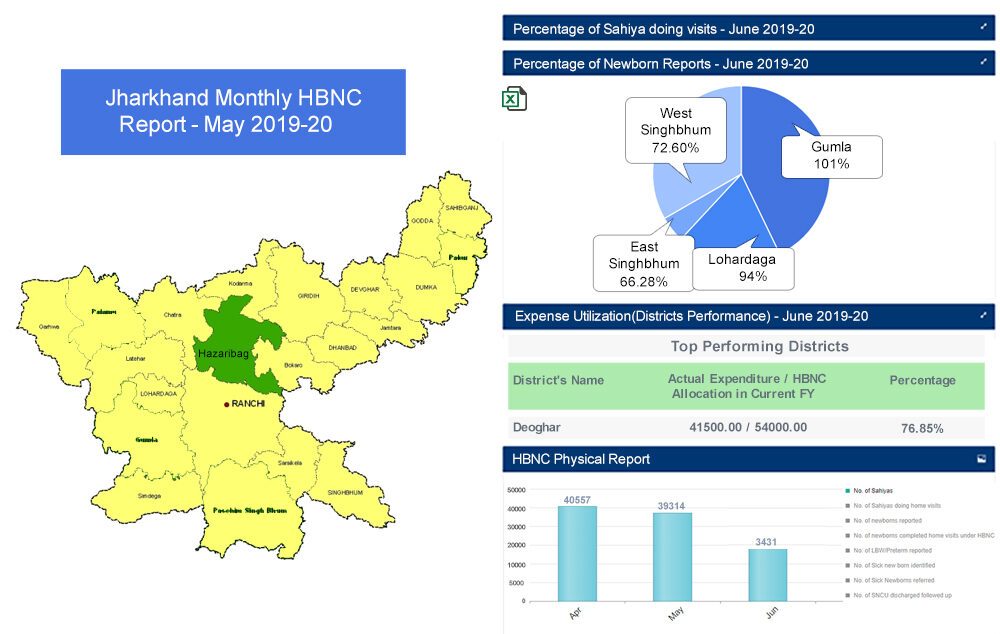
- Monthly High-Risk Reporting (10%): Established monthly report generation on HBNC visits and high-risk newborn status for government action.
- SMS Reminder Implementation (30%): Deployed automated SMS reminder system for parents and health workers per follow-up protocol.
- Handover & Handholding (10%): Final report preparation, government handover, and three months of handholding support.
The project was supervised by UNICEF’s Health Specialist with quarterly performance reviews and deliverable-based evaluation.
Key Outcomes & Impact
- Comprehensive Newborn Care MIS: Expanded the platform from HBNC-only to a comprehensive system covering the full HBYC programme, maternal health, and urban populations.
- Statewide Coverage: Extended monitoring from rural-only to include urban areas, achieving complete statewide coverage of newborn and maternal health monitoring.
- Government Capacity Building: The technical cell embedded within the government system ensured sustained operation and support beyond UNICEF’s direct involvement.
- Improved Follow-Up Rates: Automated SMS reminders to parents and health workers supported continued improvement in follow-up rates for high-risk newborns, building on the 3.8x improvement already achieved.
- Data-Driven Interventions: Monthly reports on high-risk newborns enabled government officials to target interventions to the most vulnerable populations.
- Reduced Neonatal Mortality Risk: Comprehensive monitoring of SNCU discharges, LBW babies, and home deliveries helped ensure no high-risk newborn fell through the care continuum.
Why Velocity
Velocity was engaged under UNICEF’s existing LTA based on:
- Sahiya Sangi Portal Developer: As the original developer of the Sahiya Sangi Portal (HBNC MIS), Velocity had complete codebase knowledge and technical ownership of the platform.
- Government Health System Experience: Proven track record of developing and deploying MIS solutions on government infrastructure in Jharkhand.
- Health IT Domain Knowledge: Deep understanding of HBNC/HBYC programme guidelines, SNCU workflows, and maternal-newborn health reporting requirements.
- SMS Integration Experience: Demonstrated capability in integrating SMS gateway services for automated health reminders.
- Capacity Building Expertise: Ability to establish and support technical cells within government departments for long-term sustainability.