PATH – Integrated Health Dashboard for Maharashtra
Download MarkDownThe Challenge
PATH is supporting the Government of Maharashtra in the comprehensive digitization of health service delivery at the primary level of care, with a focus on Reproductive, Maternal, Neonatal, and Child Health (RMNCH). The project, implemented across three districts of Maharashtra, aims to demonstrate end-to-end digitization at the primary health care level, leveraging the WHO Digital Health Interventions (DHI) Framework.
The critical challenge was the absence of an integrated platform capable of consolidating health data from multiple disparate government systems into a unified, actionable dashboard. Key challenges included:
- Fragmented Data Ecosystem: Health data was scattered across approximately 10 or more government portals and systems including HMIS, NCD, RCH, IHIP, Nikshay, DVDMS, eSuchi, and MJPJAY, each with different data formats, reporting frequencies, and access mechanisms.
- No Standardized Data Model: Different systems used different terminologies, coding standards, and data structures, making cross-system analysis virtually impossible.
- Limited Decision-Support: Policymakers and program heads lacked a unified view of health indicators across programs, hindering evidence-based planning, resource allocation, and program oversight.
- Diverse Data Ingestion Requirements: Some systems had API capabilities while others relied on manual data export, bulk uploads, or had no digital footprint at all, requiring a hybrid data acquisition strategy.
- Multi-Level Hierarchical Reporting: Reporting needs spanned multiple administrative levels — state, district, block, and facility — each requiring different data aggregation, visualization, and access controls.
- Sustainability and Government Transition: The solution needed to be designed for eventual transition to the Government of Maharashtra for long-term sustainability.
Velocity’s Solution
Scope of Work
Velocity Software Solutions was engaged to design, develop, and maintain a comprehensive Integrated Health Dashboard with a modular, layered framework architecture. The platform integrates data from multiple government health information systems and provides analytical, visualization, and decision-support capabilities for state and district health officials.
Key Features & Deliverables
- Health Information Exchange (HIE) Layer:
- API-based integration with government health systems (HMIS, NCD, RCH, IHIP, Nikshay, DVDMS, eSuchi, MJPJAY, and others)
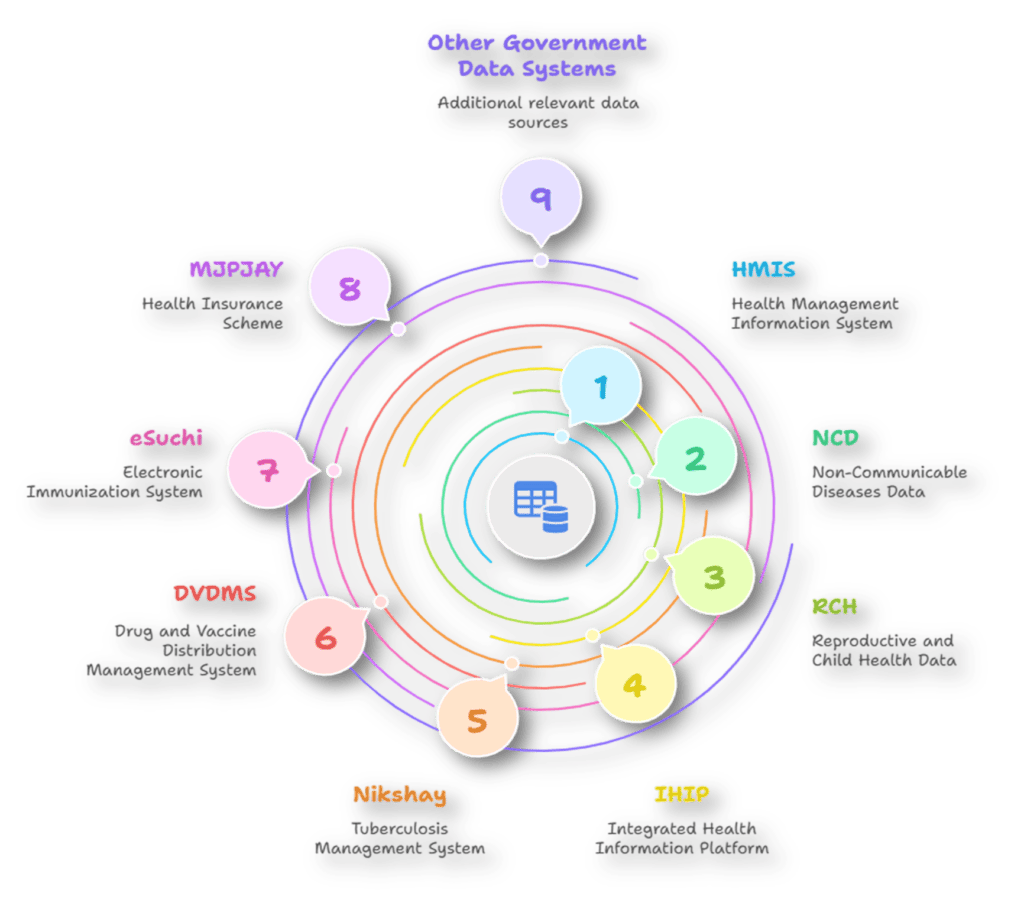
- Support for RESTful and SOAP APIs for real-time and batch data exchange
- Robust data authentication, encryption, and access control mechanisms
- Adherence to HL7 FHIR and NDHM specifications where applicable
- Scheduled data fetching aligned with source system reporting cycles (monthly, weekly, daily)
- Data Standardization & Harmonization Layer:
- ETL/ELT processes for data extraction, transformation, and loading
- Schema mapping and normalization to a unified data model
- Terminology standardization using ICD-10, SNOMED CT code sets
- Data validation, cleansing, deduplication, and quality assurance
- Metadata tagging and lineage tracking for governance and transparency
- Data aggregation from line-listed data into standardized, interoperable formats
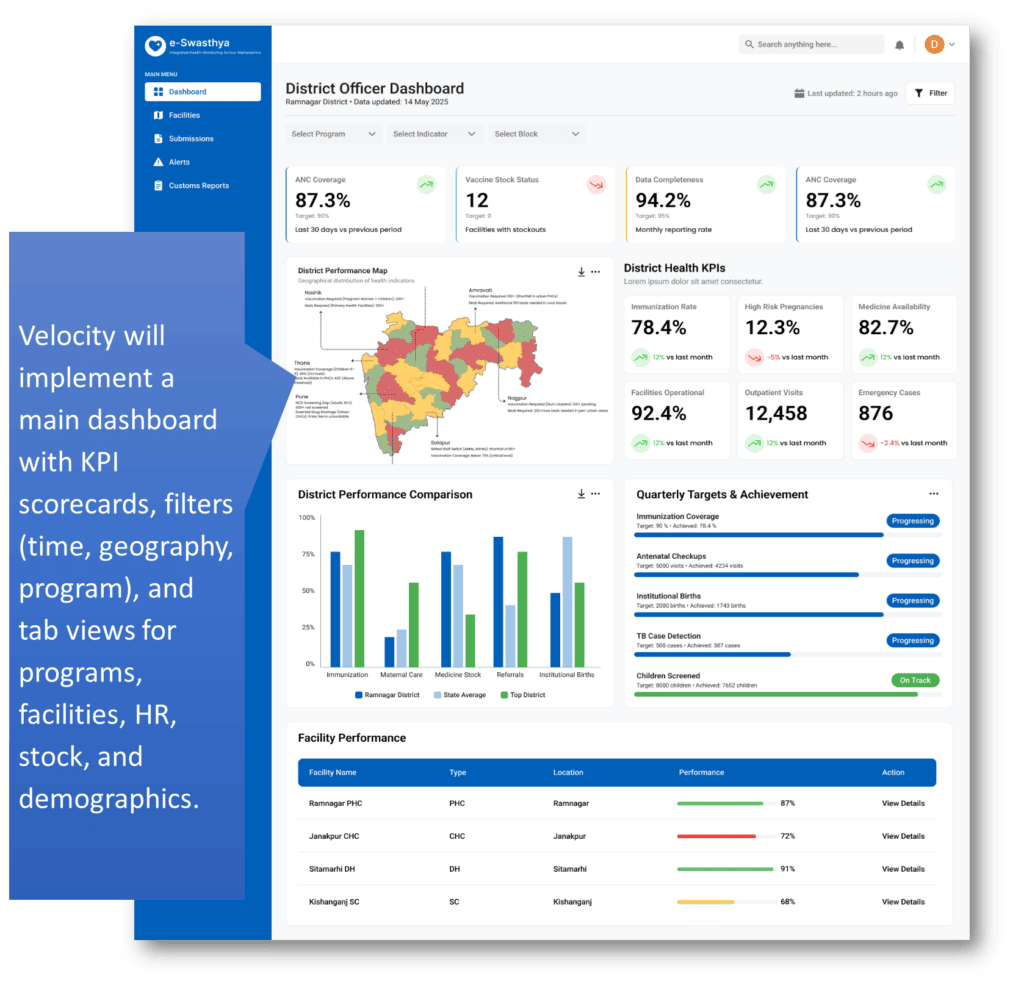
- Analytical & Visualization Layer:
- Interactive charts, graphs, and data visualizations (line charts, bar graphs, pie charts, stacked charts)
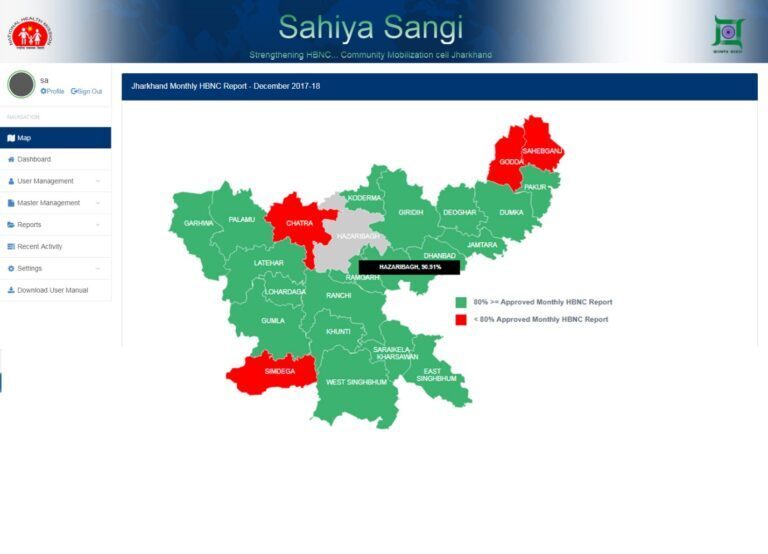
- GIS-based geospatial mapping with heatmaps, choropleth maps, and drill-down from state to district to facility level
- Advanced querying with filters (age, gender, geography, time period)
- Multi-level data aggregation (block, district, state)
- Integration with industry-grade BI tools (Power BI, Tableau, or open-source alternatives)
- Custom report builder with export capabilities (Excel, PDF, CSV, PNG)
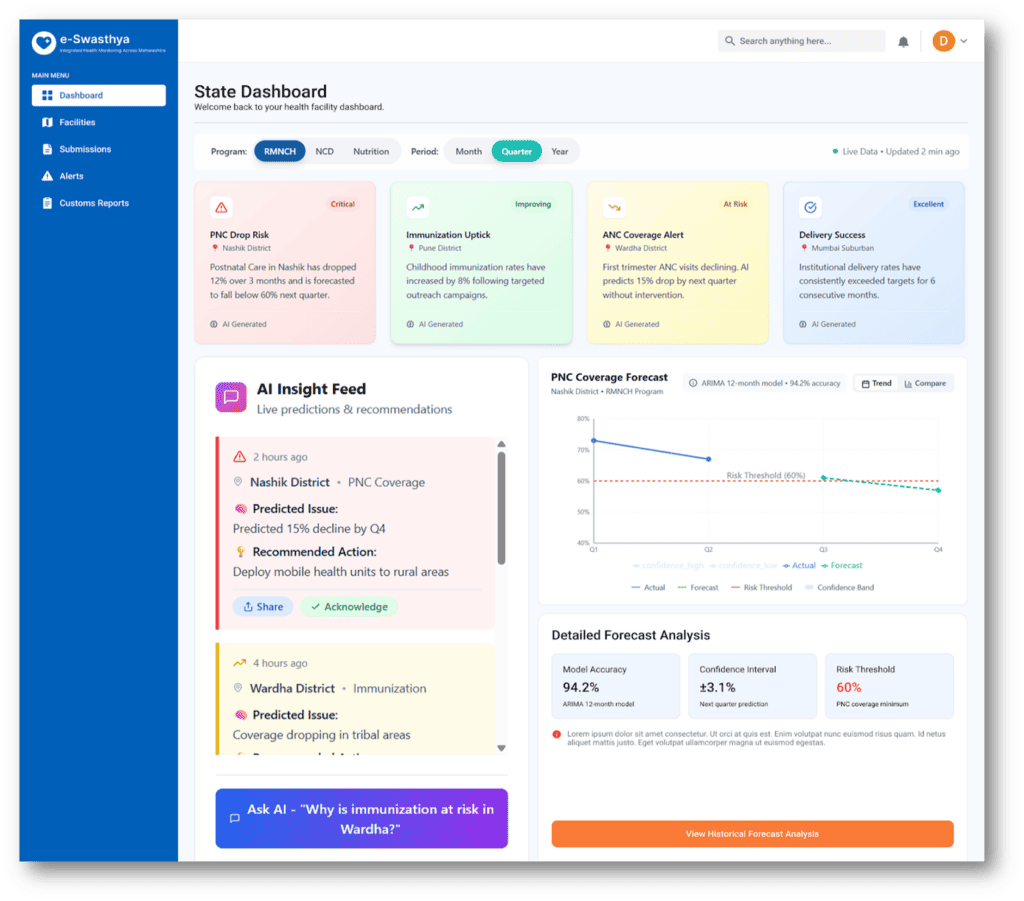
- Decision Support Layer:
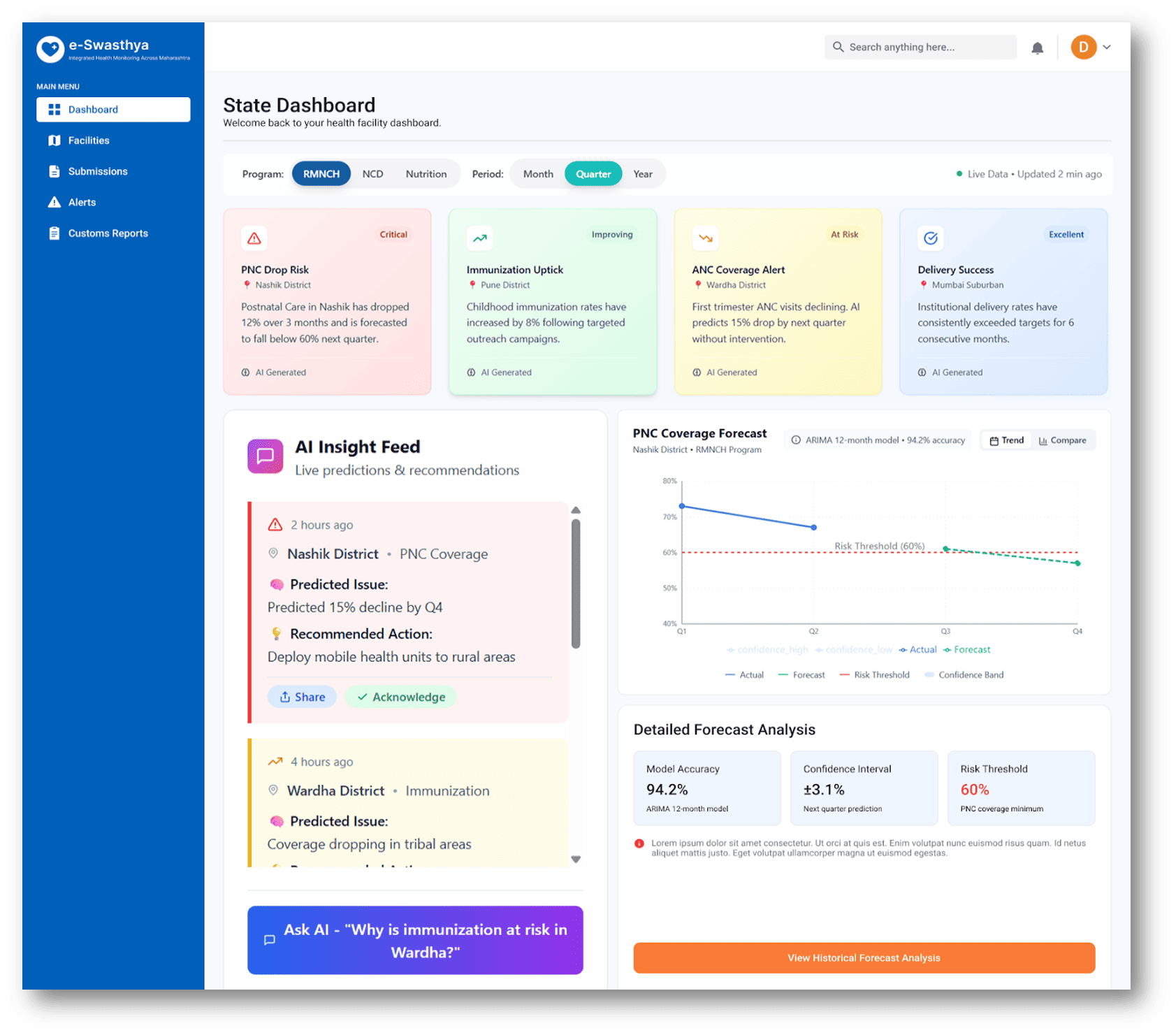
- Automated performance summaries and trend analysis dashboards
- Ranking and benchmarking of districts and facilities based on KPIs
- Anomaly detection and automated threshold-based alerts
- Predictive modeling for disease forecasting, resource allocation, and workload estimation
- Executive summary generation for policy and administrative decision-making
- Admin Module and User Management:
- Role-Based Access Control (RBAC) with roles including System Administrator, Program Administrators, State/District/Facility-Level Officers, and Data Entry Operators
- Geographic access control based on India’s LGD (Local Government Directory) codes
- User lifecycle management with bulk import via Excel/CSV
- Comprehensive audit trails and activity logs
- Notification management via email, SMS, and WhatsApp
- Hybrid Data Acquisition:
- API-based integration for systems with interoperability readiness
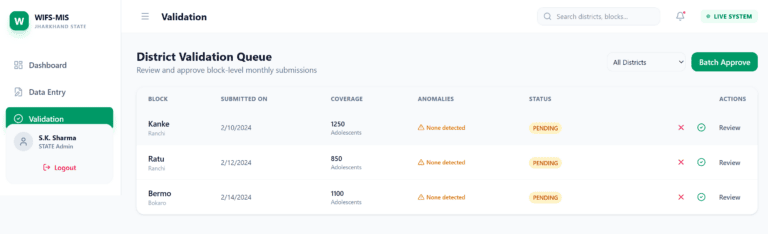
- Bulk data upload (Excel/CSV) with template mapping, validation, and error logging
- Manual data entry with web-based forms, validation rules, and audit trails
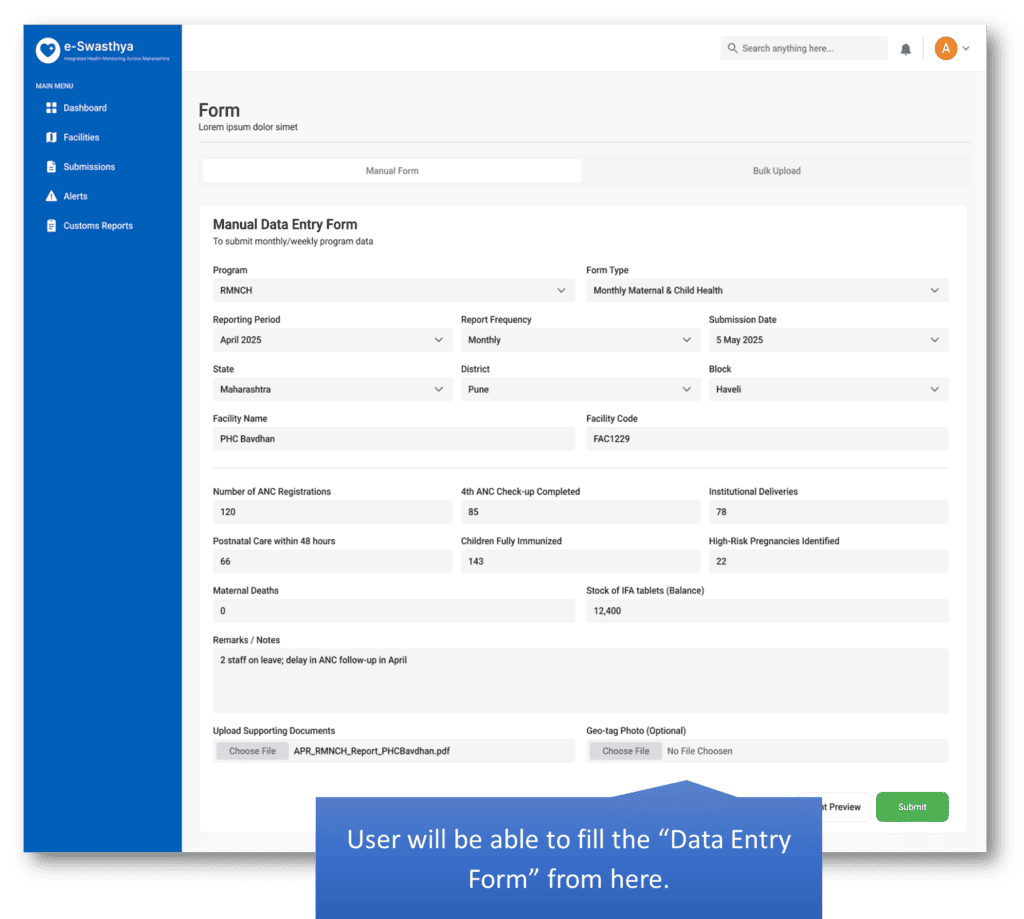
Deployment of data entry operators for data preparation and standardization
Mobile and Web Platforms: Cross-platform access via web and mobile (Android + iOS) with responsive, multilingual interfaces.
Technology Stack
- Architecture: Microservices Architecture with layered framework
- Methodology: Agile Development
- Standards: HL7 FHIR, NDHM specifications, ICD-10, SNOMED CT
- APIs: RESTful and SOAP APIs with Swagger/OpenAPI documentation
- BI Tools: Power BI / Tableau / Open-source alternatives
- GIS: Geospatial mapping with LGD code integration
- Security: CERT-In empaneled agency audit, data encryption, government compliance standards
- Platforms: Web + Mobile (Android + iOS)
- Open-Source Technologies: Leveraged where feasible for cost efficiency and flexibility
Implementation Approach
The project follows a phased delivery model over 24 months:
Phase 1: Foundation (T+0 to T+8 months)
- Requirement Study (T+20 days): Functional Requirement Specification (FRS) and Software Requirement Specification (SRS) development through collaborative stakeholder engagement.
- Design and Development (T+6 months): Design and development of the open-source digital platform including the HIE Layer, Data Standardization Layer, and Analytical & Visualization Layer. Web + Mobile (Android + iOS) solution goes LIVE.
- Capacity Building (T+8 months): Training master trainers and providing comprehensive training materials including user manuals, video tutorials, and FAQs.
Phase 2: Advanced Analytics (T+8 to T+10 months)
- Decision Support Layer (T+8 months): Development of the Decision-Making layer with predictive modeling, anomaly detection, and automated reporting on top of the analytical layer.
- Capacity Building (T+10 months): Additional training on advanced analytics and decision-support features.
Phase 3: Warranty and Transition (T+10 to T+24 months)
- Warranty Period (T+24 months): Full support in running the application including maintenance, change management support, and ongoing training.
- Documentation: Comprehensive technical documentation, user manuals, SOPs, and maintenance guides.
- Knowledge Transfer: Formal handover to the Government of Maharashtra or designated agency, including source code, deployment scripts, architecture diagrams, and operational procedures.
Phase 4 (Optional): Annual Maintenance
Post-handover maintenance support, subject to PATH/Government discretion.
Key Outcomes & Impact
- Unified Health Data Platform: Successfully consolidated data from 10+ government health systems into a single, coherent dashboard, providing Maharashtra’s health officials with an unprecedented integrated view of health service delivery.
- Data-Driven Decision Making: State and district officials gained access to real-time analytics, trend analysis, and predictive insights, enabling evidence-based program planning and resource allocation across RMNCH services.
- Standardized Health Data: Harmonization of data across disparate systems using international coding standards (ICD-10, SNOMED CT) established a foundation for interoperable health information exchange.
- Improved Program Monitoring: GIS-based visualizations and drill-down capabilities enabled officials to identify geographical gaps in health service delivery and target interventions where they were most needed.
- Scalable Model: The modular, layered architecture created a replicable model for comprehensive primary health care digitization that can be extended to other districts and states across India.
- Government Ownership: Structured knowledge transfer and capacity building ensured the Government of Maharashtra could independently operate and evolve the platform for long-term sustainability.
Why Velocity
Velocity Software Solutions was the right choice for this complex, multi-stakeholder engagement because of:
- Government Digital Transformation Experience: Proven track record in developing enterprise-scale digital platforms for government health programs with complex interoperability requirements.
- Health Information Systems Expertise: Deep understanding of health data standards (HL7 FHIR, NDHM, ICD-10, SNOMED CT), government health portals (HMIS, NCD, RCH), and the nuances of integrating heterogeneous health information systems.
- Data Engineering and Analytics Capabilities: Strong competency in ETL/ELT processes, data standardization, GIS integration, and BI tool implementation for large-scale data visualization and analysis.
- Microservices Architecture Proficiency: Extensive experience in designing scalable, modular platforms using microservices architecture, ensuring the dashboard could grow with Maharashtra’s evolving digital health landscape.
- Non-Profit and Government Partnership Model: Understanding of the collaborative dynamics between international NGOs (PATH) and state government stakeholders, including compliance requirements, procurement processes, and transition planning.
- Comprehensive Delivery Approach: End-to-end capabilities spanning requirements gathering, development, testing (including CERT-In security audit support), capacity building, and long-term knowledge transfer.