Case Study: Out-of-School Children Monitoring Application
Download MarkDownThe Challenge
Bihar has one of the highest populations of out-of-school children in India, with significant numbers concentrated in rural and hard-to-reach habitations. The existing paper-based tracking mechanisms were ineffective at scale, making it nearly impossible to:
- Map and identify out-of-school children across 28,000+ habitations in real time
- Track the reintegration journey of each child from identification through enrollment and retention
- Monitor field-level activities of community mobilizers and education functionaries working in remote areas with limited connectivity
- Generate actionable reports for district and state-level decision-makers to allocate resources effectively
- Ensure data integrity across multiple administrative levels spanning 38 districts and 534 blocks
The Government of Bihar and UNICEF needed a robust, scalable digital platform that could function in low-connectivity environments while providing a comprehensive dashboard for monitoring and decision-making.
Velocity’s Solution
Scope of Work
Velocity Software Solutions developed an integrated web-based application and Android mobile app for end-to-end monitoring of out-of-school children in Bihar. The solution encompassed:
- Design, development, testing, and deployment of the web application
- Design, development, and deployment of the Android mobile application with offline capabilities
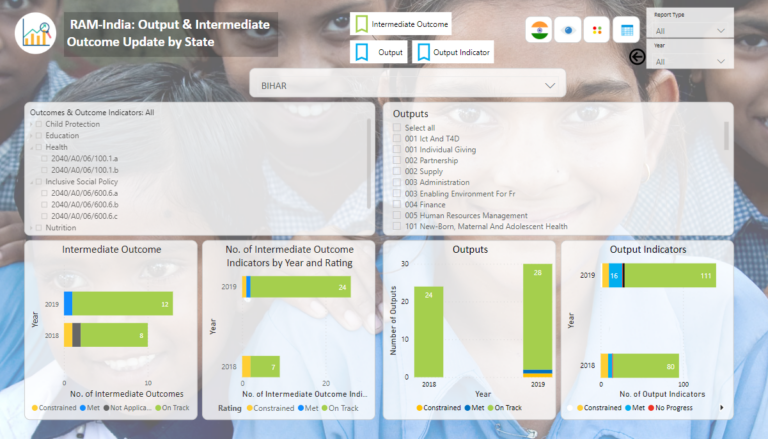
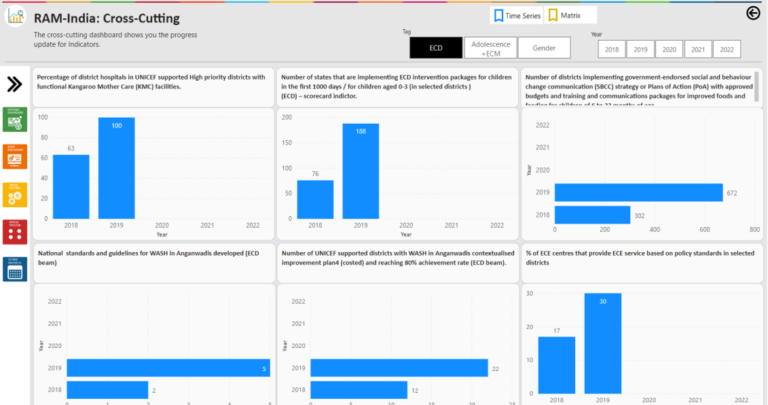
- Dashboard with graphical and map-based reporting
- User management and role-based access control system
- Integrated ticketing/helpdesk system for user support
- Comprehensive training and capacity building for field functionaries
- Ongoing operations and maintenance support
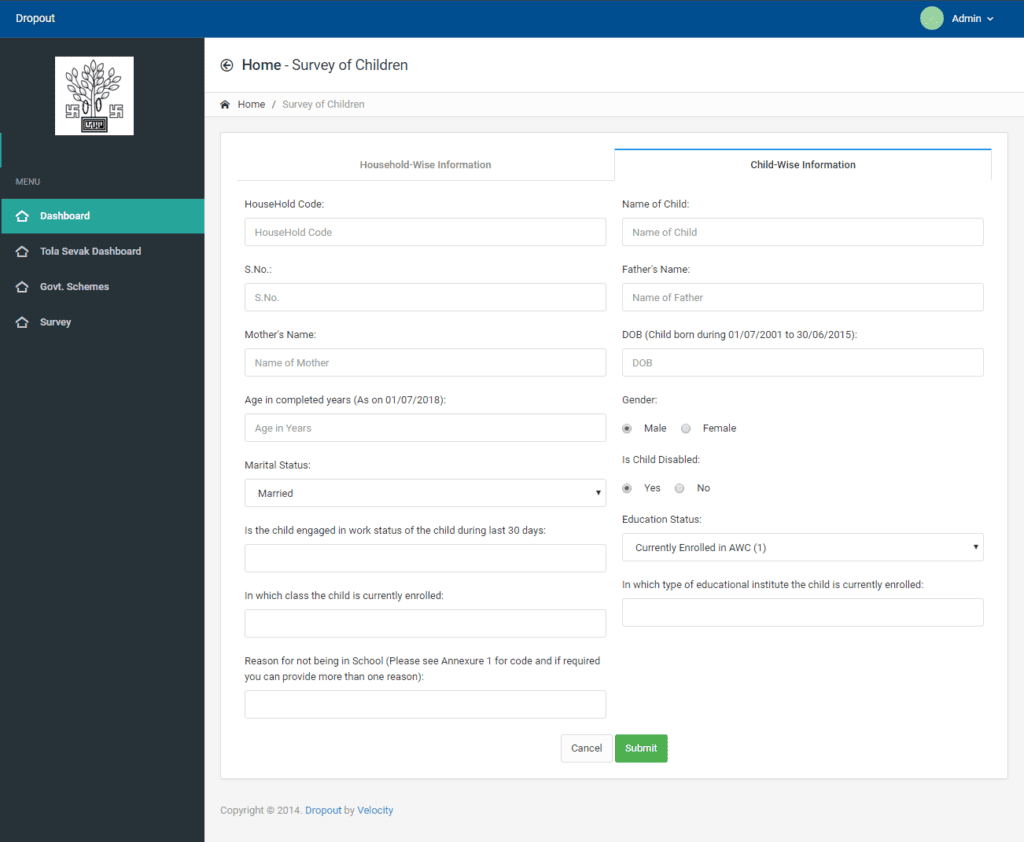
Key Features & Deliverables
Web Application:
– Multi-level Dashboard: Graphical reports with state, district, block, and habitation-level drill-down capabilities, featuring charts, graphs, and GIS-based map views
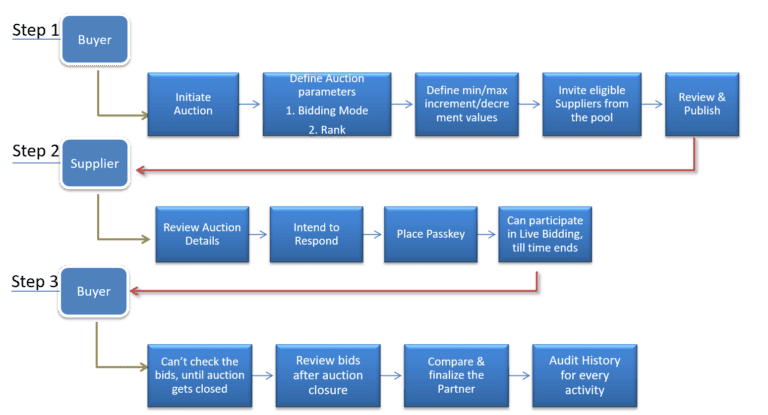
- Child Tracking Module: End-to-end tracking from identification to enrollment, with status updates at each stage of reintegration
Habitation Mapping: Comprehensive mapping of all 28,000+ habitations with demographic and education indicators
User Management System: Role-based access for administrators, district coordinators, block-level officers, and field mobilizers
Report Generation: Automated and customizable reports for state and district-level stakeholders
Ticketing System: Built-in support mechanism for field users to raise and track issues
- Data Import/Export: Bulk data upload capabilities and export in multiple formats
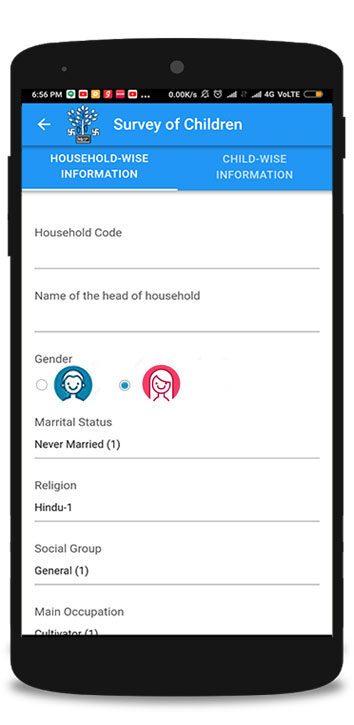
Android Mobile Application:
– Offline Data Collection: Full offline functionality allowing field workers to collect data in areas with no internet connectivity
– Smart Data Sync: Automatic synchronization of locally stored data when connectivity is restored
- GPS Integration: Location-tagged data collection for verification and mapping
- Photo Upload: Ability to capture and upload photographs as part of the verification process
- User-friendly Interface: Simple, intuitive design in Hindi language for ease of use by field-level functionaries
- Low Bandwidth Optimization: Designed to work efficiently on 2G/3G networks
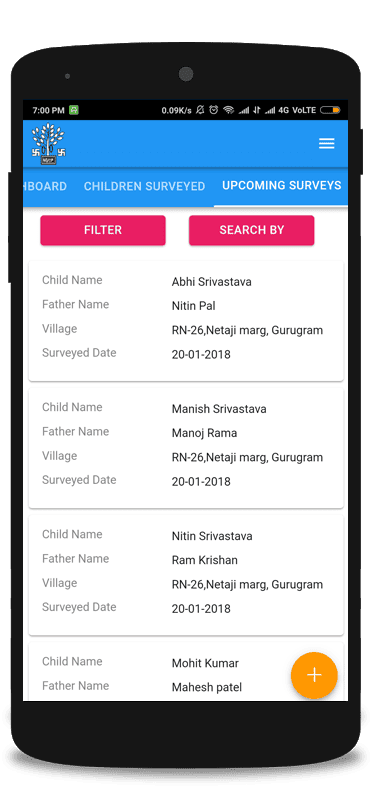
Accessibility & Compliance:
– Open source technology stack ensuring no vendor lock-in
– Responsive web design accessible across devices (desktop, tablet, mobile)
– Hindi language support throughout the application
– Compliance with government data security standards
– Hosting on government-approved infrastructure
Technology Stack
- Frontend: HTML5, CSS3, JavaScript, Responsive Web Framework
- Backend: Open Source Server-side Framework
- Database: MySQL / PostgreSQL
- Mobile: Android (Java/Kotlin) with SQLite for offline storage
- Mapping: GIS integration for map-based visualizations
- Server: Government-approved cloud / NIC infrastructure
- Security: SSL encryption, role-based access control, data encryption at rest
Implementation Approach
Velocity adopted an agile, phased implementation methodology:
Requirement Analysis & Design (Months 1-2): Deep-dive sessions with UNICEF and Government of Bihar stakeholders to finalize functional requirements, wireframes, and system architecture. Extensive field visits to understand ground-level challenges and connectivity constraints.
Development Phase 1 – Core Platform (Months 3-6): Built the core web application with dashboard, user management, and habitation mapping modules. Developed the Android app with offline data collection capabilities.
Development Phase 2 – Advanced Features (Months 7-9): Integrated the child tracking workflow, ticketing system, advanced reporting, and GIS-based visualizations. Implemented smart data sync for the mobile app.
User Acceptance Testing & Pilot (Months 10-12): Rigorous UAT with UNICEF and government stakeholders. Pilot deployment in select districts to validate the solution under real-world conditions. Iterative refinements based on field feedback.
Statewide Rollout & Training (Months 13-15): Phased rollout across all 38 districts. Conducted training sessions for district coordinators, block officers, and field mobilizers. Deployed the helpdesk and ticketing system.
Stabilization & Handover (Month 16): Post-deployment monitoring, bug fixes, performance optimization, and knowledge transfer to UNICEF and government technical teams.
Key Outcomes & Impact
- Comprehensive Coverage: Successfully deployed across all 38 districts of Bihar, covering 534 blocks and approximately 28,000 habitations
- Real-time Visibility: Enabled state and district officials to monitor OOSC identification and reintegration progress in real time through intuitive dashboards
- Offline-First Design: Ensured uninterrupted data collection in remote, low-connectivity areas through robust offline capabilities
- Scalable Architecture: Built to handle data for millions of children across the state, with the ability to scale to additional states
- Improved Decision-Making: Graphical and map-based reports empowered administrators to identify high-burden areas and allocate resources strategically
- Field Worker Empowerment: Hindi-language mobile app with simple interface enabled frontline workers to digitize data collection efficiently
- Data-Driven Reintegration: Systematic tracking of each child’s journey enabled targeted interventions and improved reintegration outcomes
- Open Source Compliance: Delivered on open source technologies, ensuring long-term sustainability and government ownership
Why Velocity?
Velocity Software Solutions was selected for this critical UNICEF initiative based on our:
- Deep expertise in building large-scale government technology solutions with multi-level administrative hierarchies
- Proven track record in mobile applications with offline-first architecture for low-connectivity environments
- Strong understanding of India’s education sector and the unique challenges of field-level data collection
- Experience with GIS-based dashboards and real-time monitoring systems for development sector organizations
- Commitment to open source technologies and government hosting compliance
- Robust project management capabilities for managing statewide rollouts with extensive training and capacity building
Velocity Software Solutions has been a trusted technology partner for UNICEF and other UN agencies, consistently delivering scalable, impactful digital solutions that drive measurable outcomes for children and communities across India.