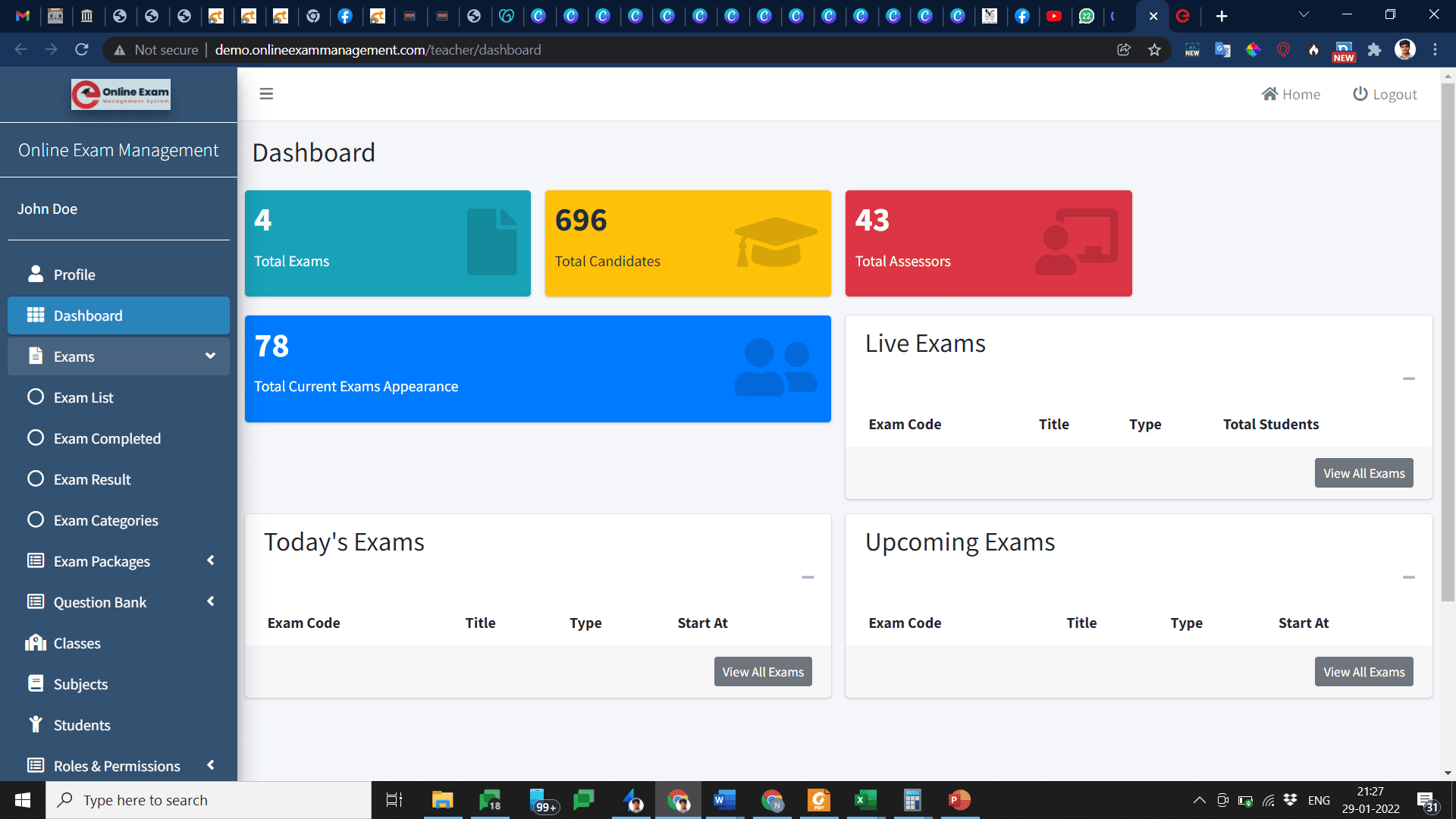
Case Study: Digital Test Administration Platform for Teacher Needs Assessment
Download MarkDownThe Challenge
Conducting a competency assessment for 120,000 teachers across a geographically diverse state like Jharkhand presented formidable challenges:
- Massive Scale: Simultaneously administering tests to 120,000 teachers across 24 districts, many in remote and tribal areas with limited infrastructure
- Multiple Test Versions: Managing 63 distinct test versions across 7 subject areas (Hindi, English, Mathematics, Science, Social Science, Sanskrit, and Urdu), each with different question sets and evaluation criteria
- Diverse Question Types: Supporting multiple question formats including multiple-choice questions (MCQ), constructed response items, and classroom scenario-based assessments
- Mobile-first Requirement: Most teachers had access to smartphones but not computers, requiring a mobile phone-based testing solution
- Language Requirements: The platform needed to support Hindi as the primary language, with content in Urdu and Sanskrit for respective subject tests
- Connectivity Constraints: Many assessment centers in rural Jharkhand had unreliable internet connectivity, necessitating robust offline capabilities
- Anti-cheating Measures: Ensuring test integrity across thousands of simultaneous test sessions required sophisticated randomization and security features
- Real-time Monitoring: Education department officials needed real-time dashboards to monitor test completion, participation rates, and preliminary results across all districts
Velocity’s Solution
Scope of Work
Velocity Software Solutions designed, developed, and deployed an end-to-end Digital Test Administration Platform comprising:
- Mobile-responsive web application for test delivery on smartphones
- Test management and content authoring system
- Real-time monitoring dashboard for administrators
- Automated scoring engine for objective questions
- Helpdesk and support system for test day operations
- Post-assessment analytics and reporting
Key Features & Deliverables
Test Delivery Platform:
– Mobile-optimized Interface: Purpose-built for smartphone screens, with touch-friendly navigation, clear typography, and intuitive test-taking experience
- Multi-format Question Support: MCQ with single and multiple correct answers, constructed response (open-ended), classroom scenario-based questions with multimedia, and matching/ordering type questions
- 63 Test Versions: Automated test assignment based on teacher’s subject specialization and district, with randomization within test versions
- Timed Assessment: Configurable time limits per test and per section with countdown indicators and auto-submission
Offline Resilience: Automatic saving of responses locally, with background sync when connectivity is restored, ensuring no data loss during connectivity interruptions
Anti-cheating Measures: Question randomization, option shuffling, session locking, and time-based test windows
Hindi Language Support:
– Complete Hindi Interface: All navigation, instructions, and system messages in Hindi
– Unicode-compliant Rendering: Proper display of Hindi, Urdu (Nastaliq), and Sanskrit (Devanagari) scripts across all device types
– Hindi Keyboard Support: Optimized input for constructed response questions in Hindi
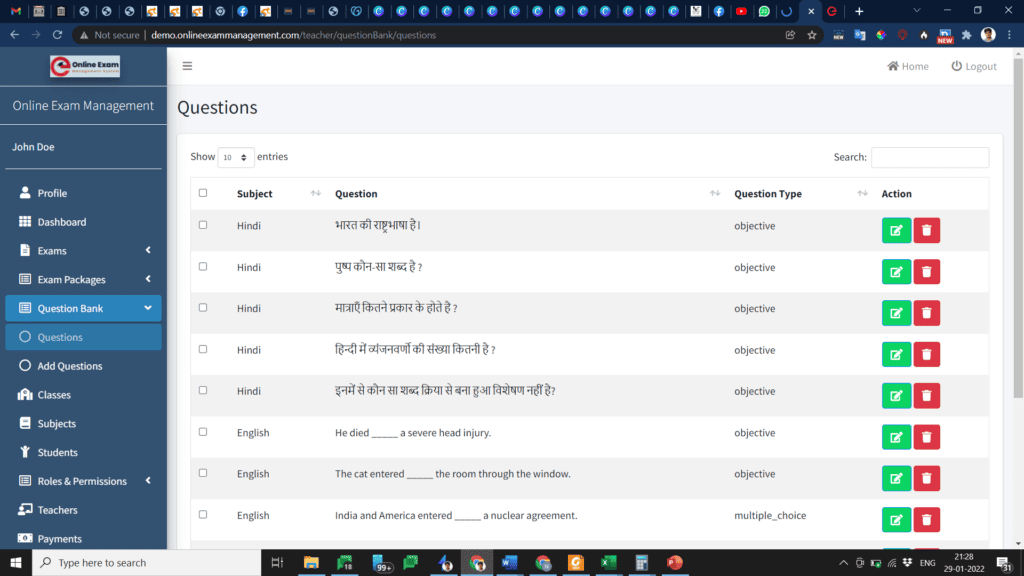
Test Management System:
– Content Authoring Tool: Admin interface for creating and managing questions across 7 subjects and 63 test versions
– Question Bank Management: Organized repository with tagging by subject, topic, difficulty level, and question type
– Test Configuration: Flexible configuration of test parameters including duration, number of questions, passing criteria, and scheduling
– Bulk Upload: Excel/CSV-based bulk upload of question banks for efficient content loading
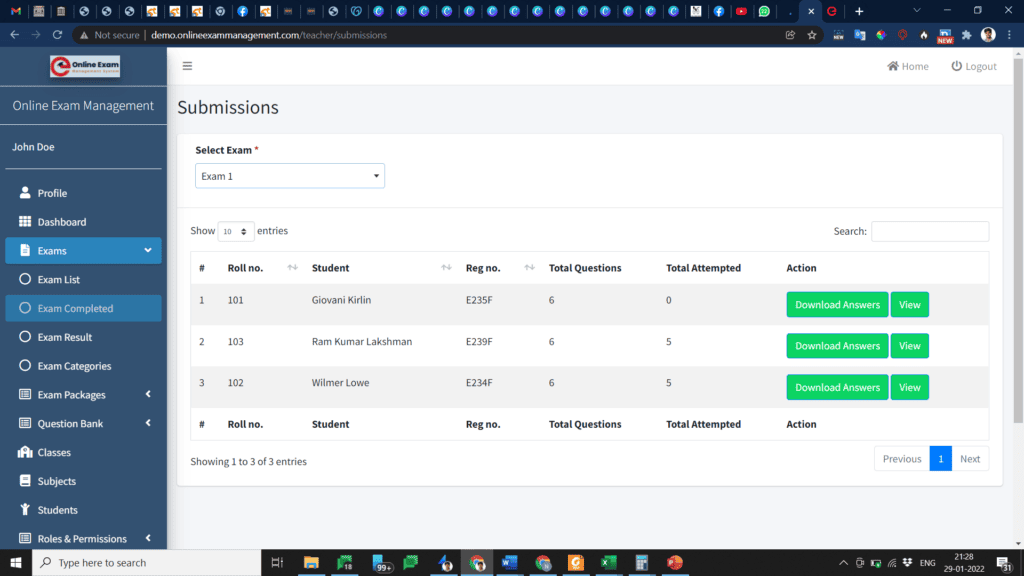
Real-time Monitoring Dashboard:
– Live Participation Tracking: District-wise and center-wise view of teacher login rates, test start rates, and completion rates updated in real time
– Progress Analytics: Visual dashboards showing percentage completion, average time spent, and submission status across all 24 districts
– Alert System: Automated alerts for abnormal patterns (mass dropoffs, technical issues at specific centers)
– Administrative Controls: Ability to extend time, pause tests, or intervene at specific centers in case of emergencies
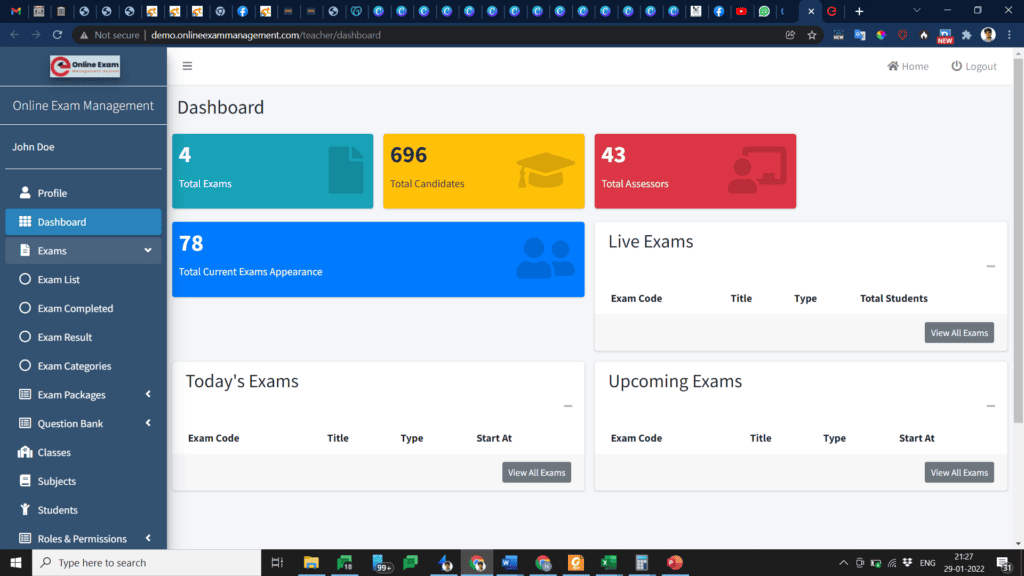
Helpdesk System:
– Multi-channel Support: Phone, WhatsApp, and in-app support channels for teachers and center coordinators
– Issue Tracking: Categorized ticket management for technical issues, login problems, and content queries
– Escalation Workflow: Tiered support structure with field-level, district-level, and central support teams
Technology Stack
- Frontend: HTML5, CSS3, JavaScript (Responsive/PWA)
- Backend: Server-side web framework with RESTful APIs
- Database: Relational database with read replicas for dashboard queries
- Mobile: Progressive Web App (PWA) for cross-device compatibility
- Caching: In-memory caching for high-concurrency test sessions
- CDN: Content delivery network for static assets and media
- Monitoring: Real-time application monitoring and alerting
Implementation Approach
Given the 3-month timeline and the complexity of a statewide assessment, Velocity executed a highly compressed and focused implementation:
Requirements & Content Preparation (Week 1-3): Collaborated with UNICEF and Jharkhand education department subject matter experts to finalize test specifications, question formats, and scoring rubrics. Received and processed question banks for all 7 subjects and 63 test versions.
Platform Development (Week 2-6): Parallel development of the test delivery platform, admin panel, and monitoring dashboard. Implemented Hindi/Urdu/Sanskrit language support with extensive testing on various Android devices. Built the offline resilience layer and auto-sync mechanism.
Load Testing & Security (Week 6-8): Stress testing the platform to handle 120,000+ concurrent sessions. Security audit including penetration testing and vulnerability assessment. Optimized database queries and caching for peak load performance.
Pilot Testing (Week 8-9): Conducted pilot tests with sample teachers in select districts to validate the platform under real-world conditions. Gathered feedback on usability, language clarity, and mobile experience. Iterative refinements based on pilot findings.
Statewide Deployment & Test Day (Week 9-11): Coordinated rollout with district education offices. Deployed helpdesk teams and center-level support coordinators. Managed the live assessment across all 24 districts with real-time monitoring.
Results & Analytics (Week 11-12): Automated scoring of objective questions. Generated district-wise and subject-wise analytics reports. Delivered comprehensive assessment data to UNICEF and the Jharkhand education department for TNA analysis.
Key Outcomes & Impact
- 120,000 Teachers Assessed: Successfully administered the statewide Teacher Needs Assessment to approximately 120,000 teachers across all 24 districts of Jharkhand
- 63 Test Versions Delivered: Managed 63 unique test versions across 7 subject areas without any content delivery errors
- Mobile-first Success: Over 95% of teachers completed the assessment on their personal smartphones, validating the mobile-first approach
- Hindi Language Accessibility: Complete Hindi interface enabled comfortable test-taking for teachers in their working language
- High Completion Rate: Achieved strong test completion rates across urban and rural districts through robust offline capabilities and helpdesk support
- Real-time Oversight: Education department officials monitored participation and completion in real time, enabling immediate intervention where needed
- Evidence-based Training Design: The assessment data provided UNICEF and the Jharkhand government with granular, district-wise, subject-wise teacher competency data for designing targeted professional development programs
- Zero Data Loss: The offline-first design ensured no teacher responses were lost despite connectivity challenges in rural areas
Why Velocity?
Velocity Software Solutions was selected to deliver this high-stakes assessment platform based on our:
- Expertise in large-scale digital assessment platforms capable of handling 100,000+ concurrent users
- Strong mobile-first development capabilities with offline-resilient architectures for low-connectivity environments
- Deep experience with Hindi and regional language application development including complex script rendering
- Proven track record with UNICEF India across multiple education technology projects
- Ability to deliver under aggressive timelines with a 3-month end-to-end implementation from concept to statewide deployment
- Robust support infrastructure for managing live, high-stakes events with real-time monitoring and helpdesk capabilities
Velocity Software Solutions brings unparalleled expertise in large-scale digital assessment and education technology, helping governments and development organizations leverage technology to strengthen education systems at scale.