Localization and Internationalization in PrestaShop Themes: Reaching Global Audiences
Download MarkDown
Introduction
In today’s interconnected world, businesses have the opportunity to expand their reach and tap into international markets like never before. However, simply launching an online store is not enough to attract global customers. To successfully target international audiences, it is essential to adapt your PrestaShop themes through proper localization and internationalization.
This article explains the importance of localization and internationalization in PrestaShop themes and outlines best practices to help your business expand globally.
What is Localization and Internationalization?
Understanding these two concepts is essential before implementing them in your PrestaShop store.
What is Localization?
Localization refers to the process of adapting a website or software to meet the linguistic, cultural, and regulatory requirements of a specific region or country.
It includes:
- Translating content into local languages
- Adapting currency formats
- Modifying date and time formats
- Adjusting tax and shipping rules
- Aligning with cultural preferences
Localization ensures that your PrestaShop store feels native to users in different countries.
What is Internationalization?
Internationalization is the process of designing and developing your PrestaShop theme in a way that makes it easy to adapt to multiple languages and regions.
It involves:
- Structuring code to support multilingual functionality
- Enabling multi-currency support
- Making themes Unicode-compatible
- Designing scalable architecture for future market expansion
In simple terms, internationalization prepares your store for global growth, while localization customizes it for specific markets.
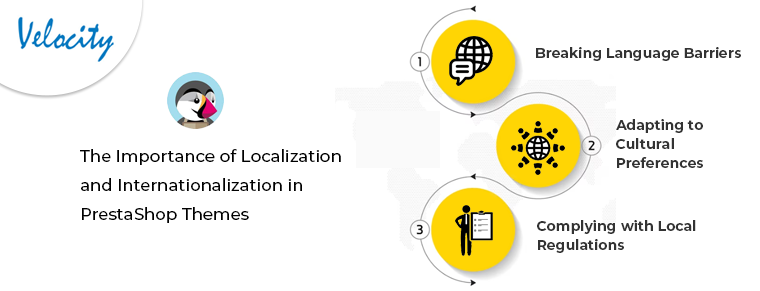
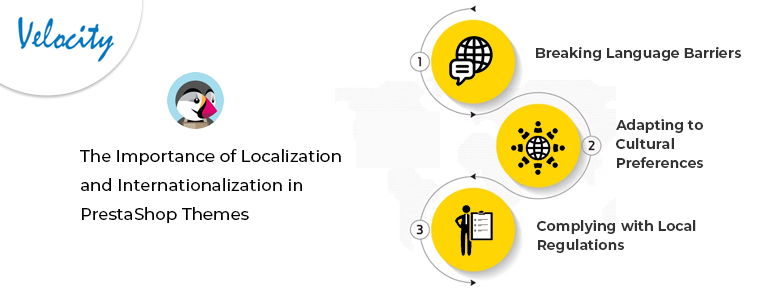
Why Localization and Internationalization Matter in PrestaShop Themes
1. Breaking Language Barriers
Language is one of the biggest obstacles in global eCommerce. Customers are more likely to trust and purchase from websites available in their native language.
By localizing your PrestaShop theme, you can:
- Translate product descriptions
- Localize checkout pages
- Provide multilingual customer support
- Improve user experience
A multilingual PrestaShop store builds credibility and increases conversion rates.
2. Adapting to Cultural Preferences
Consumer behavior differs across regions. Cultural nuances influence purchasing decisions, design preferences, and marketing responses.
Localization allows you to:
- Modify website visuals and banners
- Adapt promotional campaigns
- Align messaging with regional values
- Customize seasonal offers
Adapting your PrestaShop theme to cultural expectations strengthens customer engagement.
3. Complying with Local Regulations
Different countries have unique legal and compliance requirements.
These may include:
- VAT or GST regulations
- Privacy laws (such as GDPR)
- Shipping restrictions
- Refund policies
Localization ensures your PrestaShop store complies with local regulations, reducing legal risks and enhancing customer trust.
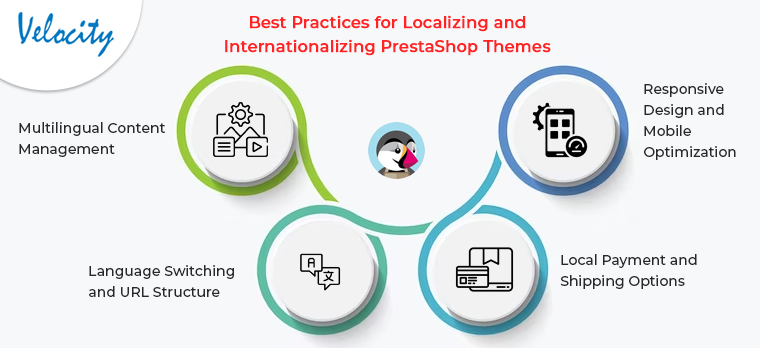
Best Practices for Localizing and Internationalizing PrestaShop Themes
1. Implement Multilingual Content Management
Use PrestaShop’s built-in translation features or advanced modules to manage multilingual content efficiently.
Best practices include:
- Avoiding machine-only translations
- Using professional translators
- Maintaining consistent terminology
- Updating all language versions regularly
Effective content management improves global SEO performance.
2. Enable Language Switching and Optimize URL Structure
A visible language switcher enhances user experience.
For SEO optimization:
- Use language-specific URLs (example: /en/, /fr/)
- Implement hreflang tags
- Avoid duplicate content issues
This ensures better search engine indexing in different regions.
3. Offer Local Payment Gateways and Shipping Options
Customers prefer familiar and trusted payment methods.
Integrate:
- Region-specific payment gateways
- Local shipping providers
- Country-based tax calculation
- Currency auto-detection
Providing localized checkout experiences significantly increases international conversions.
4. Ensure Responsive Design and Mobile Optimization
Mobile commerce is rapidly growing worldwide. A responsive PrestaShop theme ensures:
- Fast loading speed
- Seamless mobile checkout
- Adaptive layout across devices
- Improved user engagement
Mobile optimization is essential for global eCommerce success.
Conclusion
To succeed in the global eCommerce market, businesses must go beyond basic translation. Proper localization and internationalization in PrestaShop themes allow you to:
- Break language barriers
- Adapt to cultural differences
- Comply with regional laws
- Improve mobile shopping experiences
By implementing these best practices, you can confidently expand your PrestaShop store into international markets and achieve sustainable global growth.
If you need assistance with PrestaShop localization, multilingual setup, or global expansion strategy, feel free to contact us at: