UNICEF New Delhi – Out-of-School Children (OOSC) Digital Application
Download MarkDownThe Challenge
India had made considerable gains in ensuring children’s access to education through the government’s Sarva Shiksha Abhiyan, Samagra Shiksha programme, and the Right of Children to Free and Compulsory Education (RTE) Act. However, an estimated 6 million children were still out of school as of 2014, with 75% concentrated in six states: Uttar Pradesh, Bihar, Rajasthan, Madhya Pradesh, Odisha, and West Bengal. Most of these children belonged to disadvantaged groups — scheduled tribes, scheduled castes, Muslim communities — and nearly one-third (28%) of children with disabilities were not in school.
The COVID-19 pandemic dramatically worsened this situation. With schools closed, all children were effectively out of school, and there was a significant risk that many — particularly girls, migrant children, children with disabilities, and child laborers — would not return once schools reopened.
The existing process for identifying out-of-school children suffered from critical weaknesses:
- Paper-Based Surveys: States conducted village-level paper-based surveys with data entry at block or higher levels, leading to errors and data loss during manual compilation
- Time Delays: Manual data compilation and list preparation was time-consuming, causing critical delays in following up on identified children
- No Real-Time Analytics: There was no mechanism for timely data analysis and visualization to be fed back to villages to inform strategies for reaching out-of-school children and monitoring their progress
- Scale Requirements: The application needed to serve approximately 100,000 to 400,000 data collectors/teachers per state
- Connectivity Challenges: Many data collection areas had low bandwidth or intermittent internet connectivity
- Multi-State Adaptation: The solution needed to be adaptable to state-specific requirements across 3-4 states with different administrative structures
Velocity’s Solution
Scope of Work
Velocity Software Solutions was engaged to develop a comprehensive digital application ecosystem to facilitate the identification, monitoring, and tracking of out-of-school children, building on an earlier application developed by UNICEF Bihar.
Key Features & Deliverables
Phase 1: Prototype Development
Web-Based Application
– Online data entry directly from computers
– Data entry based on mapping of out-of-school children (15 household variables, 28 child variables, 12 tracking variables)
– Verification and approval facilities for data crosschecking
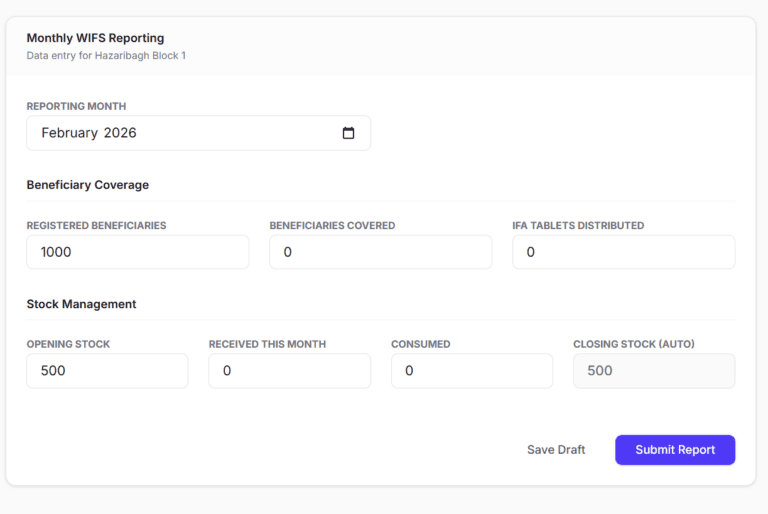
– User-friendly admin panel for adding/editing/deleting questionnaires, data entry forms, pre-populated lists of districts/GPs/schools
Android Mobile Application
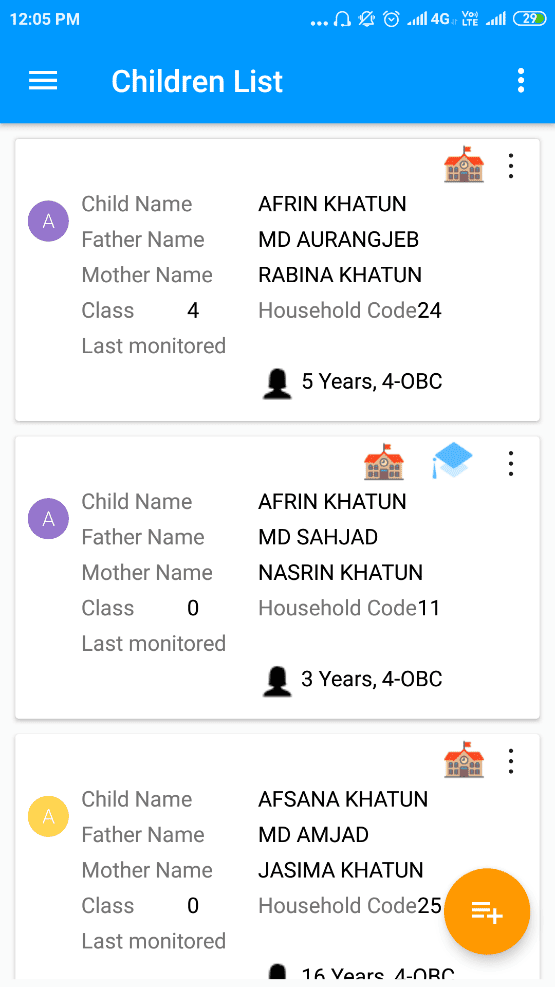
– Standardized data entry format for smartphones
– Offline data entry capability with syncing when internet is available
– Low-bandwidth compatible syncing for remote areas
– GPS location capture of data collectors (with enable/disable flexibility)
– Responsive design for varying screen sizes
– Compatible with various commonly used Android versions
– Functionality with both mobile keyboard and touch screen
– Push notifications and feedback system
User Management System
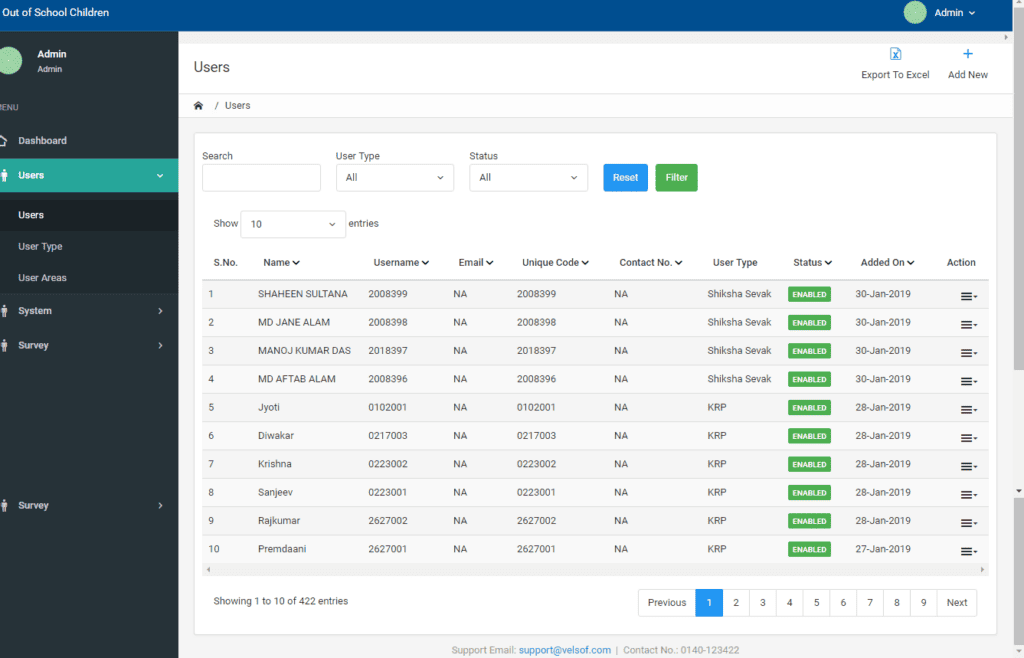
– Role-based user creation and management
– Multiple user tiers (state, district, block, school levels)
– Data verification and approval workflows
Online Dashboard
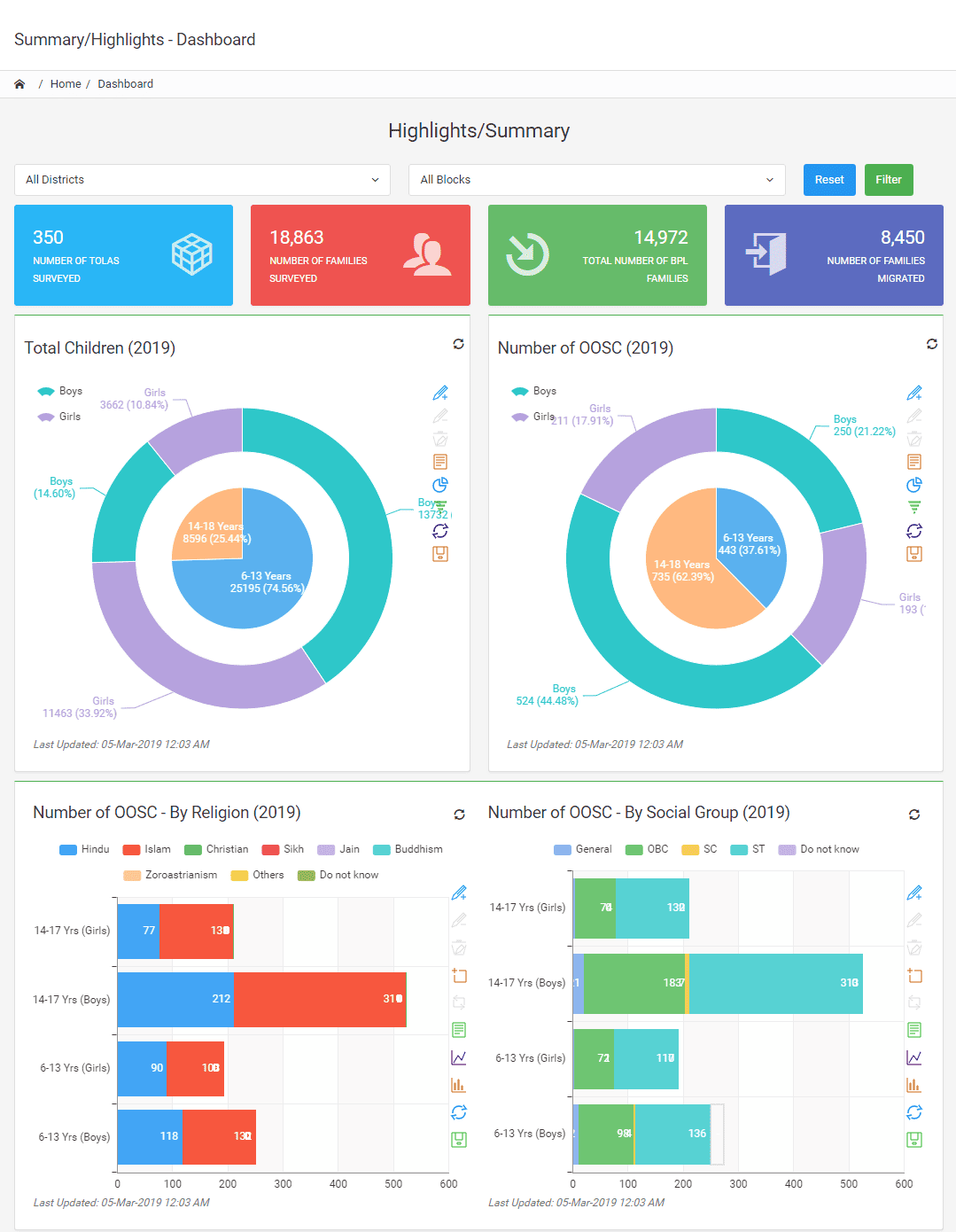
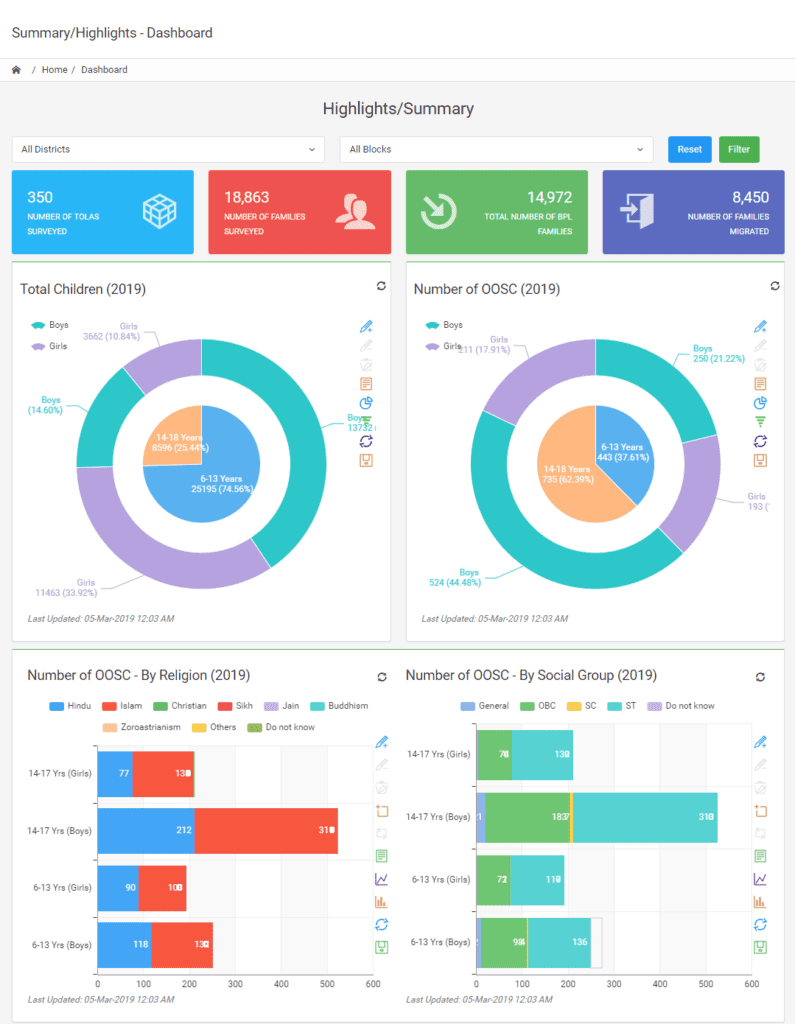
– Key indicators presented graphically for administrative areas
– Standard periodic and customized report generation
– Year-on-year OOSC tracking based on admission status into schools or training programmes
– Retention monitoring
– Maps, time series, and bar charts of key indicators
– Print-friendly visualizations exportable as PNG
– Data exportable to Excel and PDF
– Shareable via email and social media
– Past year data import and dashboard generation capability
Phase 2: State-Specific Adaptation (3-4 States)
– Technical discussions with state government officials to understand requirements
– State-specific digital application development
– Three-month trial hosting with encrypted personal data
– Server transition technical support
– Domain name purchase and hosting (government-owned domain)
– Google Play Store publication under state government ownership
– Security audit by government-empanelled vendor
– Application handover with source code to UNICEF and state governments
Capacity Building
– User manual and video development
– Training of government officials including master trainers
– Helpdesk establishment for technical support and issue resolution
– Capacity building of state government technical staff for independent maintenance
Phase 3: Maintenance
– One year of support and maintenance services including bug fixes
– Digital application updates for modifications in data capture format
Technology Stack
- Mobile: Android (cross-version compatible) with offline-first architecture
- Web: Responsive web application with admin panel
- Database: Open-source database following Government of India MDDS standards
- Security: SSL encryption, encrypted authentication/authorization, session management
- Localization: Multi-language interface (English, Hindi, regional languages) following MeITY localization practices
- Standards: ISO/IEC 14496-OFF font standard, Industry Open Standards for interoperability
- Analytics: Interactive dashboard with maps, charts, and exportable visualizations
- Infrastructure: Agency-hosted during trial, migrated to government servers
Implementation Approach
The project was executed in three distinct phases over 18 months:
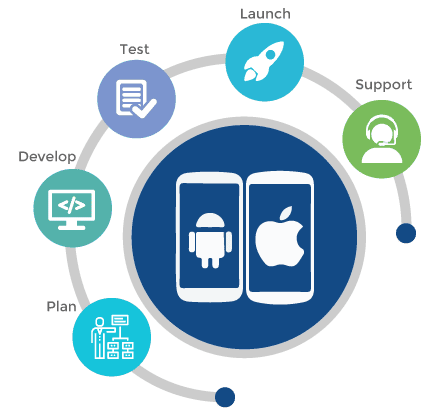
Phase 1 – Development & Demonstration (Weeks 1-8):
– Week 2: Inception report with methodology, technology stack, layout/design, and features
– Week 6: Prototype development including web application, mobile app, user management, and dashboard
– Week 8: Hosted demonstration version for UNICEF and state government stakeholders
Phase 2 – State-Specific Adaptation (Weeks 9-18):
For each of 3-4 states:
– Technical discussions with state government officials
– State-specific application development and customization
– Three-month trial hosting with data encryption
– Security audit by government-empanelled vendor
– Handover with source code and documentation
– User manual, training videos, and master trainer training
– Helpdesk establishment
– Google Play Store publication
Phase 3 – Maintenance (Months 5.5-18):
– Ongoing bug fixing and support
– Application updates for data capture format changes
– Helpdesk communication log maintenance
The project required travel to each state twice (one day each) for support, with the agency based at its own location and working closely with UNICEF’s Education team.
Key Outcomes & Impact
- Digital Transformation of OOSC Mapping: Replaced paper-based surveys with a digital system, eliminating manual compilation errors and dramatically reducing the time from data collection to actionable insights
- Real-Time Visibility: Provided state, district, block, and village-level officials with real-time dashboards showing OOSC profiles, enabling timely intervention
- Massive Scale Capacity: Built to serve 100,000 to 400,000 data collectors per state, supporting India’s largest education mapping exercises
- Multi-State Deployment: Successfully adapted and deployed across 3-4 states with state-specific requirements, creating a model for national scale-up
- Offline-First Design: Enabled data collection in remote, low-connectivity areas where most out-of-school children are concentrated
- Government Ownership: Handed over applications with source code to state governments, published on Play Store under government ownership, ensuring long-term sustainability
- Open Source Availability: UNICEF made the source code publicly available for use by any organization working to improve children’s access to education
- Year-on-Year Tracking: Enabled longitudinal tracking of identified OOSC as they were enrolled in schools and special training programmes, measuring actual impact of interventions
Why Velocity
Velocity Software Solutions was selected for this transformative education technology project because of:
- Mobile Application Expertise: Minimum 5 years of specialized experience in application development for national/state-level projects
- Government Project Experience: Proven track record in developing and deploying digital solutions in partnership with government and UN organizations
- Data Management Capabilities: Strong expertise in data management, mobile data collection, and interactive dashboard development
- Offline-First Architecture Skills: Technical capability to build applications that work reliably in low-bandwidth and offline environments
- Multi-State Deployment Experience: Ability to manage parallel state-specific adaptations with varying requirements
- Open Source Commitment: Alignment with UNICEF’s open-source mandate, ensuring the solution could be freely shared and adapted
- Comprehensive Service Delivery: End-to-end capability spanning development, training, helpdesk, security audit coordination, and long-term maintenance
- Education Sector Understanding: Appreciation of the urgency and complexity of reaching out-of-school children, particularly in the post-COVID context