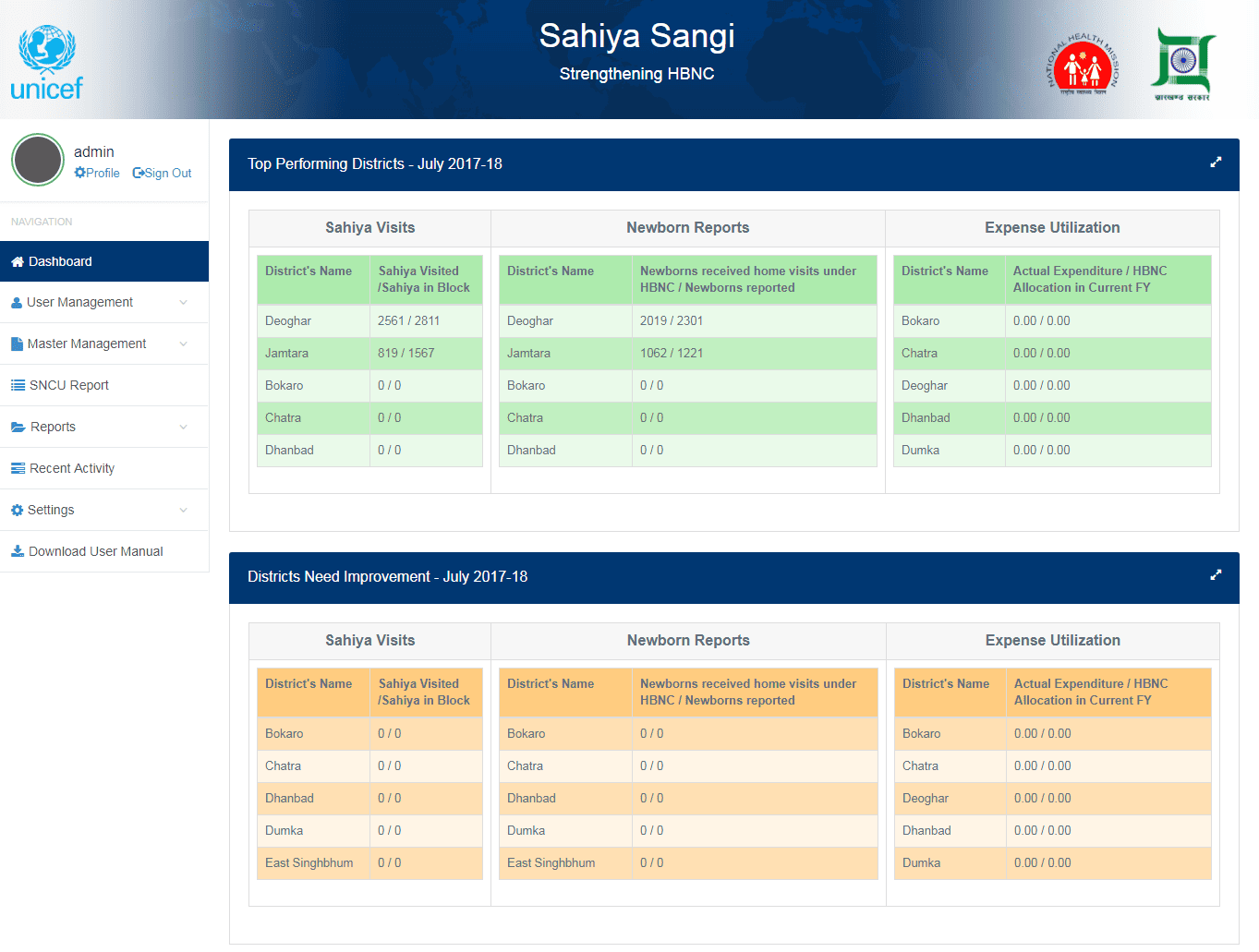
SahiyaSangi Portal Enhancements — HBNC and HBYC Tracking (UNICEF Ranchi 2019)
Download MarkDownThe Challenge
Building on the successful deployment of the HBNC monitoring system in 2018, UNICEF Ranchi identified the need for significant enhancements to the SahiyaSangi Portal — the primary digital platform supporting Jharkhand’s community health worker (Sahiya/ASHA) programme. Two major new requirements emerged that demanded sophisticated system enhancements:
Sahiya Assessment Digitization:
- Sahiya Assessment — a critical annual evaluation of community health workers’ knowledge and competency — was being conducted entirely through manual paper-based processes. Collating data against each assessment parameter was extremely difficult, time-consuming, and delayed.
- The manual process made it nearly impossible to quickly identify areas of improvement across thousands of Sahiyas and to effectively plan targeted training interventions.
- There was no mechanism for automated reminders to ensure assessments were completed on schedule, leading to incomplete evaluations and data gaps.
Home Based Care for Young Children (HBYC) Tracking:
- The Government of India launched HBYC — a novel initiative to reduce child mortality and improve nutrition status through additional home visits by Sahiyas and Anganwadi workers for children aged 3-15 months. This programme extended the continuum of care beyond the neonatal period addressed by HBNC.
- Tracking individual children across 5 quarterly visits over 15 months presented a major technical challenge — particularly the need for a unique child identifier system. The existing Coupon Code mechanism (originally designed for death reporting) needed to be re-engineered to serve as a universal tracking identifier from the first visit.
- Block and district-level reporting formats for HBYC needed to be digitized and integrated with automated anomaly detection to flag discrepancies between coupon codes issued and children reported.
Additional Platform Needs:
- Continuous hosting and maintenance of the existing SahiyaSangi.com portal
- Deployment of dedicated technical resources at the UNICEF Ranchi office for on-ground support
- Enhanced business analytics capabilities across all programme modules
Velocity’s Solution
Scope of Work
Velocity Software Solutions delivered comprehensive enhancements to the SahiyaSangi Portal, integrating two major new modules — Sahiya Assessment Digitization and HBYC Child Tracking — while maintaining and hosting the existing platform and providing on-site technical support.
Key Features & Deliverables
1. Sahiya Assessment Digitization Module
- Web-based assessment module integrated into the existing SahiyaSangi.com portal
- Digital form interface replicating the Sahiya Assessment questionnaire
- Ability to upload scanned copies of physical assessment forms for archival
- Online form filling for direct digital entry of assessment data
- Bulk Excel import functionality for efficient mass data migration of assessment records
- Automated SMS reminders to Sahiyas and supervisors for pending assessment completion
- Business Analytics reporting dashboard for assessment results including:
- Competency scoring by thematic area
- Comparative performance across blocks and districts
- Training needs gap analysis
- Trend analysis across assessment periods
- Export capabilities for generating training plans based on assessment outcomes
2. HBYC Child Tracking System
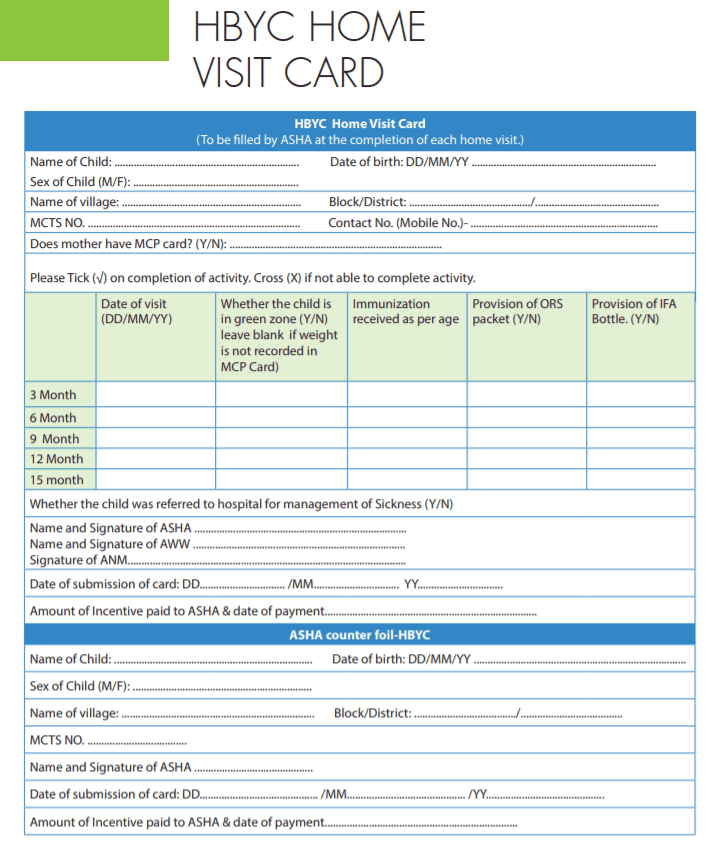
- Comprehensive child tracking module covering 5 quarterly visits over 15 months (ages 3-15 months)
- Re-engineered Coupon Code system:
- Unique ID assignment at the child’s first visit (instead of at death reporting)
- Coupon code-based tracking throughout the 15-month care period
- System validation ensuring each child has a unique identifier from the outset
- Web interface for quarterly data entry following the HBYC tracking format
- Integration with existing Sahiya visit management workflow
- Tracking of key HBYC parameters:
- Complementary feeding practices
- Growth monitoring and weight tracking
- Immunization schedule adherence
- Illness identification and referral actions
- Hygiene and sanitation counselling
- Automated anomaly reports comparing:
- Line listing of children assigned coupon codes
- Number of children reported in block/district level formats
- Flagging discrepancies for supervisor attention
- Automatic email notifications for anomalies sent to relevant stakeholders
- Real-time data reporting from block level for earliest possible intervention
3. Block/District Level Reporting Interface
- Web portal interface for monthly data import from Block and District Level Reporting Formats
- Structured data templates aligned with government reporting requirements
- Data validation and quality checks during import
- Aggregation engine for compiling block-level data into district and state summaries
4. Enhanced Business Analytics
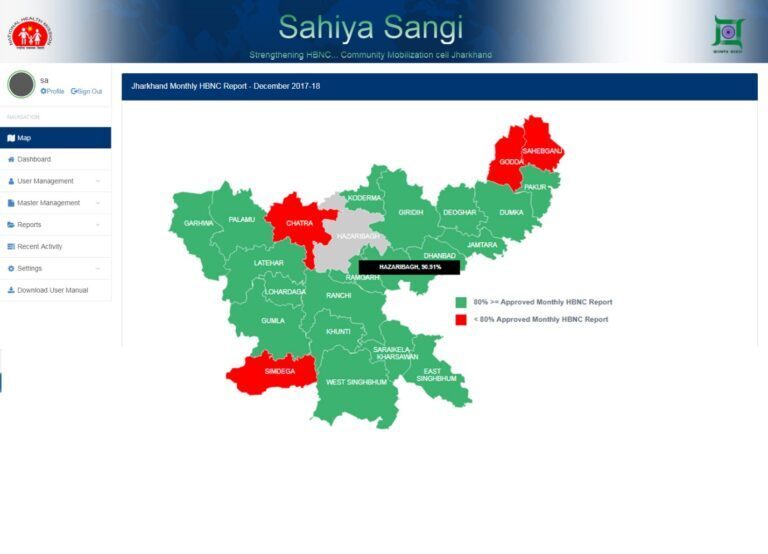
- Comprehensive analytics dashboards spanning HBNC, HBYC, and Sahiya Assessment modules
- Drill-down capabilities from state to individual Sahiya level
- Visual representations including maps, charts, and infographics
- Custom report generation for programme reviews and government reporting
- Trend analysis and forecasting capabilities
5. Platform Hosting and Maintenance
- Continued hosting of SahiyaSangi.com with uptime guarantees
- Regular maintenance including bug fixes, security patches, and performance optimization
- Database management and backup services
6. On-Site Technical Resources
- Deployment of 2 dedicated technical resources at the UNICEF Ranchi office
- On-ground support for user training, issue resolution, and requirement gathering
- Direct liaison with government health officials and UNICEF programme staff
Technology Stack
- Web Platform: PHP-based web application (SahiyaSangi.com)
- Database: MySQL with optimized schemas for child tracking and assessment data
- Reporting: Business analytics engine with interactive dashboards
- Communication: SMS gateway integration for automated reminders
- Email: Automated email notification system for anomaly alerts
- Import/Export: Excel import/export capabilities for bulk data operations
- Hosting: Managed server hosting with SSL security and automated backups
Implementation Approach
- Inception and Analysis: Prepared a comprehensive Inception Report after studying the existing Sahiya Assessment structure and HBYC programme guidelines, identifying integration points with the current SahiyaSangi platform.
- Module Design: Designed the Sahiya Assessment and HBYC tracking modules with detailed wireframes, data models, and workflow diagrams, incorporating feedback from UNICEF programme staff and government health officials.
- Coupon Code Re-engineering: Redesigned the existing coupon code system to function as a universal child identifier from the first visit, ensuring backward compatibility with existing death reporting workflows.
- Iterative Development: Developed both modules in iterative sprints with regular demonstrations to UNICEF and government stakeholders, incorporating feedback at each stage.
- Data Migration: Supported the migration of existing assessment records and child data into the new modules, ensuring data integrity and completeness.
- Training Delivery: Conducted multi-level training sessions:
- Block-level data entry operators on the reporting interfaces
- District health officials on dashboard usage and report interpretation
- State-level programme managers on analytics and anomaly monitoring
- On-Site Support Deployment: Stationed 2 technical resources at the Ranchi office for continuous support, issue resolution, and requirement refinement throughout the engagement.
- Monitoring and Optimization: Continuously monitored system performance, data quality, and user adoption, making iterative improvements based on field feedback.
Key Outcomes & Impact
- Digitized Sahiya Assessment: Transformed the annual competency evaluation of thousands of Sahiyas from a manual paper-based exercise into a streamlined digital process, reducing data compilation time from weeks to hours and enabling immediate identification of training needs.
- Pioneered HBYC Digital Tracking: Implemented one of the first digital tracking systems for the Government of India’s HBYC programme, enabling longitudinal monitoring of child care across 5 visits over 15 months with unique identifier-based tracking.
- Improved Child Health Outcomes: Real-time monitoring of HBYC visits ensured that children in the critical 3-15 month age group received consistent follow-up for complementary feeding, immunization, and illness management, contributing to improved nutrition and health outcomes.
- Automated Quality Assurance: The anomaly detection system automatically identified discrepancies between expected and actual child visit data, enabling supervisors to intervene quickly and ensure data integrity and programme coverage.
- Targeted Training Interventions: Analytics from the digitized Sahiya Assessment enabled programme managers to design targeted training programmes addressing specific knowledge gaps, improving the overall quality of community health service delivery.
- Enhanced Programme Accountability: The combination of digital tracking, automated reminders, and anomaly detection created a robust accountability framework that improved both Sahiya compliance and supervisory effectiveness.
- Continuity of Care Platform: The SahiyaSangi Portal evolved into a comprehensive community health worker management platform covering newborn care (HBNC), young child care (HBYC), and worker competency (Assessment) — creating an integrated digital ecosystem for maternal and child health in Jharkhand.
Why Velocity?
Velocity Software Solutions’ continuation on this engagement was a testament to the quality and impact delivered during the 2018 HBNC project. The team’s deep understanding of Jharkhand’s community health ecosystem, established relationships with government health officials, and proven track record with the SahiyaSangi platform enabled rapid and effective delivery of the new modules. Velocity’s on-site presence at the Ranchi office ensured hands-on support during the critical adoption phase, while the team’s expertise in building health data systems with automated quality assurance mechanisms delivered a solution that went beyond data collection to actively improve programme quality. The financial model combining hosting, development, and on-site resource deployment provided UNICEF with a comprehensive, integrated service package.
Velocity Software Solutions — Building integrated digital health platforms that strengthen community health systems from newborn care through early childhood development.