Case Study: Real-Time Monitoring & Reporting Platform (RapidPro + ODK)
Download MarkDownThe Challenge
UNICEF India was using multiple data collection platforms across its field offices, with RapidPro handling SMS and IVR-based surveys and ODK managing mobile form-based data collection. The key challenges included:
- Fragmented Data Ecosystem: Data from RapidPro and ODK resided in separate systems, making it impossible to get a unified view of programme monitoring indicators
- Lack of Real-time Visualization: While data was being collected in near real-time, there was no integrated dashboard providing live visualizations for decision-makers
- UReport Integration: UNICEF wanted to leverage the UReport platform (an open-source community engagement tool) as the public-facing reporting website, but it required significant customization and integration with Indian data sources
- Data Sync Latency: Decision-makers needed data refreshed every 10-15 minutes, requiring a robust real-time synchronization pipeline between multiple data sources
- Diverse Visualization Needs: Different programmes required different types of visualizations — maps, time series, bar charts, disaggregated tables — all from a single platform
- Open Source Mandate: The entire solution needed to be built on open-source technologies, leveraging UReport’s GitHub codebase as the foundation
Velocity’s Solution
Scope of Work
Velocity Software Solutions designed, developed, and maintained an integrated Real-Time Monitoring and Reporting Platform, comprising:
- Customization and deployment of the UReport website (from GitHub open-source codebase)
- Integration pipeline connecting RapidPro and ODK data to the visualization layer
- Real-time data synchronization engine with 10-15 minute refresh cycles
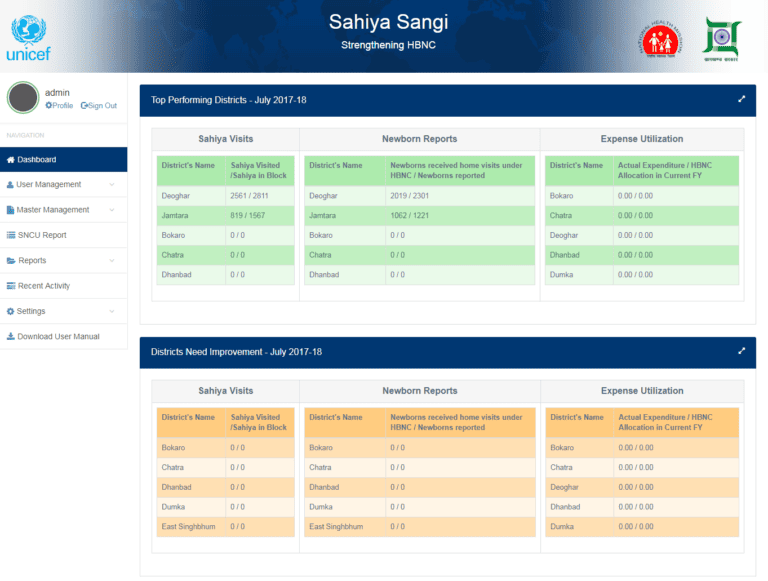
- Custom data visualization templates and dashboards
- 6-month operations and maintenance support
Key Features & Deliverables
UReport Website Customization:
– GitHub Codebase Deployment: Forked and deployed the UReport open-source codebase from GitHub, customized for UNICEF India’s requirements
- Indian Context Localization: Adapted the platform for Indian geography, languages, and programme structures
- Custom Branding: UNICEF India-specific branding, layout, and navigation design
- Responsive Design: Mobile-responsive interface for access across devices by field staff and decision-makers
RapidPro Integration:
– API-based Data Pull: Automated extraction of survey responses, flow results, and contact data from RapidPro via its REST API
– Flow Mapping: Configuration of mapping rules translating RapidPro flow results into structured monitoring indicators
- Contact Segmentation: Geographic and demographic segmentation of RapidPro contacts for disaggregated reporting
- SMS/IVR Response Aggregation: Real-time aggregation of SMS and IVR survey responses into dashboard-ready metrics
ODK Integration:
– ODK Central/Aggregate Connectivity: Direct integration with ODK data servers for automated pull of form submissions
– Form-to-Indicator Mapping: Configurable mapping of ODK form fields to programme monitoring indicators
– Media Handling: Support for photo, audio, and GPS data collected through ODK forms
- Submission Tracking: Monitoring of expected vs. received submissions for coverage tracking
Real-time Data Sync Engine:
– 10-15 Minute Refresh: Automated data synchronization pipeline running every 10-15 minutes, pulling new data from RapidPro and ODK, transforming it, and loading it into the visualization database
– ETL Pipeline: Extract, Transform, Load pipeline handling data cleaning, deduplication, aggregation, and indicator calculation
– Error Handling: Robust error handling with retry logic, logging, and alert notifications for sync failures
– Incremental Sync: Efficient delta-based synchronization to minimize processing load and API calls
Data Visualization Templates:
– Map-based Visualizations: Geographic heat maps showing programme coverage and indicator values by state, district, and block
– Time Series Charts: Line and area charts tracking indicator trends over time with configurable time windows
– Bar & Pie Charts: Comparative and proportional visualizations for disaggregated data (gender, age, geography)
– Data Tables: Tabular views with sorting, filtering, and export capabilities
– Custom Dashboards: Programme-specific dashboard layouts combining multiple visualization types for different UNICEF programme sectors
Administrative Features:
– Dashboard Builder: Admin interface for configuring and arranging visualizations into programme-specific dashboards
– Data Source Management: Configuration panel for managing RapidPro and ODK connection parameters
– User Management: Role-based access control for different UNICEF teams and programme areas
– Indicator Configuration: Admin tools for defining and modifying monitoring indicators, calculation formulas, and thresholds
Technology Stack
- Frontend: UReport (open source, Python/Django-based) with custom visualization components
- Backend: Python/Django (UReport codebase)
- Database: PostgreSQL
- Data Sync: Custom ETL pipeline (Python-based)
- Visualization: D3.js / Chart.js / Leaflet for maps
- APIs: RapidPro REST API, ODK Central/Aggregate API
- Hosting: Cloud-based infrastructure
- Caching: Redis for real-time data caching
Implementation Approach
Architecture & Design (Month 1): Analyzed the UReport GitHub codebase and planned customization approach. Designed the integration architecture for RapidPro and ODK data pipelines. Created wireframes for custom visualization templates and dashboards. Defined the ETL pipeline architecture and data model.
Development (Month 1-2): Deployed and customized the UReport platform from the open-source codebase. Built the RapidPro and ODK integration connectors with API-based data extraction. Developed the real-time sync engine with 10-15 minute refresh cycles. Created visualization templates for maps, charts, time series, and tables. Implemented the admin panel for dashboard and indicator configuration.
Integration Testing (Month 2): End-to-end testing of the data pipeline from RapidPro/ODK through ETL to visualization. Load testing to validate performance under concurrent access and high data volumes. Validation of data accuracy by comparing dashboard metrics against source data.
Deployment & Training (Month 2): Production deployment on cloud infrastructure. Training for UNICEF programme teams on using dashboards, configuring indicators, and interpreting visualizations. Administrator training on platform management and troubleshooting.
Operations & Maintenance (Months 3-8): Ongoing monitoring of data sync pipelines and system health. Bug fixes, performance optimization, and minor enhancements based on user feedback. Addition of new visualization templates and dashboards for additional programme areas. Capacity building for UNICEF technical team for eventual handover.
Key Outcomes & Impact
- Unified Data Platform: Successfully integrated RapidPro and ODK data into a single, cohesive visualization platform, eliminating data silos and providing a holistic view of programme monitoring
- Real-time Decision Support: 10-15 minute data refresh cycles enabled UNICEF programme managers and leadership to make decisions based on near real-time field data
- Open Source Compliance: Entire solution built on open-source technologies (UReport, Python/Django, PostgreSQL), ensuring no vendor lock-in and community-driven sustainability
- Programme Coverage Visibility: Map-based visualizations provided immediate, intuitive understanding of programme reach and geographic gaps
- Multi-sector Support: The configurable dashboard and indicator framework supported monitoring across UNICEF’s diverse programme areas (health, education, WASH, child protection)
- Scalable Architecture: The platform design allowed easy addition of new data sources, programmes, and visualization types as UNICEF’s monitoring needs evolved
- Cost-effective: Leveraging open-source foundations (UReport, RapidPro, ODK) significantly reduced licensing costs while delivering enterprise-grade functionality
Why Velocity?
Velocity Software Solutions was chosen to build this strategic monitoring platform based on our:
- Deep expertise in open-source technologies including Python/Django, PostgreSQL, and JavaScript visualization libraries
- Experience with RapidPro and ODK platforms and their APIs for data integration
- Strong data engineering capabilities for building real-time ETL pipelines and data synchronization systems
- Proven track record with UNICEF India across multiple technology projects spanning different programme areas
- Ability to customize open-source platforms (UReport) while maintaining upgrade compatibility with the community codebase
- Commitment to knowledge transfer ensuring UNICEF teams can independently manage and evolve the platform
Velocity Software Solutions builds integrated data platforms that transform fragmented data collection into unified, real-time intelligence — empowering organizations like UNICEF to make faster, smarter decisions that impact millions of lives.