
Supply Chain Software That Keeps Your Operations Moving
We build supply chain management systems that give you real-time visibility from procurement to delivery. Inventory management, order tracking, warehouse automation, and demand forecasting — powered by Odoo, ERPNext, and custom Python backends. We've been solving logistics headaches since 2006.
Talk to Our Supply Chain TeamTrusted by Leading Brands










What Our Clients Say
What We Build
End-to-end supply chain digitization — from the warehouse floor to the customer's doorstep.
Inventory Management
Multi-warehouse inventory tracking with real-time stock levels, automated reorder points, batch/serial number tracking, and cycle counting. We build systems that eliminate stockouts and overstock — so your capital isn't tied up in unsold inventory.
Order Tracking & Logistics
End-to-end order visibility from placement to delivery. We integrate with carriers (FedEx, DHL, local couriers), build route optimization engines, and create customer-facing tracking portals that reduce "where's my order" support tickets by 60%+.
Warehouse Management (WMS)
Barcode/RFID-based warehouse operations: receiving, putaway, picking, packing, and shipping. We design warehouse layouts for optimal pick paths and build WMS solutions that integrate with your <a href="/erp-crm-solutions/">ERP</a> and shipping carriers.
Procurement Automation
Automated purchase order generation, vendor management, RFQ workflows, and approval chains. We build procurement systems that enforce your policies, track vendor performance, and negotiate better terms through spend analytics.
Demand Forecasting
ML-powered demand prediction using historical sales data, seasonal patterns, market signals, and external factors. Our forecasting models help you plan inventory, production, and procurement 3-12 months ahead with confidence.
Logistics Optimization
Route planning, load optimization, carrier selection, and delivery scheduling. We build logistics solutions that reduce shipping costs by 15-25% while improving delivery times — whether you ship 100 or 100,000 parcels per day.
Where We Go Deep in Supply Chain
80+ supply chain projects across manufacturing, retail, and distribution.
Real-Time Dashboards & Visibility
Supply chain decisions need real-time data. We build live dashboards with React that show inventory levels, order status, warehouse utilization, and delivery performance. Alerts and exception management so your team knows about problems before customers do.
Why Companies Choose Us for SCM
ERP Integration Experts
Data Accuracy Guaranteed
Industry-Specific Experience
ML-Powered Forecasting
Multi-Warehouse Support
Continuous Optimization
How We Think About Supply Chain Software
We've digitized supply chains for manufacturers, distributors, retailers, and logistics companies. The common lesson? Software only works if it fits how your warehouse and operations actually run — not how a textbook says they should.
ERP-first or custom-built — we help you choose
For many businesses, Odoo's supply chain modules or ERPNext's inventory and manufacturing features cover 80% of requirements out of the box. We configure, customize, and extend these platforms to handle the other 20%. But when your supply chain is genuinely unique — custom routing algorithms, complex allocation rules, or real-time optimization — we build from scratch with Python and React.
Integration is where supply chain projects succeed or fail
Your supply chain doesn't exist in isolation. It connects to your ERP, your eCommerce platform, your 3PL partners, your carrier APIs, and your customers' systems. We've built integrations with SAP, Oracle, NetSuite, Shopify, Magento, and dozens of carrier APIs. Our Node.js middleware layers handle real-time data sync between systems that were never designed to talk to each other.
A supply chain is only as strong as its weakest data point. We focus on data accuracy and real-time visibility because every decision — from reorder quantities to delivery routes — depends on having the right information at the right time.
What we've learned across 80+ projects
- Start with visibility, then optimize — You can't improve what you can't see. Step one is always getting accurate, real-time data on inventory levels, order status, and shipment tracking. Optimization comes after
- Warehouse layout drives efficiency — The best WMS software won't help if your warehouse layout is wrong. We help design pick paths, zone configurations, and storage strategies before writing any code
- Demand forecasting needs clean data — ML models are only as good as their training data. We spend significant time cleaning historical sales data, handling seasonality, and accounting for promotions and anomalies
- Mobile-first for warehouse staff — Warehouse workers use handheld scanners and tablets, not desktops. Every interface we build is touch-optimized and works reliably on warehouse WiFi
- Plan for exceptions — The 95% of orders that go smoothly don't need software. It's the 5% with backorders, partial shipments, returns, and damaged goods that make or break your operations. Our systems handle edge cases gracefully
We're not consultants who hand you a strategy deck. We're engineers who build working software that your warehouse and logistics teams actually use every day.
Distributor: 8 Warehouses Unified, 99.5% Order Accuracy
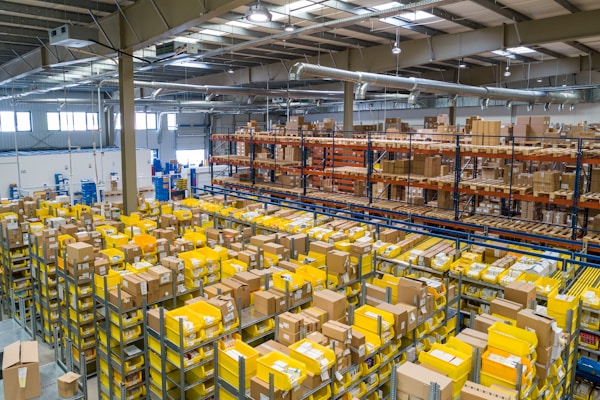
A building materials distributor was running 8 warehouses on a mix of Excel spreadsheets and an outdated DOS-based inventory system. Stock counts were off by 15-20%, leading to overselling and expedited shipments that ate into margins. We implemented Odoo with custom warehouse management modules, barcode scanning for receiving and picking, automated reorder points based on rolling demand analysis, and a customer portal for real-time order tracking. Inventory accuracy improved from ~82% to 99.5%. Expedited shipping costs dropped by 70%. The entire system went live in 5 months with zero downtime during the cutover.
Manufacturer: ML-Powered Demand Forecasting, 40% Less Overstock
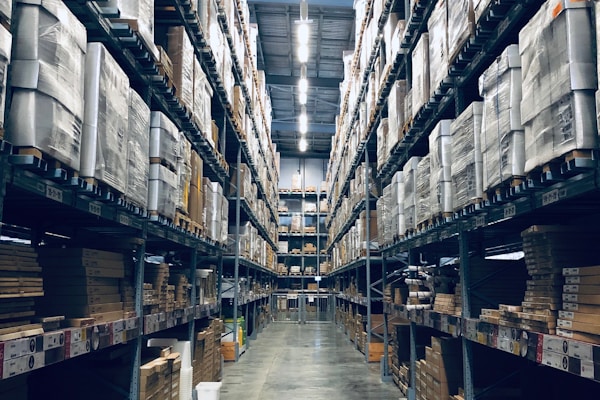
A consumer electronics manufacturer was overproducing popular items and underproducing niche products — tying up $8M in excess inventory. We built a demand forecasting system using Python ML models that analyzed 3 years of sales data, seasonal patterns, promotional calendars, and market signals. The model forecasts demand by SKU by region for the next 6 months, with weekly updates. Production planning integrates directly with their ERPNext manufacturing module. Overstock reduced by 40%, stockouts dropped by 60%, and inventory carrying costs fell by $2.4M annually.
Logistics: Route Optimization Saving $1.2M/Year in Fuel Costs
A regional delivery company with 120 vehicles was planning routes manually — dispatchers would pin addresses on a map and draw routes based on experience. We built a custom route optimization engine with Python that considers delivery windows, vehicle capacity, driver hours, traffic patterns, and real-time road conditions. The React dashboard gives dispatchers optimized routes each morning with the ability to adjust on the fly. Fuel costs dropped by 18% ($1.2M annually), average deliveries per vehicle increased by 22%, and late deliveries fell from 12% to under 3%.

Common Questions About Supply Chain Solutions
Ready to Modernize Your Supply Chain?
Whether you're dealing with inventory chaos, manual order processing, or zero visibility into your logistics — we've solved these problems before. Let's talk about what's not working.
Book a Free Consultation