Know How to Create exe for the desktop application
Download MarkDown
Last reviewed: November 2026.
1. Introduction
This document describes how to create the exe for the desktop application.
2. Executable file (exe file)
An executable file (exe file) is a computer file that contains an encoded sequence of instructions that the system can execute directly when the user clicks the file icon.
3. How to create the exe file for application
For creating the exe file for the application:
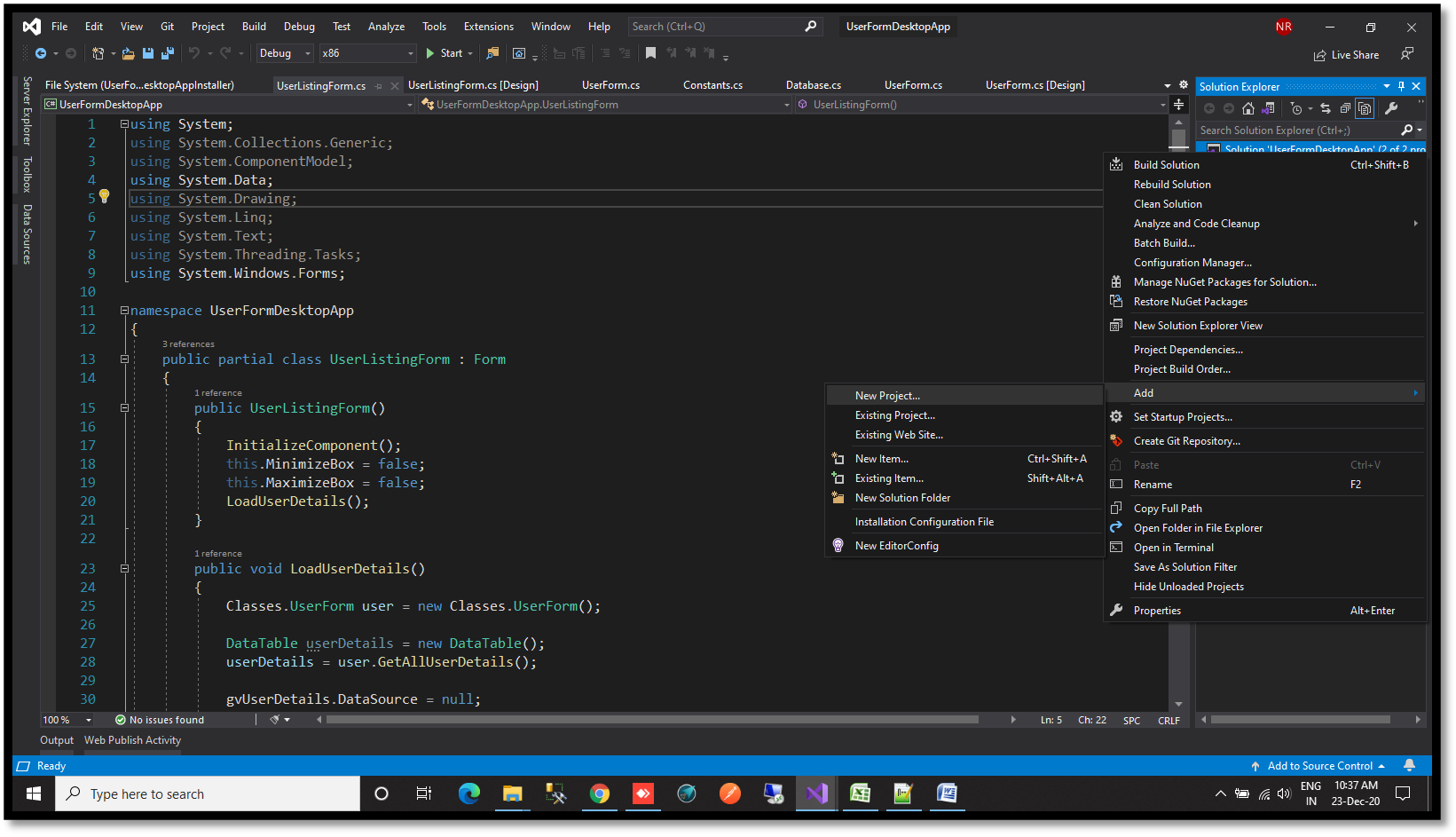
Go to the solution of the project -press right button of mouse and click on Add option- click on New Project.
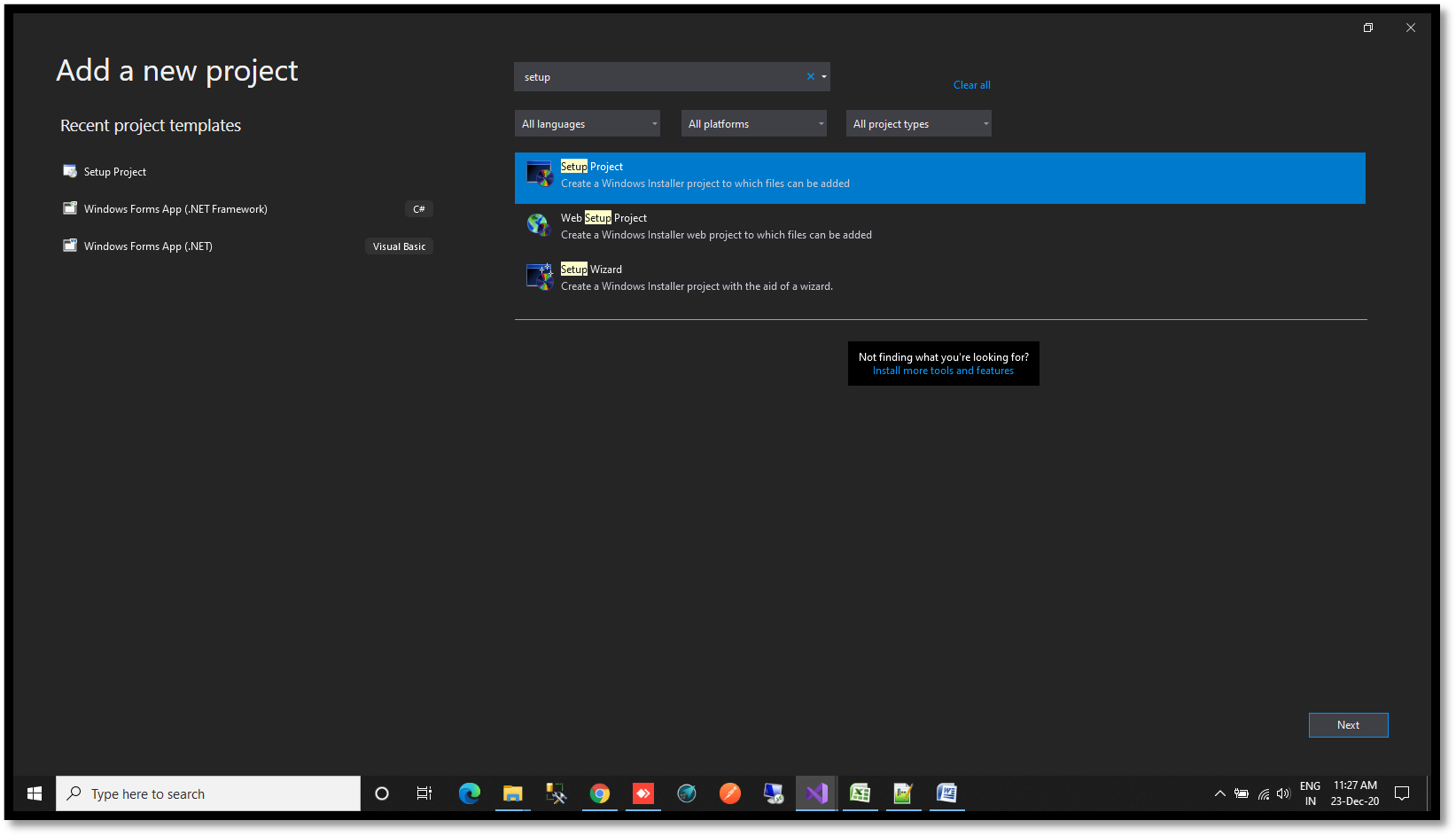
Search setup in the next window occur -click on Setup Project
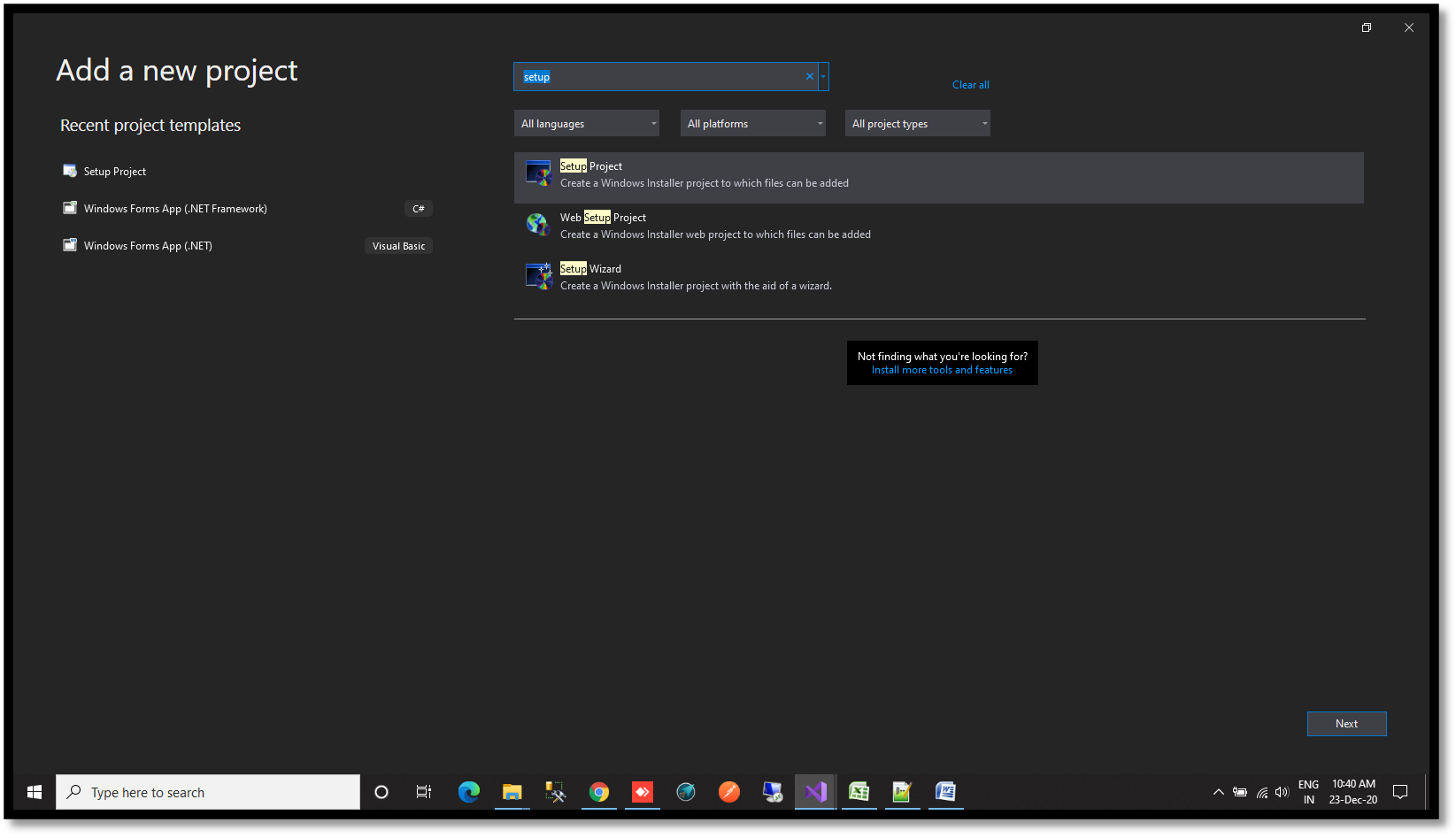
If the Setup Project option not found then add the extension while clicking on the extension option in top bar – click on Manage Extensions
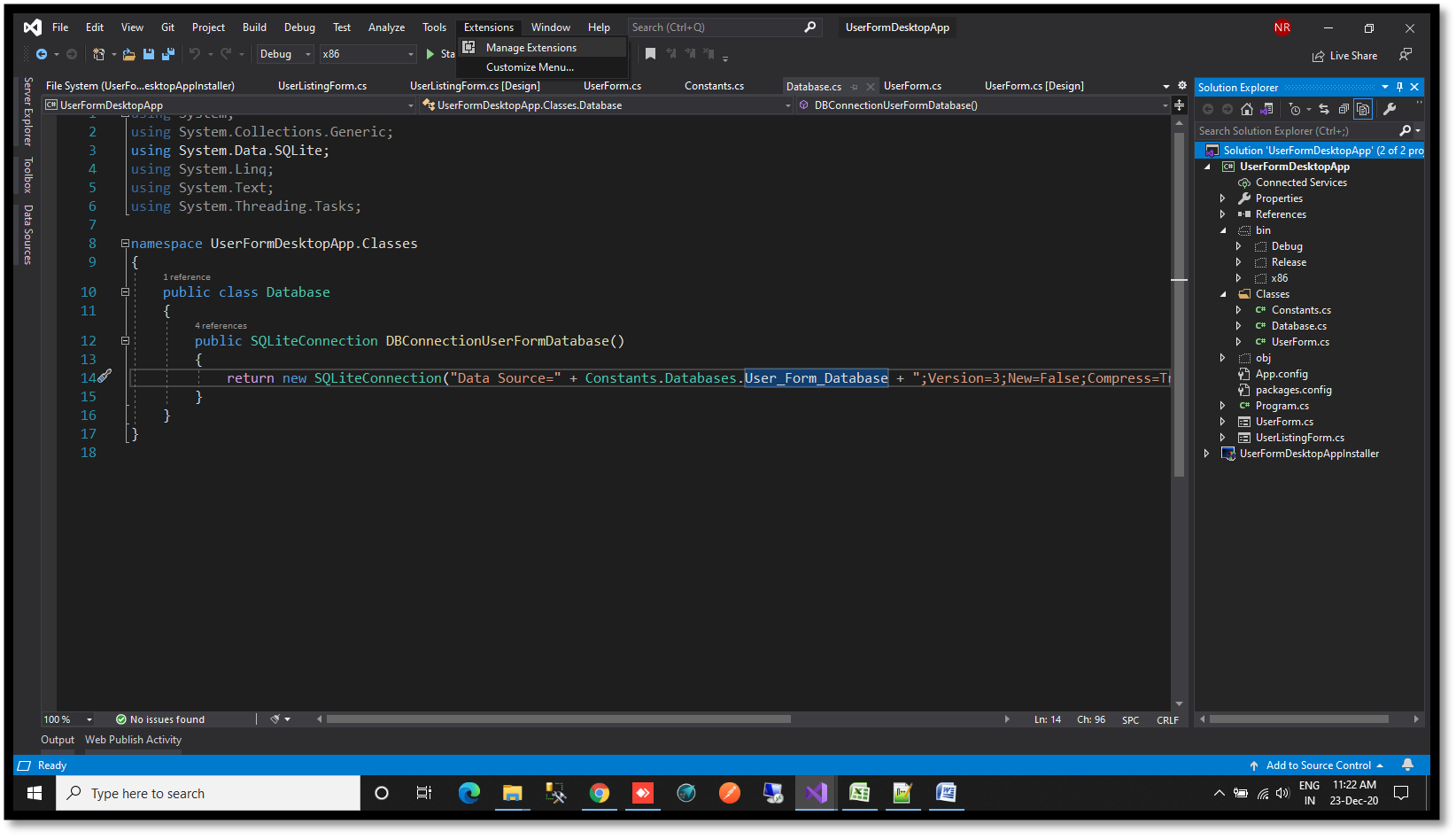
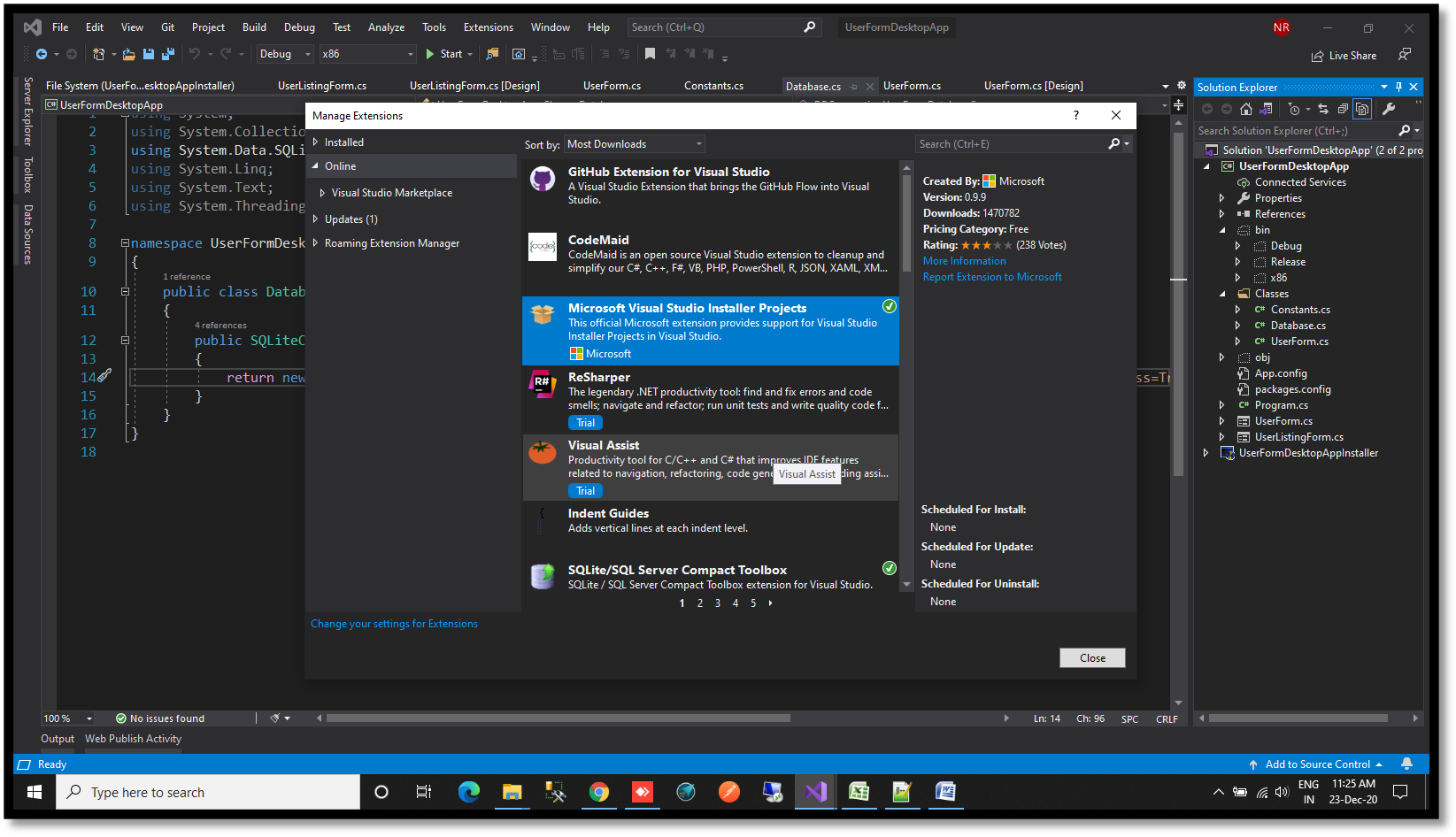
Add Microsoft Visual Studio Installer Projects extension in visual studios
If the Setup Project option is present there -Click on Next
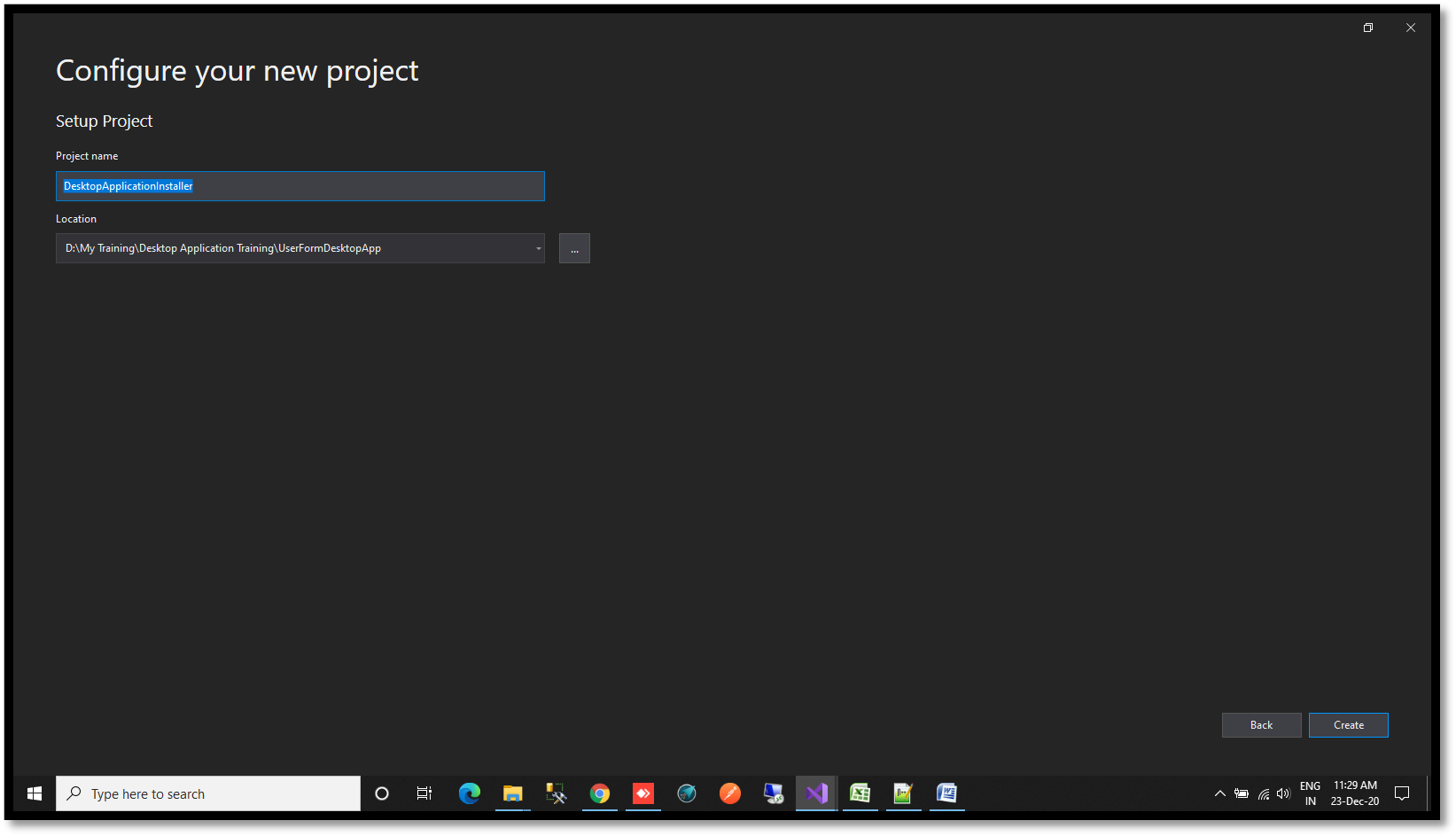
Provide the name to the setup -Click on Create
A new interface will shown to you
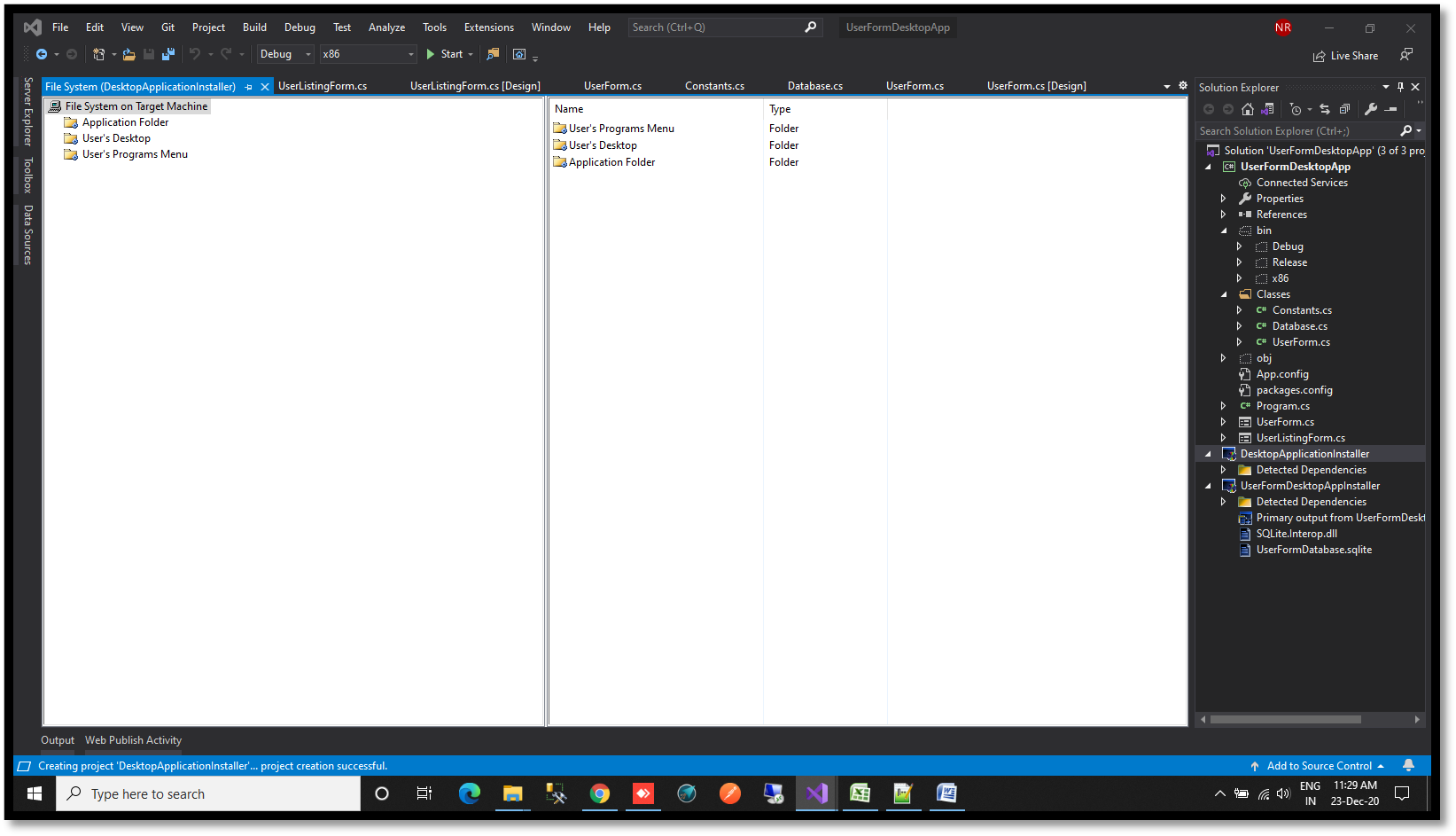
Right Click on Application folder -Click on Add – Project Output
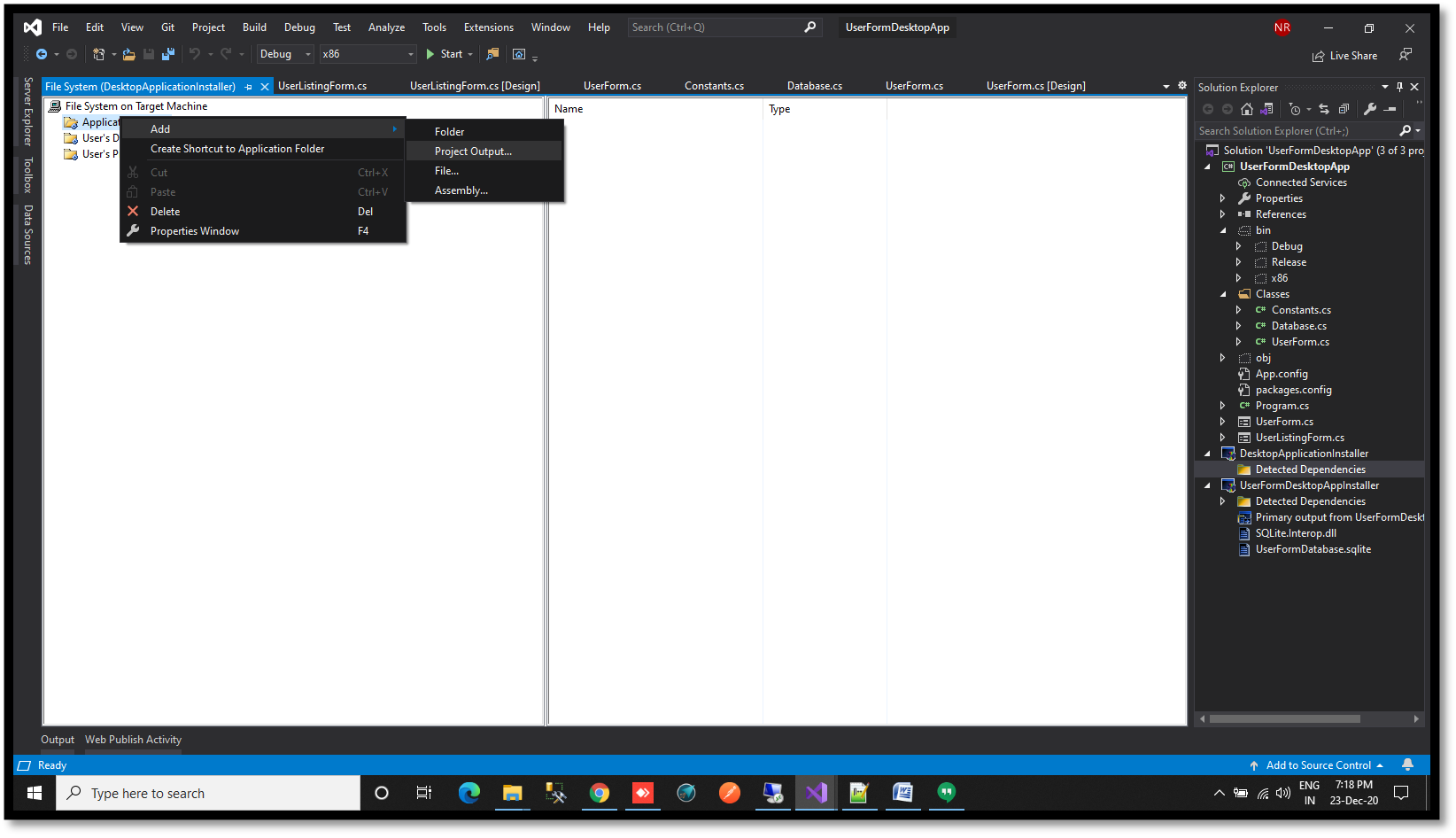
A new window will open -Click on Primary Output – Click Ok
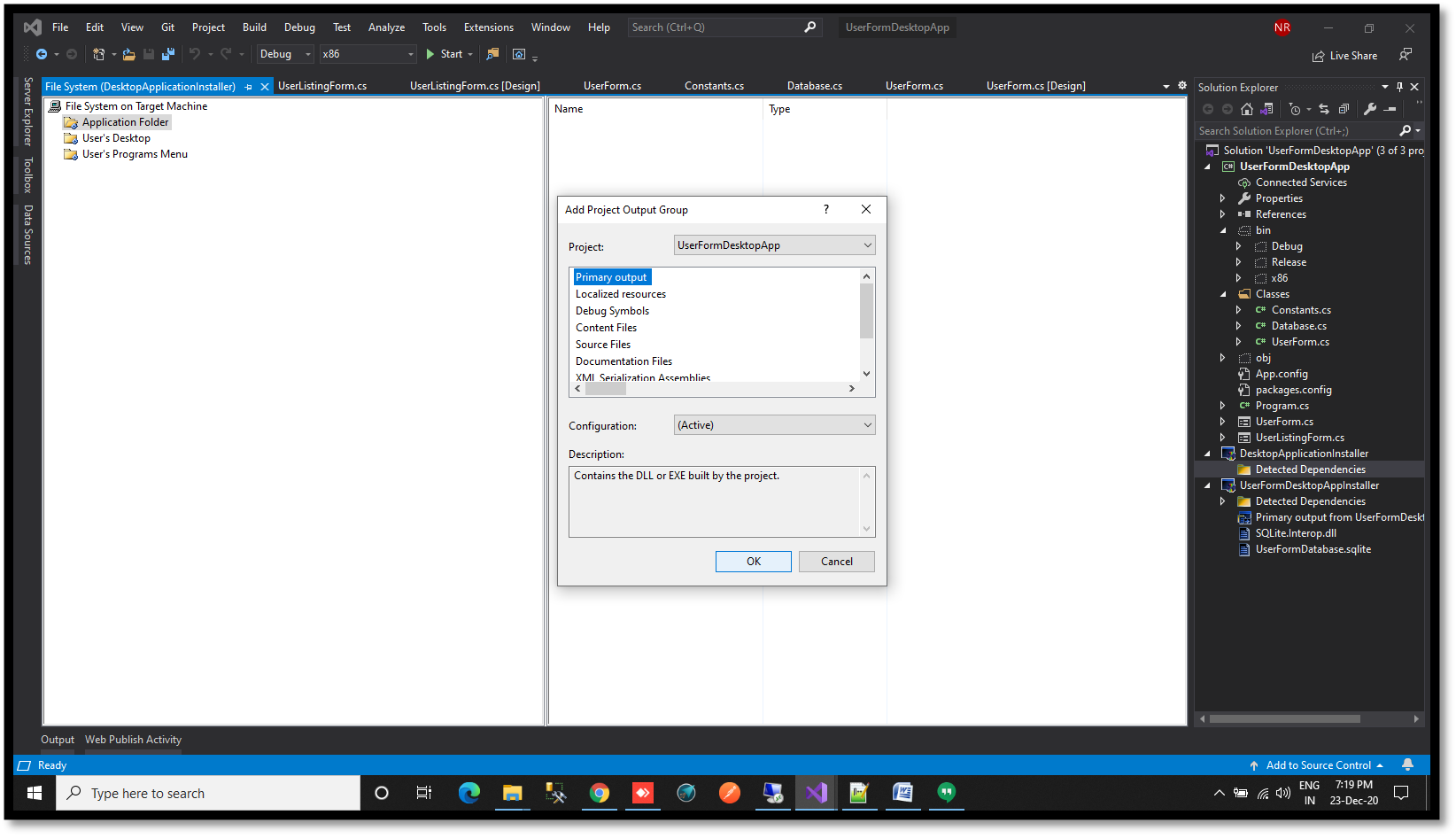
Multiple files will shown in the right section of the screen
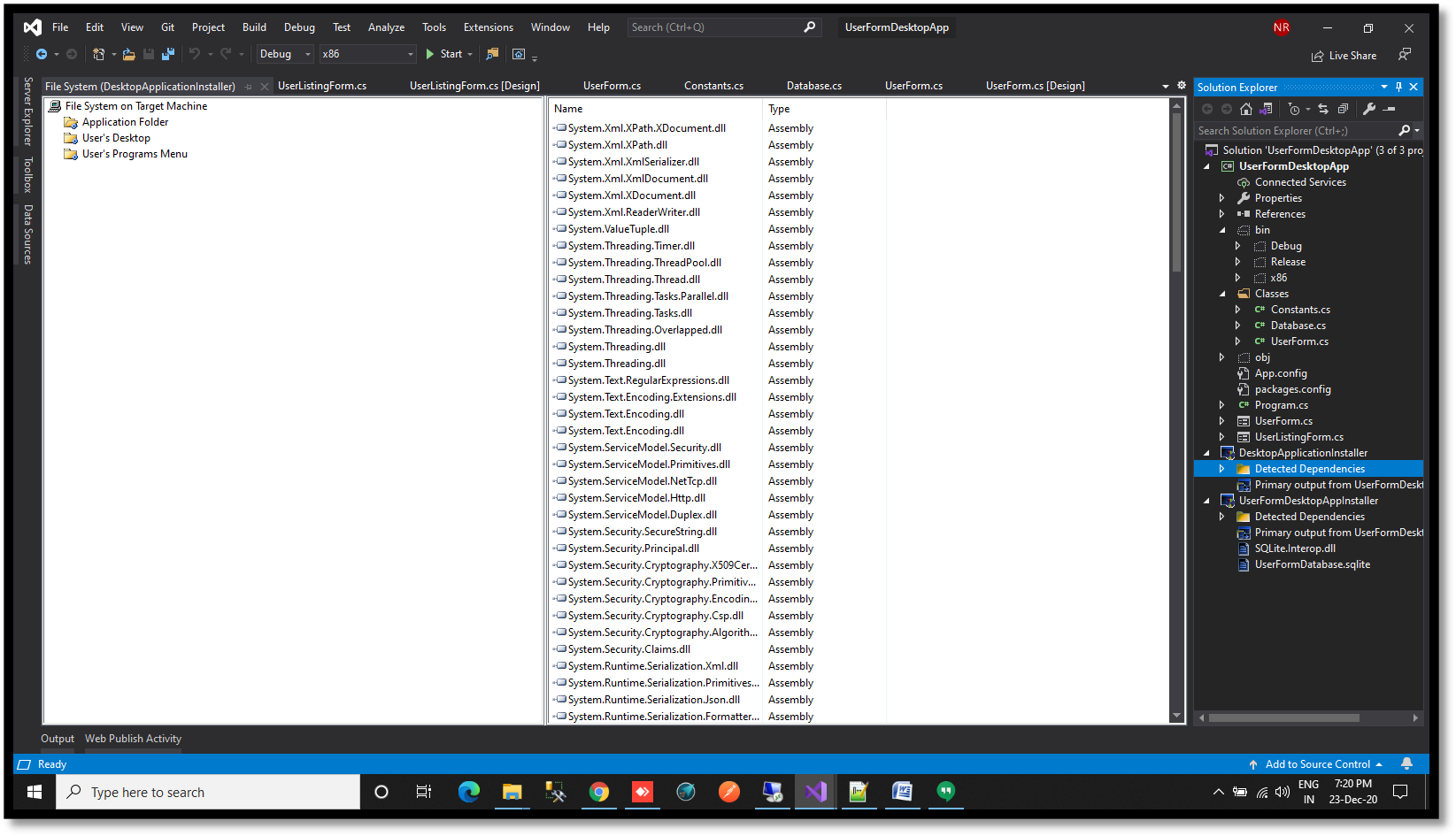
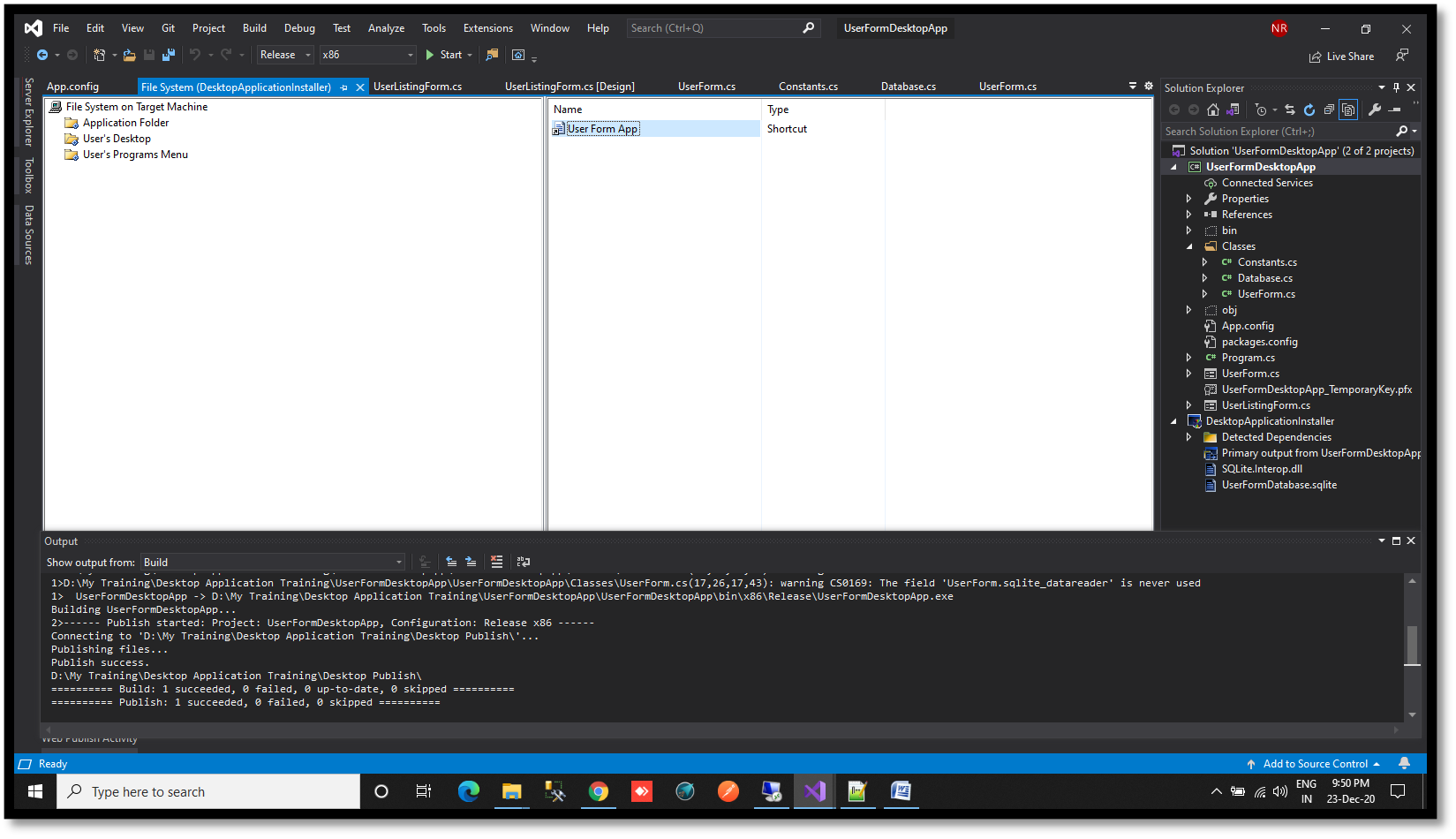
Click on User’s Desktop -Right click on right section- click on Create New Shortcut -Double click on Application Folder -Select Primary Output option -Click Ok
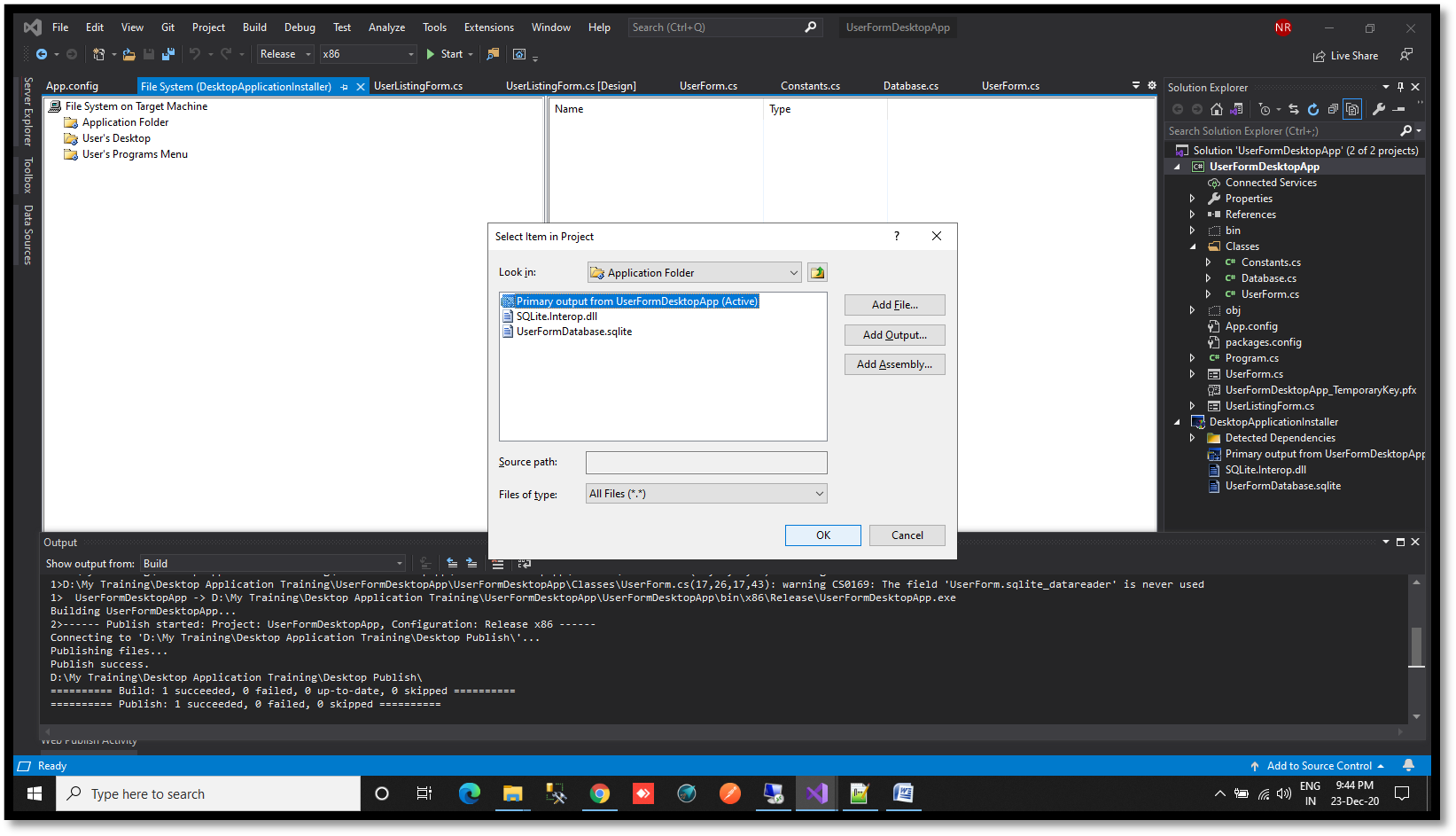
Rename the file. The file name will shown to user when they download the application in their system.
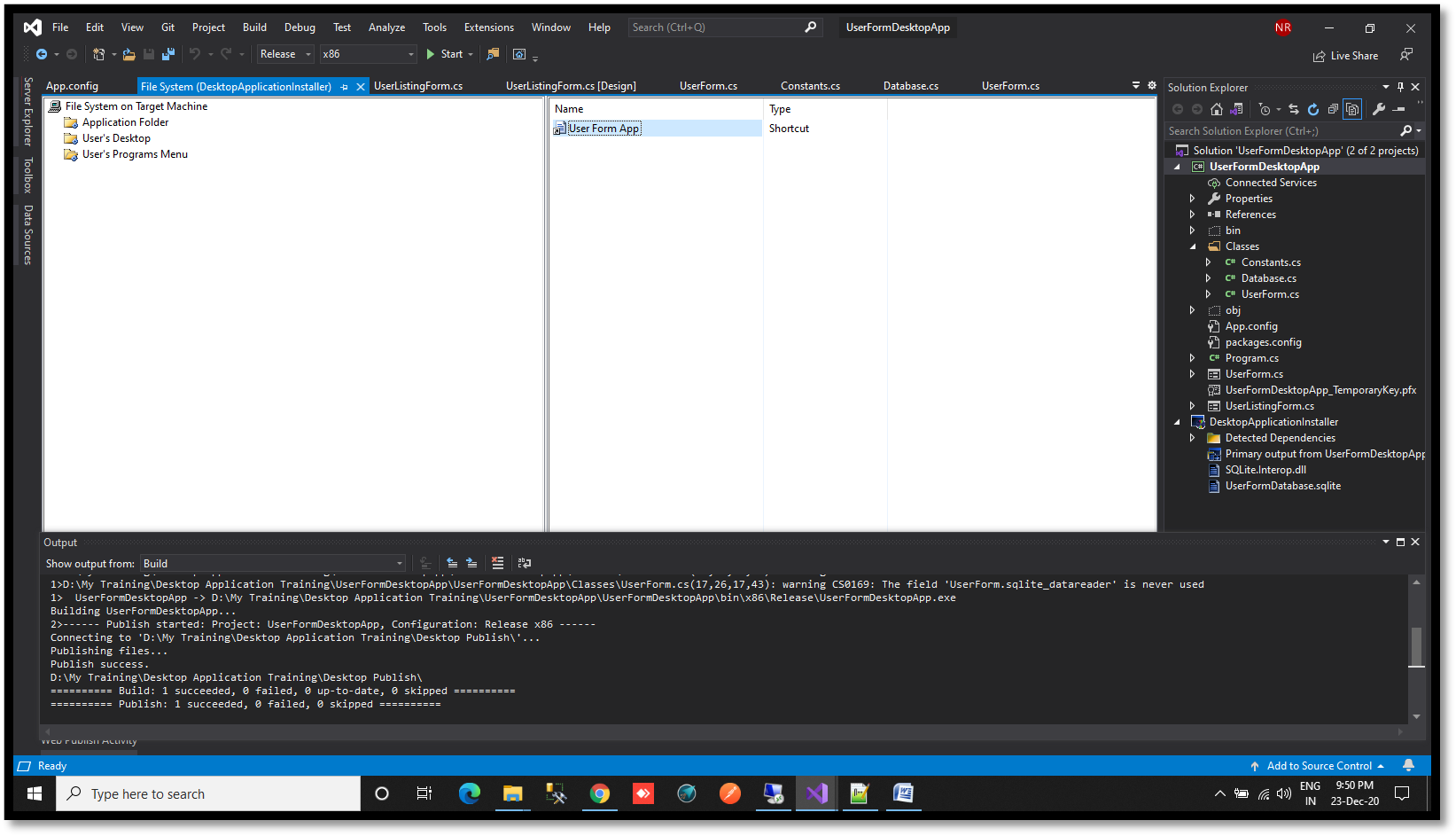
Click on User’s Programs Menu- Right click on right section- click on Create New Shortcut- Double click on Application Folder -Select Primary Output option -Click Ok
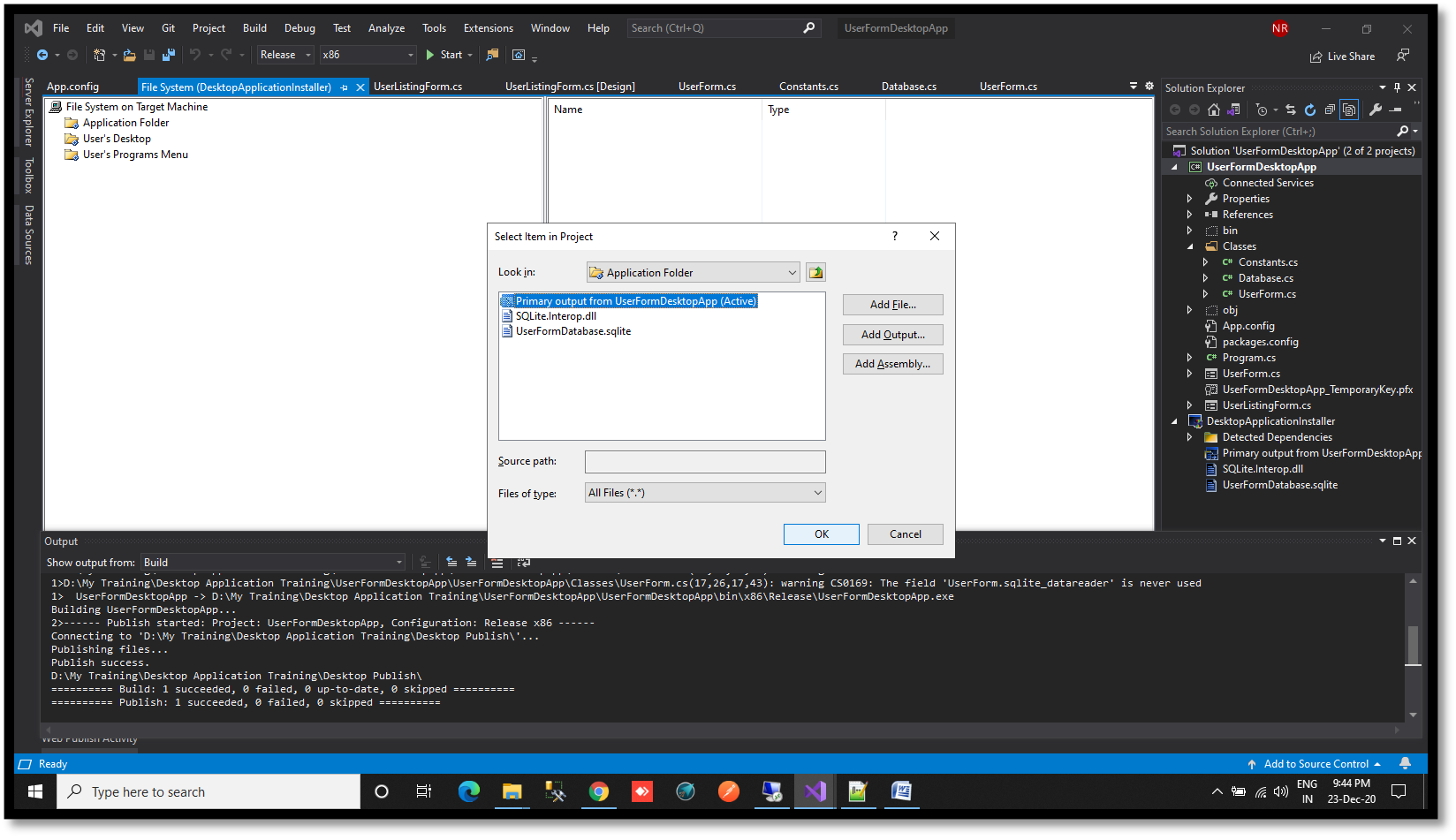
Rename the file.
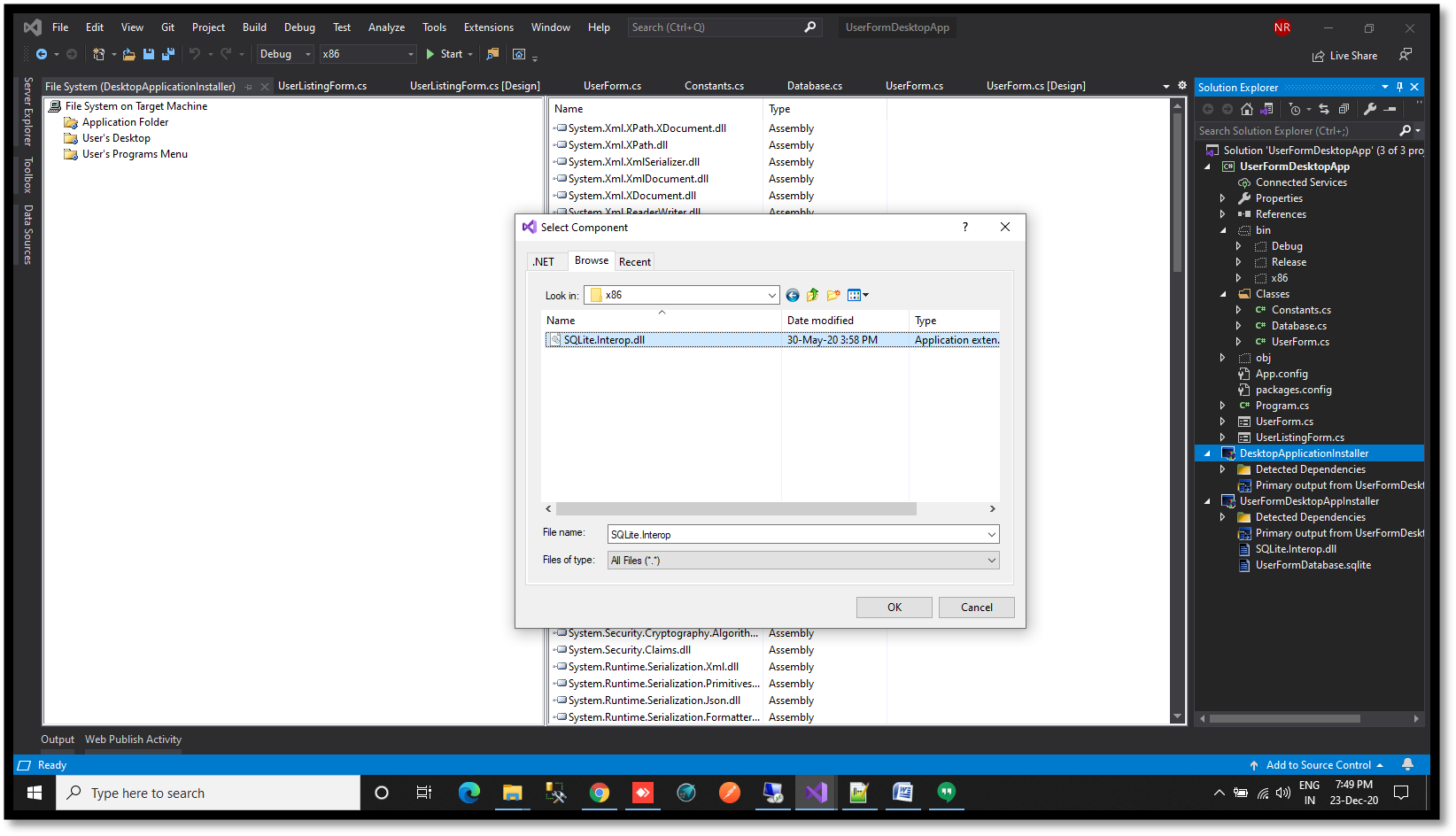
Right click on Installer- Click Add Click Assembly
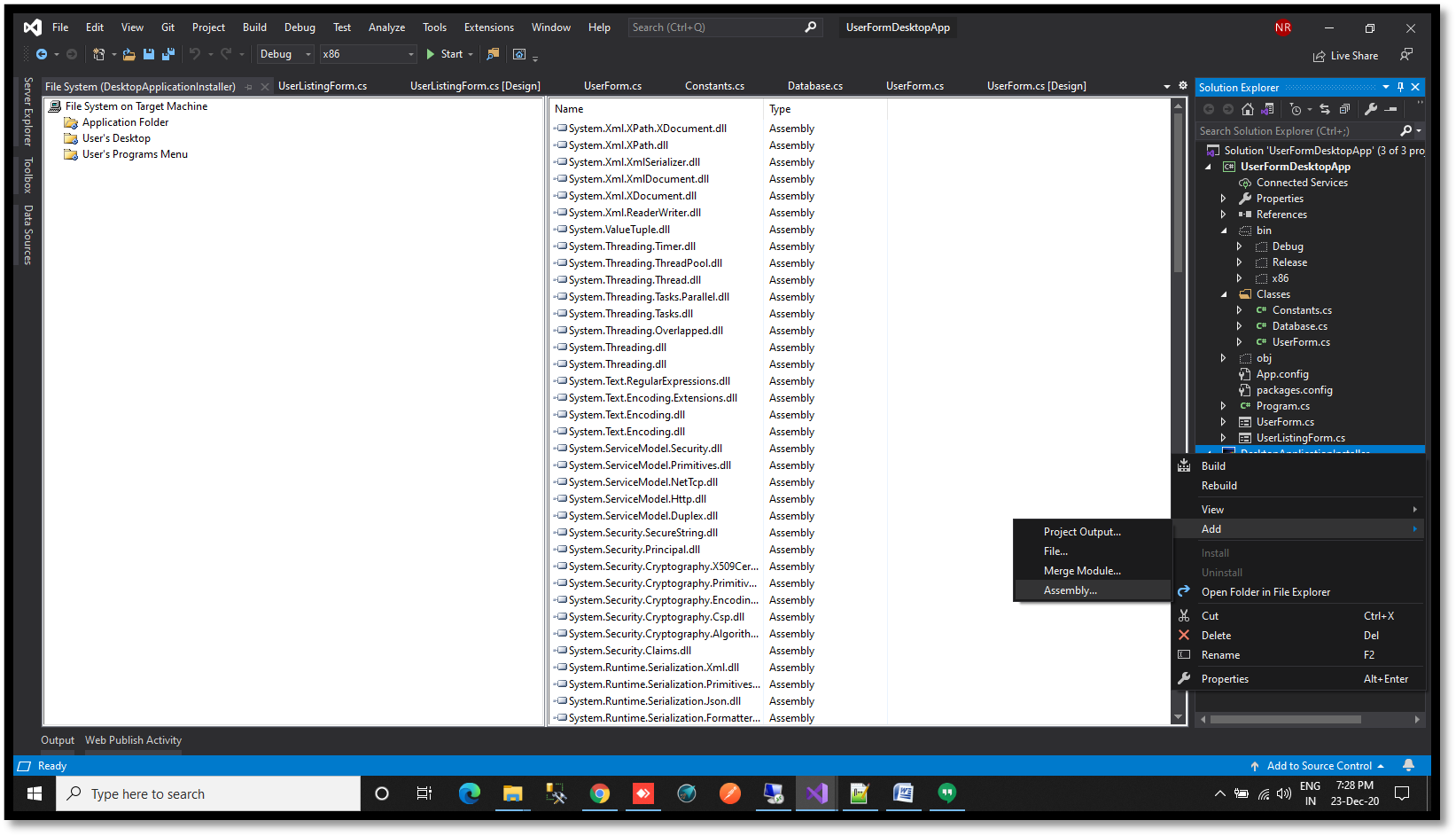
Browse to SQLite.Interop.dll under x86/Debug/x86 folder.
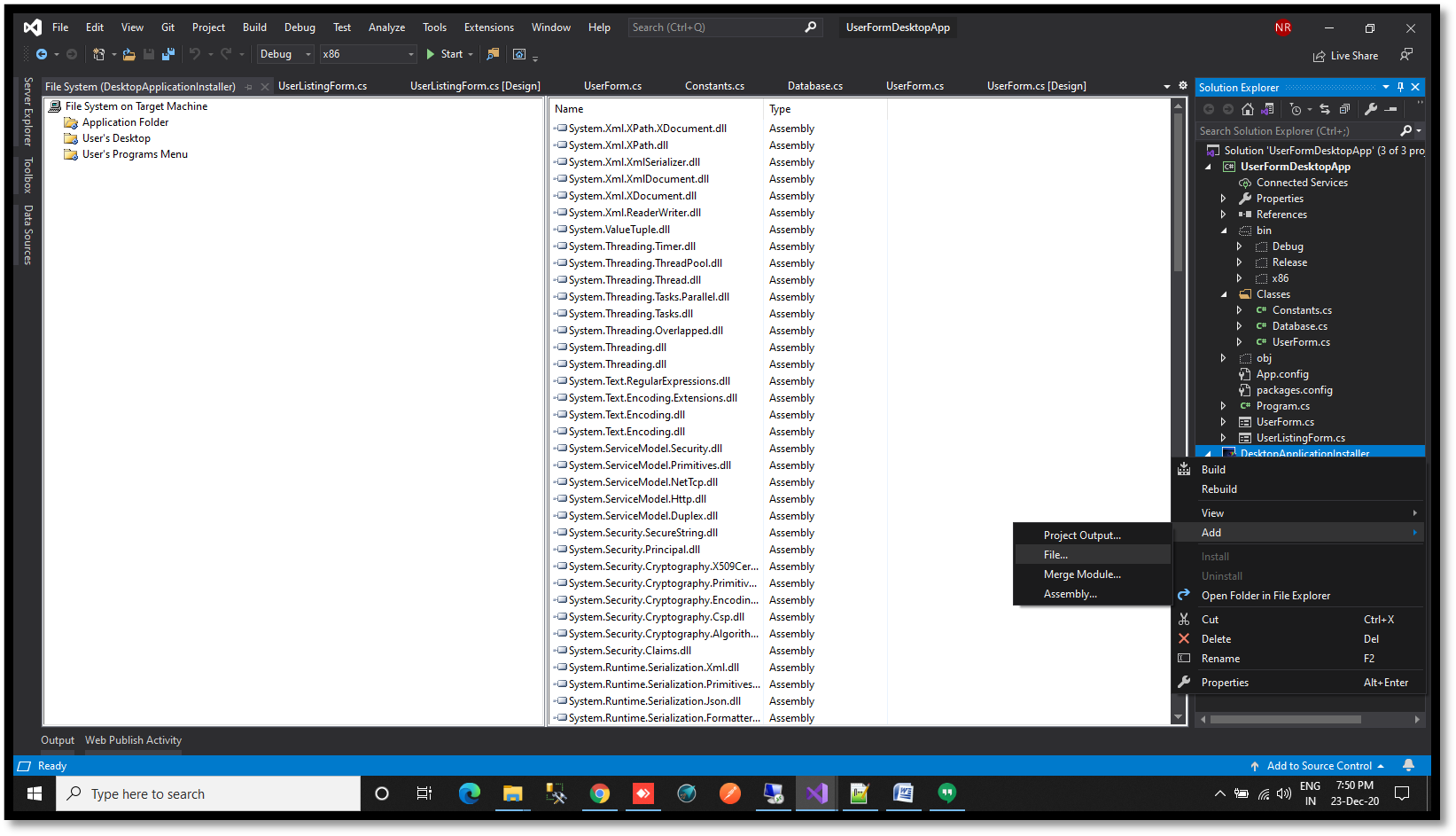
Right click on Installer – Click Add -Click File
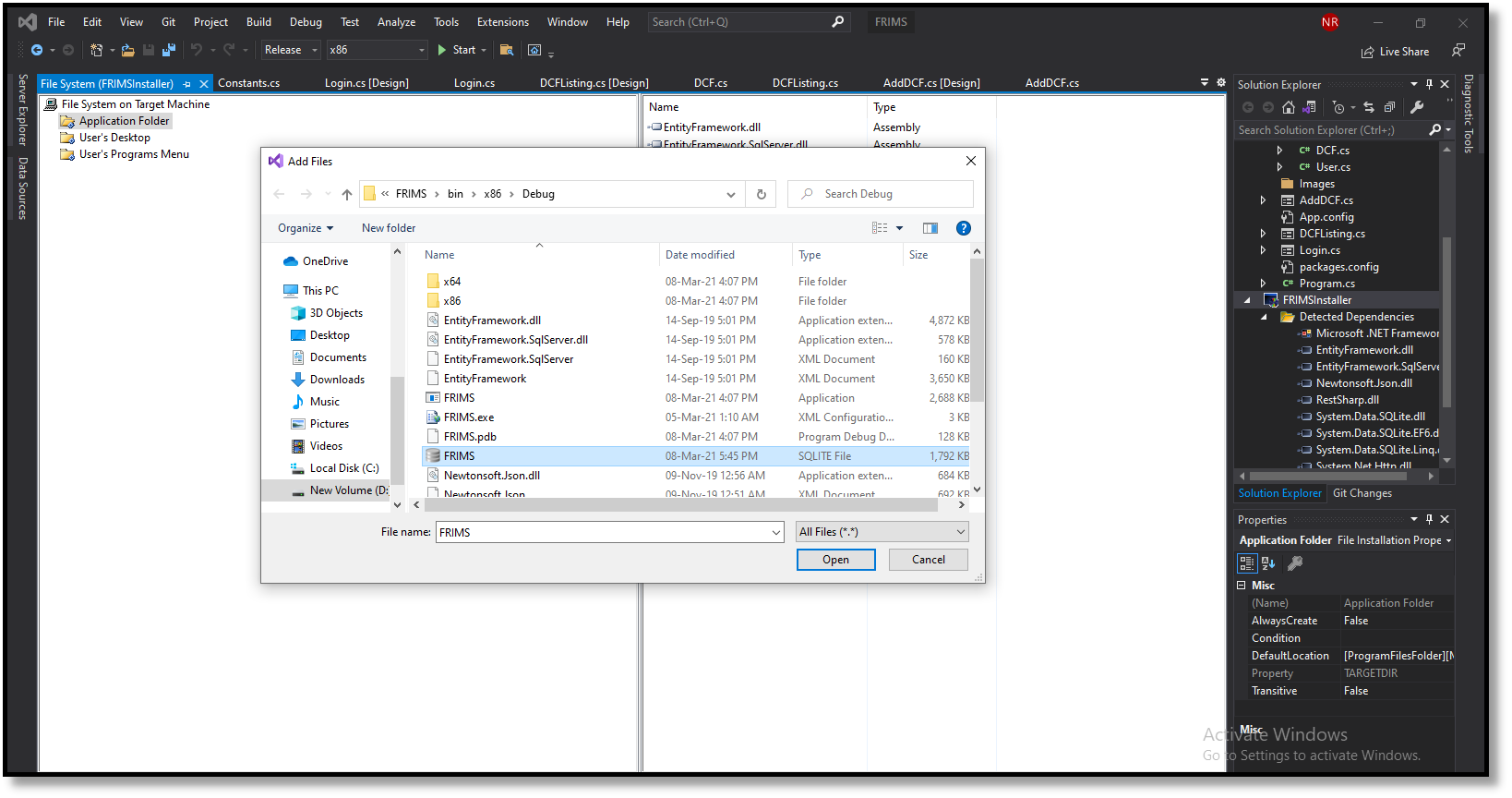
Browse to database of the application to (bin/x86/Debug) – Click Open
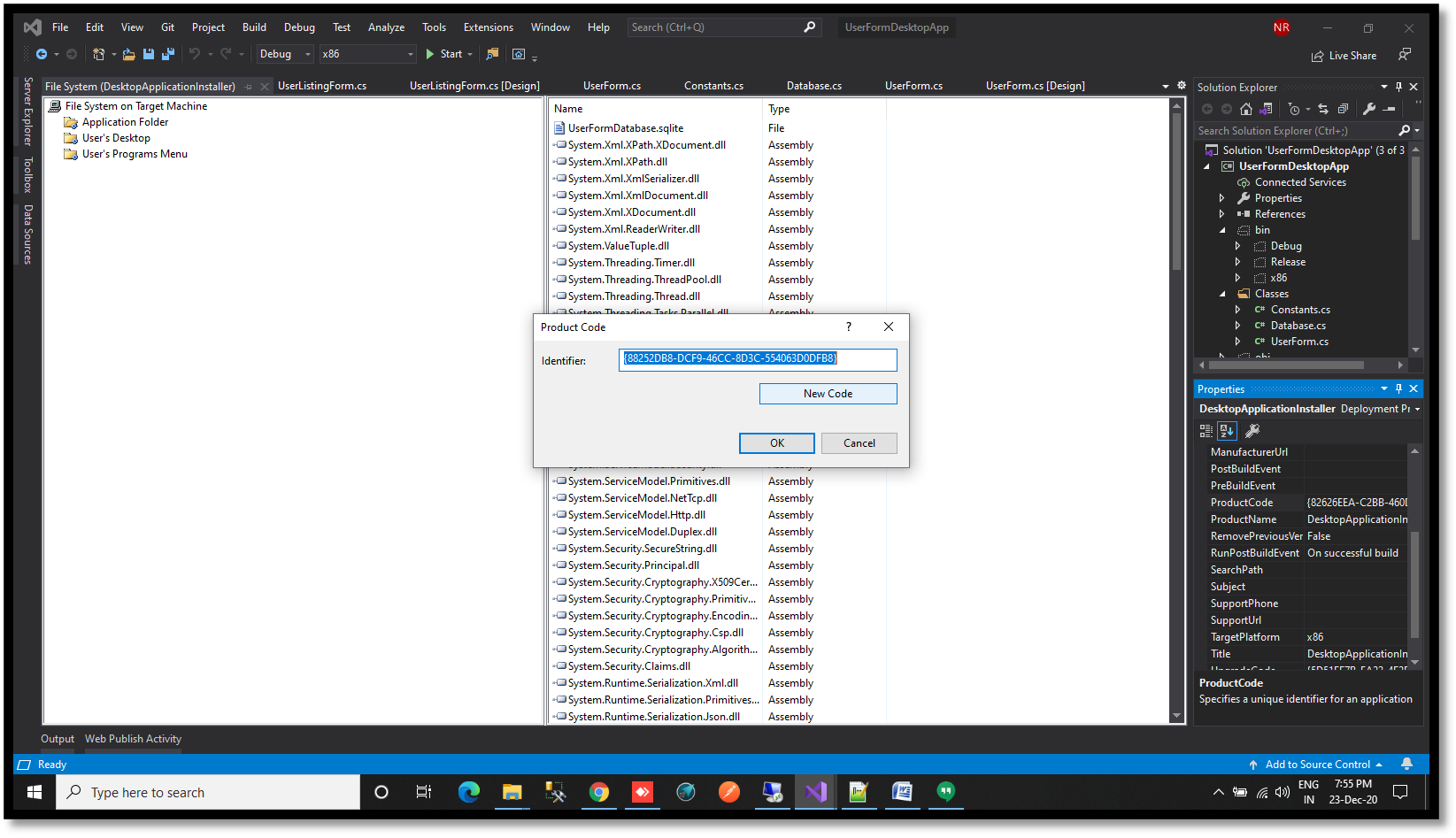
Click on Installer -Press F4 key- Click on Product Code- Click New Code- Click Ok -Click Upgrade Code – Click New Code -Click Ok
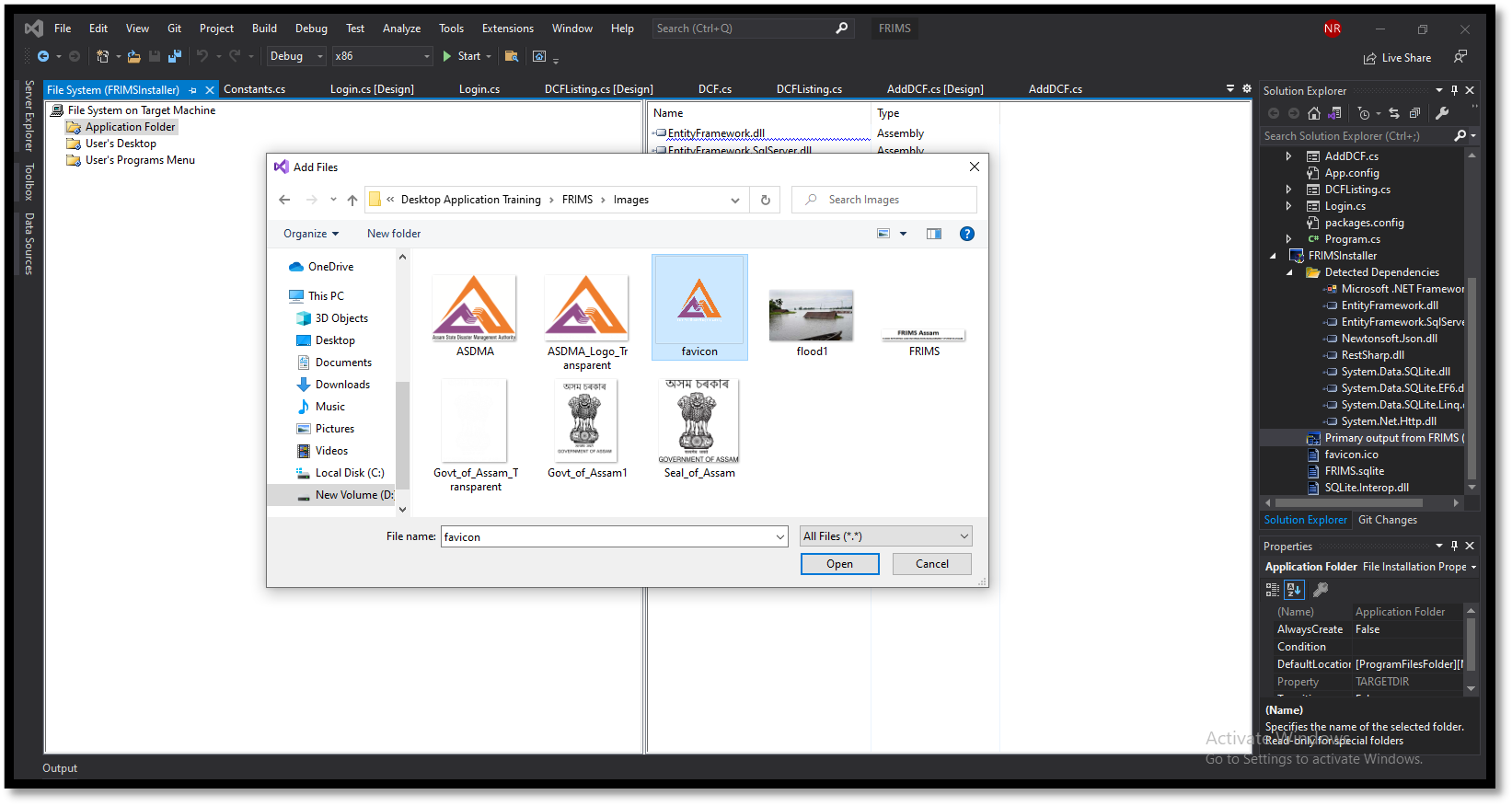
Right click on Application Folder- Click Add- Click File -Browse to path of icon image- Click Open.
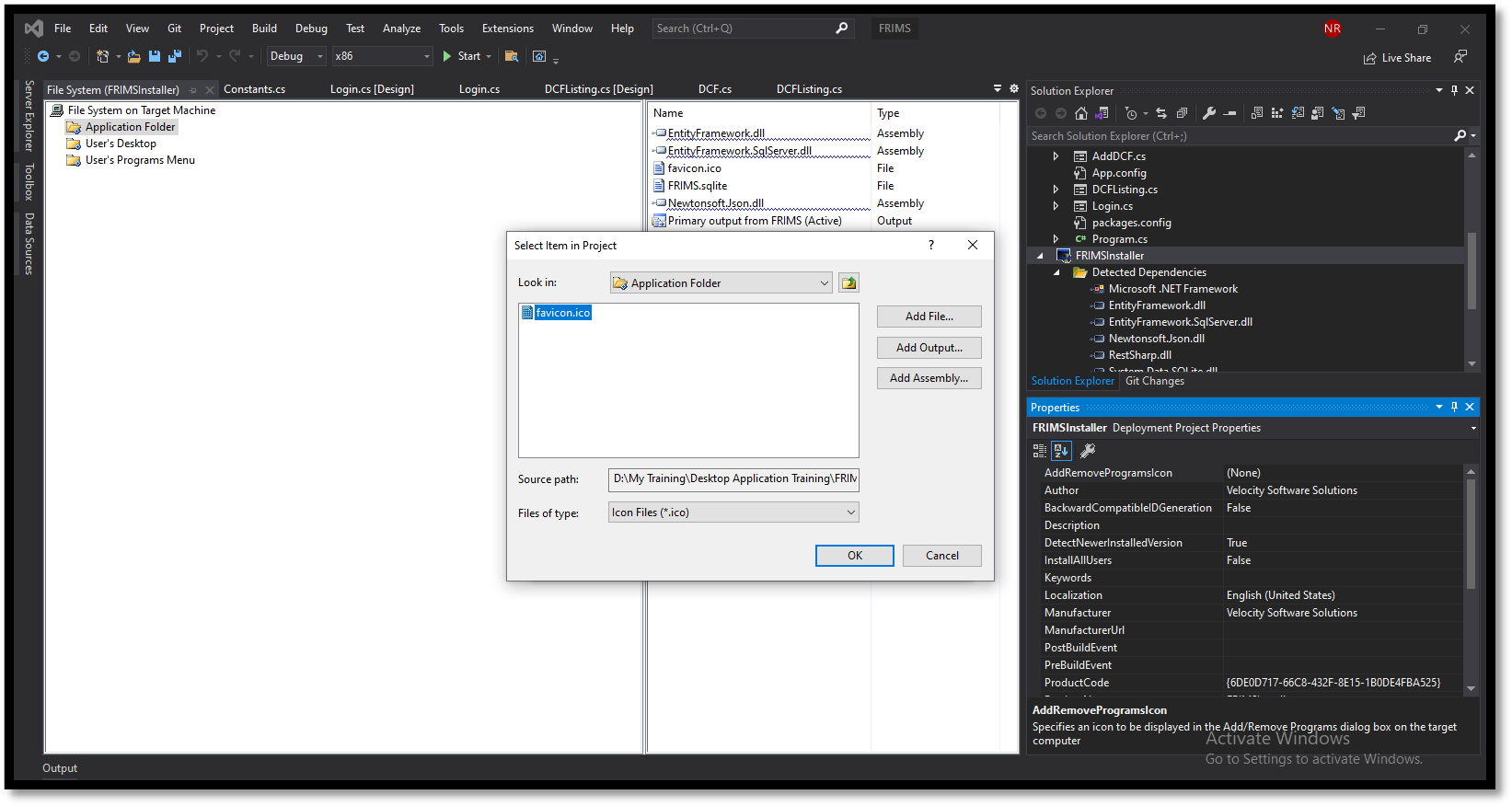
Click on Installer -Press F4 key -Click on AddRemoveProgramsIcons-Click on Browse- Click on Browse-Double click on Application Folder Select the icon image -Click Ok
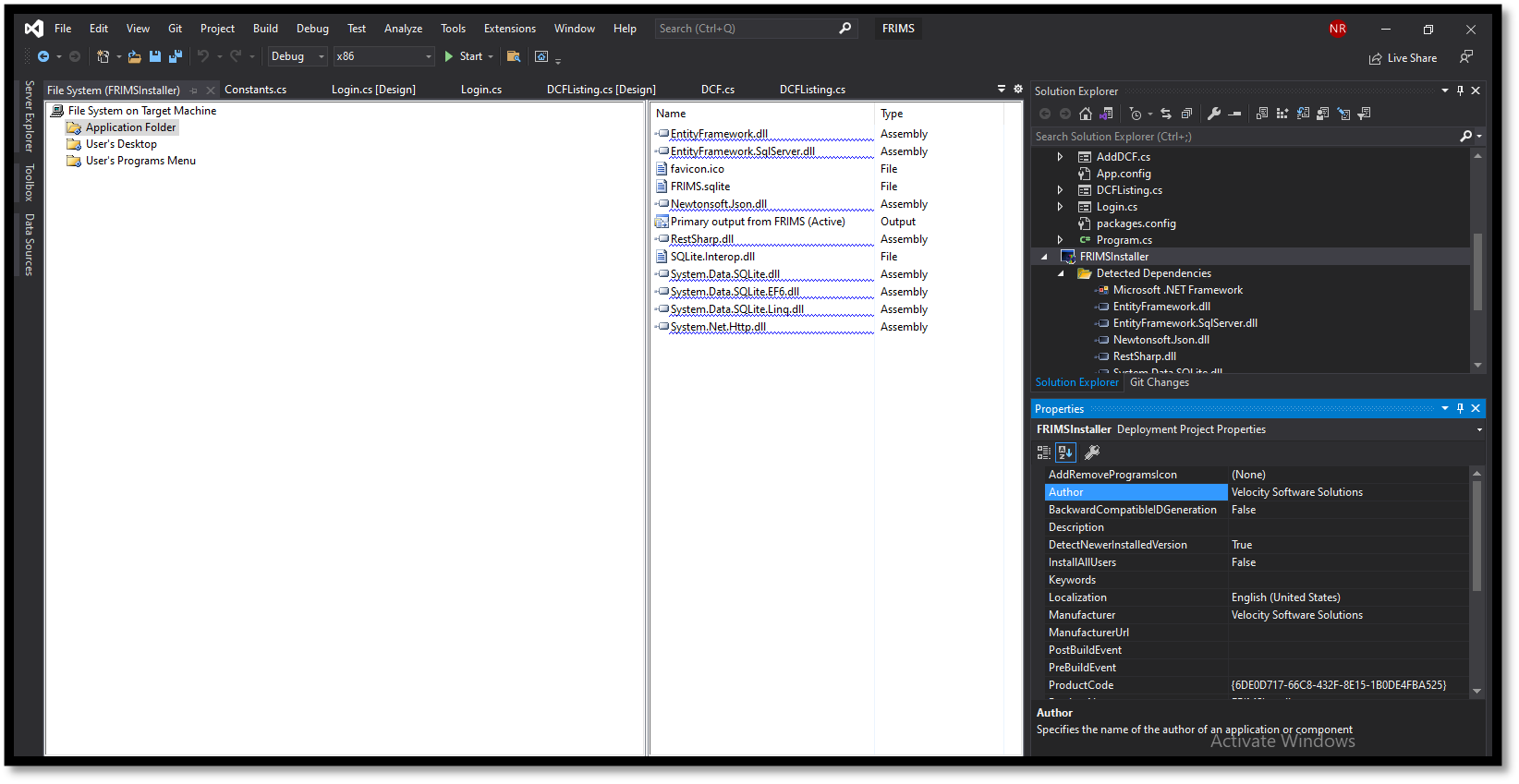
Click on Installer -Press F4 key- Click on AuthorWrite Company Name (Velocity Software Solutions) -Click on Manufacturer Write Company Name (Velocity Software Solutions)
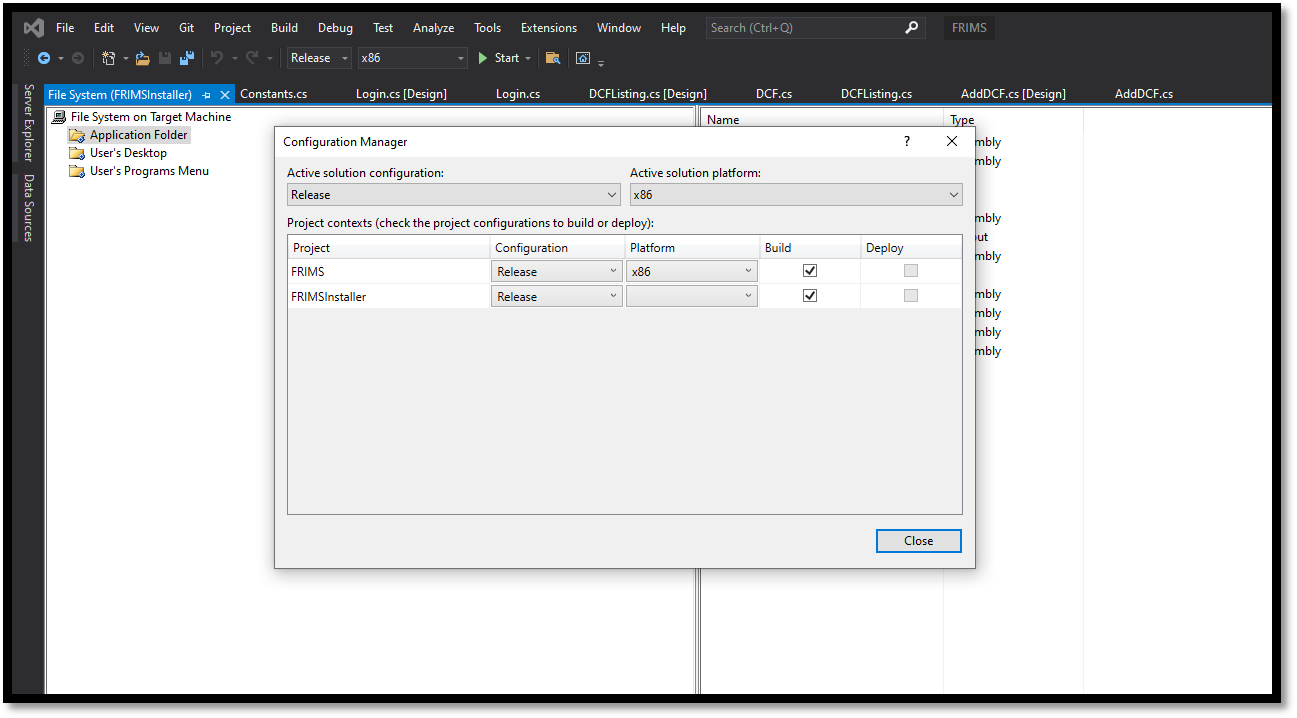
Select Release mode from top bar- select x86 in next drop down
If not present then add x86 by clicking configuration manager
Copy the database from bin- Debug to bin- x86 -Debug folder.
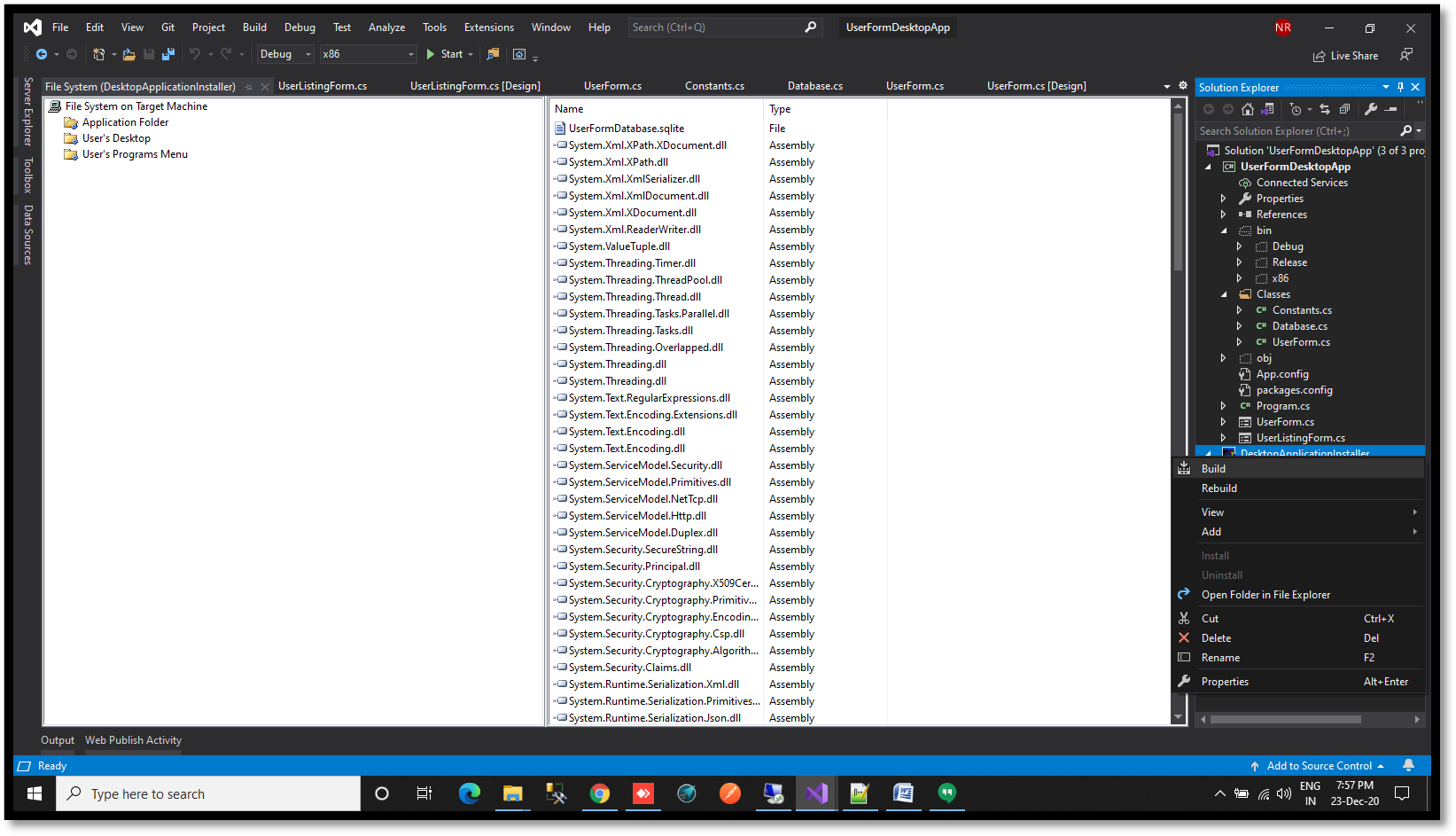
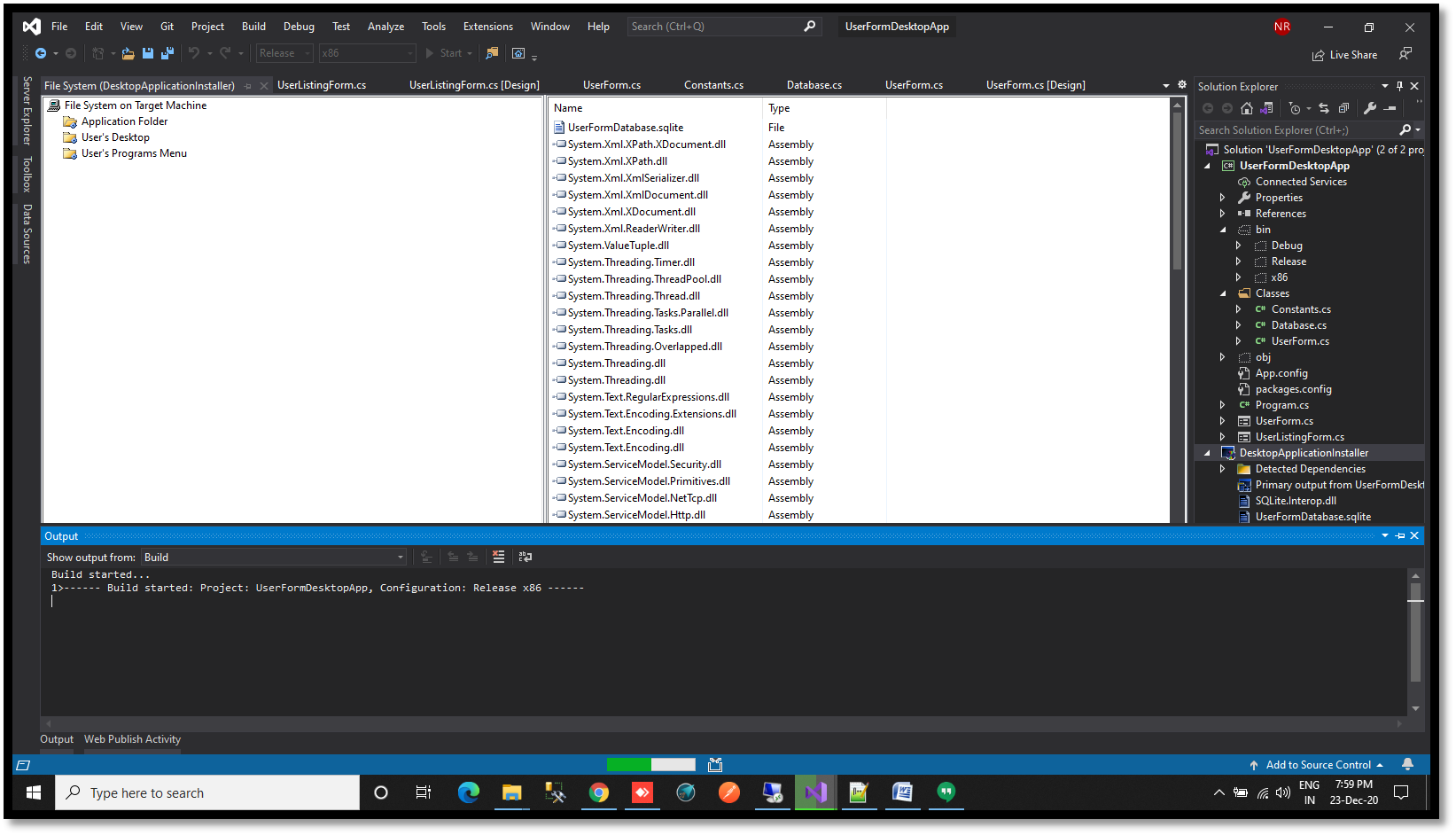
Right click on Installer- Click Build
Note – Kindly give write permission to folder where the application will be installed through exe.
Frequently Asked Questions
What is the easiest way to create an .exe file from a desktop application?
For Windows desktop applications built with .NET (C#, VB.NET), Visual Studio’s built-in Setup Wizard or the Visual Studio Installer Projects extension produces a .exe + .msi installer with minimal setup. For Python scripts, PyInstaller and cx_Freeze are the most common tools — both bundle the interpreter plus your script into a single .exe. For Java applications, Launch4j wraps a .jar inside a Windows-native .exe. For Electron apps (JavaScript/Node), electron-builder handles cross-platform .exe + .dmg + .deb output. The full Visual Studio Installer workflow shown above is best when you need MSI features (silent install, Group Policy deployment, uninstall registration).
Can I create an .exe file without Visual Studio?
Yes. Free alternatives include: Inno Setup (very popular Pascal-scripted installer, used by Audacity and PuTTY), NSIS (Nullsoft Scriptable Install System) (lighter installer, used by VLC and Notepad++), Advanced Installer (free tier available, GUI-driven), and WiX Toolset (XML-based, scriptable). All of these produce a single setup.exe that handles file copy, registry entries, and Start menu shortcuts without needing Visual Studio’s Installer Projects extension.
How do I create an .exe file from a Python script?
Install PyInstaller (pip install pyinstaller), then from your project directory run pyinstaller --onefile --windowed your_script.py. The --onefile flag bundles everything into a single .exe; --windowed suppresses the console window for GUI apps. The output appears in dist/your_script.exe. For richer installers (Start menu shortcut, file associations, uninstaller), pipe the PyInstaller output into Inno Setup or NSIS.
What’s the difference between an .exe and an .msi installer?
An .exe is a generic Windows executable — it can do anything (install software, run a portable app, launch a game). An .msi is a Microsoft Installer Package — a structured database of files, registry keys, and shortcuts that Windows Installer (msiexec.exe) reads and applies. The MSI format is preferred for enterprise deployment because it supports silent install (msiexec /i app.msi /quiet), Group Policy distribution, automatic uninstall registration in Add/Remove Programs, and roll-back on failure. Most installer tools produce both: a small bootstrapper .exe that wraps and launches the .msi.
How do I convert a .app file (macOS) to an .exe file (Windows)?
You can’t directly convert a .app — they’re built against different operating systems with different runtimes. The path is: recompile the source code for Windows. If the app was built in a cross-platform framework (Electron, .NET MAUI, Flutter, Qt, Java, Python with cross-platform GUI libraries), you can re-run the build process on Windows or with cross-compilation flags to produce an .exe. If it was built in Swift or Objective-C against macOS-only APIs (Cocoa, AppKit), you’d need to rewrite it. Tools like Wine can run some Windows .exe files on macOS, but there is no reverse tool that converts a .app to a working Windows .exe.
Why won’t my .exe file run on another computer?
The most common reasons: (1) missing runtime dependencies — your app needs the .NET Framework version it was built against, or the Visual C++ Redistributable, installed on the target machine. (2) wrong architecture — you built for x64 but the target is x86 (32-bit). Build for x86 to maximize compatibility. (3) Windows SmartScreen / antivirus blocking — unsigned executables trigger a warning. Sign your .exe with a code-signing certificate from a trusted CA (DigiCert, Sectigo, ~$200/year) to eliminate the warning. (4) missing data files — your installer didn’t copy a database, config file, or DLL that the app expects to find next to the .exe. (5) hardcoded paths — the app expects C:\Users\YourName\... but runs as a different user on the target.
How do I sign my .exe file?
Buy a code-signing certificate from a Certificate Authority (DigiCert, Sectigo, GlobalSign — usually $150–500/year for a standard cert, $300–700/year for EV which avoids SmartScreen warnings even at first install). After validation (a few hours for standard, 1–3 days for EV), you receive the cert as a .pfx or a hardware token. Use signtool.exe (ships with Windows SDK) to sign: signtool sign /f cert.pfx /p password /t http://timestamp.digicert.com your_app.exe. Signed executables show your company name in the UAC prompt and don’t trigger SmartScreen warnings for established publishers.