--- title: UNICEF New Delhi - FSSM Monitoring Dashboard for Four States url: https://www.velsof.com/case-studies/unicef-new-delhi-fssm-monitoring-dashboard-for-four-states/ date: 2026-02-15 type: case_study author: Velocity Software Solutions client: UNICEF India Country Office (WASH Section) industry: "Water, Sanitation and Hygiene (WASH) / Urban Sanitation / Faecal Sludge and Septage Management (FSSM)" location: "New Delhi, India (with implementation in Assam, Jharkhand, Madhya Pradesh, and Chhattisgarh)" categories: Case Studies tags: Dashboard, Healthcare, Mobile App, Monitoring, Public Health, Training, UNICEF, Web Application Development --- 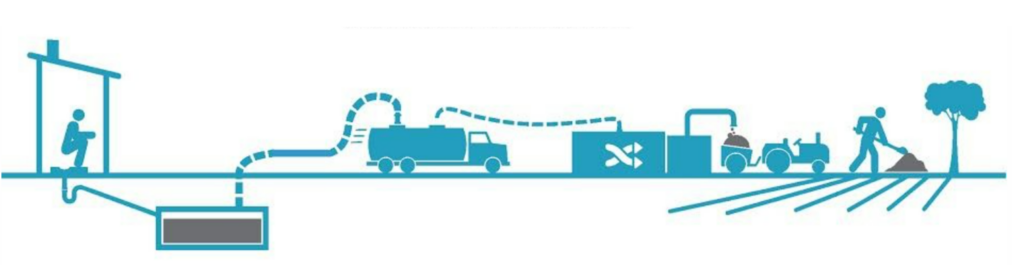 ## The Challenge India achieved significant progress under the Swachh Bharat Mission Phase 1 (2014-2019) in increasing access to toilet facilities. However, safe management of faecal sludge generated in toilets remained a critical issue, especially given that only 40% of urban India is connected to sewer networks, with approximately 60% of toilets relying on on-site sanitation systems (OSS) such as septic tanks and pit latrines. Key challenges included: - **No Dedicated FSSM Monitoring**: While India had dashboards for SBM (Grameen) capacity building and SBM (Urban) toilet infrastructure, there was no [dashboard](https://www.velsof.com/software-development/) monitoring the safe management of faecal sludge matter — a critical gap in the monitoring architecture - **Fragmented Data**: FSSM data across community, Urban Local Body (ULB), and Faecal Sludge Treatment Plant (FSTP) levels was scattered and not systematically collected or visualized - **Multi-State Complexity**: Four states (Assam, Jharkhand, Madhya Pradesh, and Chhattisgarh) each had unique FSSM contexts requiring state-specific dashboard configurations - **Multi-Level Monitoring Needs**: Monitoring was needed at multiple levels — household/community level (septic tank desludging), ULB level (service tracking), state level (policy and planning), and FSTP/STP level (plant functionality and capacity) - **IoT Integration Requirement**: FSTP-level monitoring required exploration of IoT integration with sensors to track plant functionality in real-time - **Government Handover**: The system needed to be eventually migrated to government (NIC) infrastructure in all 4 states ## Velocity’s Solution ### Scope of Work Velocity Software Solutions was engaged to establish a comprehensive IT-enabled structure for monitoring FSSM processes across four states, encompassing dashboard development, portal creation for external monitoring, and end-to-end IT solution delivery. 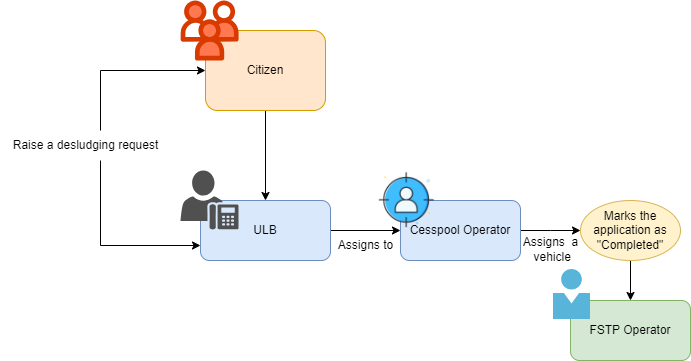 * Fig: FSSM Process Flowchart* ### Key Features & Deliverables **State-Level FSSM Dashboard** – State-specific FSSM dashboards accessible to government department officials managing FSM projects – Key indicators captured across all four states based on baseline assessment data – Literature review of the FSSM sector to identify relevant monitoring indicators – Stakeholder meetings with UNICEF state teams, government counterparts, and Technical Support Units 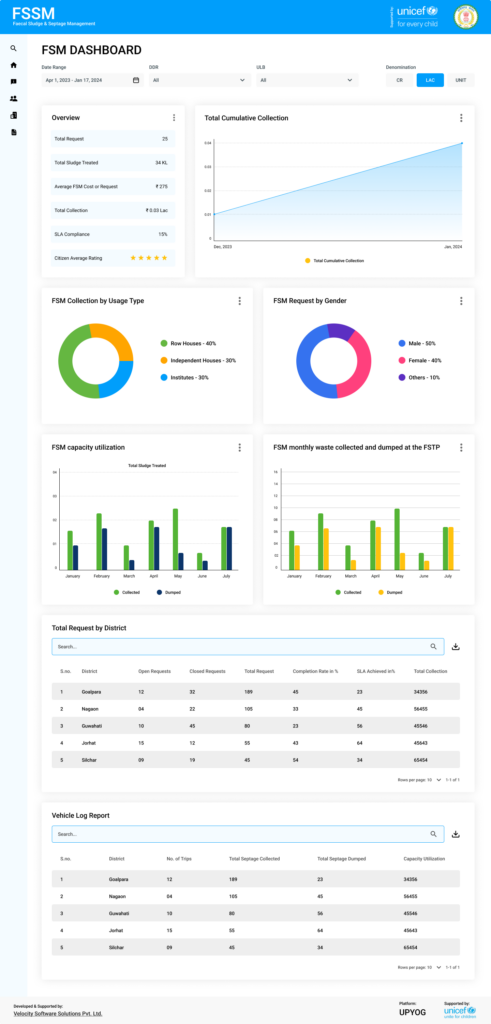 * Fig: FSSM Dashboard for Government Level Officials* **Community/Household Level Monitoring Portal** – Septic tank desludging status tracking at selected ULB levels – De-sludger mobile application for operation tracking – Call center integration for centralized desludging request registration – Online payment linkage for monitoring revenue collection – Regular cleaning and maintenance monitoring of septic tanks – User fee and sanitation tax payment tracking – Training modules for ULB-level officials on community-level interfaces **ULB Level Monitoring Dashboard** – Complete website with reporting and dashboard management system for state governments – Tracking and recording data for each septic tank for effective desludging planning – GPS-enabled live desludging vehicle tracking system – FSTP capacity planning and prospective planning support – Revenue collection monitoring through payment linkages – Grievance Redressal Mechanism for ULB communication with state nodal bodies **FSTP/STP Level Monitoring** – IoT integration exploration with sensors for real-time FSTP functionality monitoring – Data capture through sensors in an integrated system for FSTP managers – Capacity monitoring to support planning for new FSTPs or upgradation of existing ones – Monthly payment status tracking linked to onsite TSU teams – Monitoring forms/mobile app for desludging operations (trips, volume of septage emptied) – Data transmission and reflection in state-level dashboards **Comprehensive IT Solution** – End-to-end design, development, testing, deployment, and Go-Live – Data flow architecture with clear flow charts across fields and levels – Functional specification documents from requirements gathering – Solution architecture, UI/UX mockups, project plans, and QA/test plans – Domain name registration and management – Vulnerability Assessment and Penetration Testing (VAPT) through independent specialized agency – Role-based access control with special consideration for personally identifiable information – Workflow-driven approach with streamlined monitoring and end-to-end tracking **Handover & Knowledge Transfer** – Complete source code, libraries, and packages with clear migration instructions – Code documentation and user manuals for administrators and end users – Fully functional dashboard image configured on UNICEF cloud for future demos and enhancements – Training programme and handover documentation for technical and business perspectives – 8 months of system operation followed by handover to respective government agencies in all 4 states 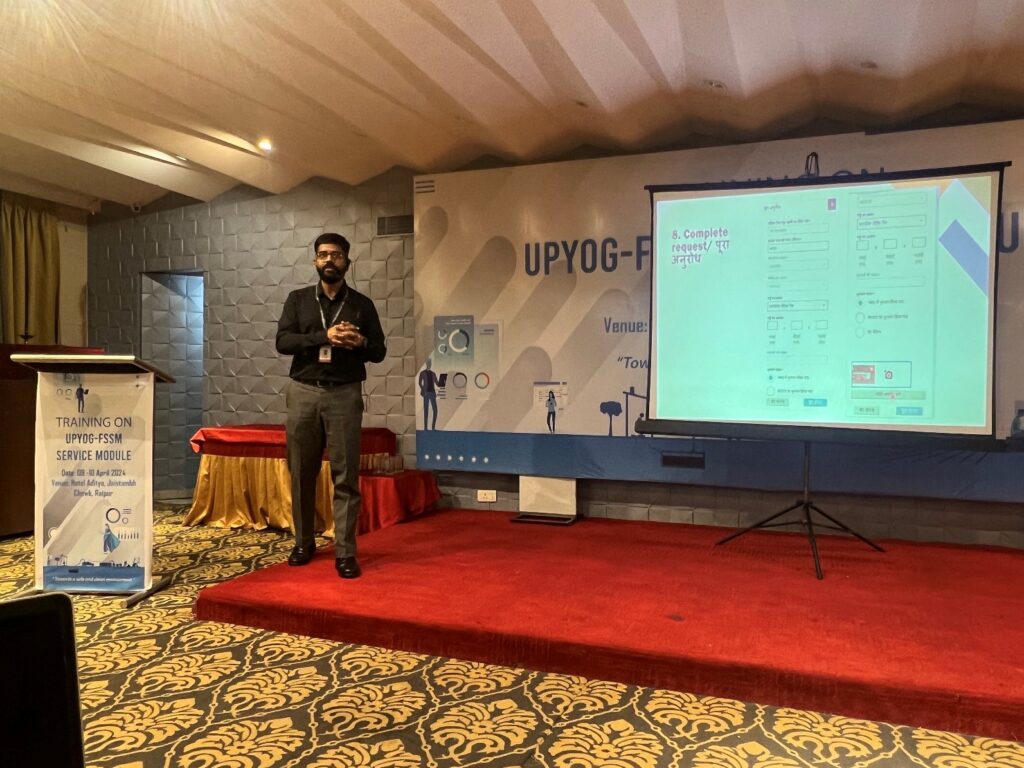 * Fig: Training Sessions* ### Technology Stack - **Frontend**: Responsive web dashboard, Mobile applications - **Backend**: API-driven architecture with multi-level data aggregation - **IoT**: Sensor integration for FSTP monitoring - **GPS**: Live vehicle tracking for desludging operations - **Communication**: Call center integration, SMS/notification services - **Security**: VAPT-certified, SSL, role-based access control, PII protection - **Infrastructure**: Cloud-based with migration path to NIC/government servers - **Licensing**: AGPL license with publicly available source code 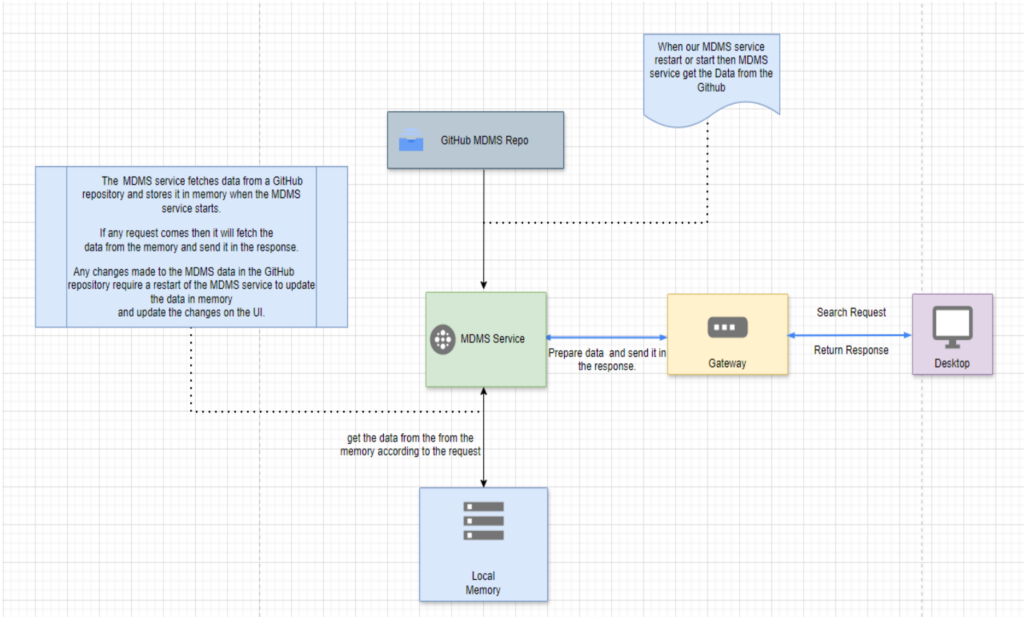 * Fig: Technical Architecture* ## Implementation Approach The project was structured around four major deliverable areas over 8 months: **Phase 1 – State Dashboard Development (Months 1-2)**: Review of existing FSSM systems across states and partner organizations, stakeholder meetings with state urban development departments/ULBs and UNICEF/TSU teams, and creation of the state-level dashboard with key indicators. **Phase 2 – External Monitoring Portal Development (Months 1-6)**: Parallel development of community-level, ULB-level, and FSTP/STP-level monitoring portals with progressive testing and deployment across 4 states. Travel to all 4 states was required for testing modules and applications. **Phase 3 – Comprehensive IT Support (Months 1-6)**: End-to-end IT solution delivery including requirements gathering, architecture design, development, testing, VAPT, and deployment. Comprehensive documentation maintained throughout. **Phase 4 – Handover & Knowledge Transfer (Month 7-8)**: System operation, monitoring dashboard architecture report with source codes, handover process with required certifications, and transfer to government agencies. The work was supervised by the WASH Officer for M&E, with technical support from the IT team and WASH Sanitation Specialist at the UNICEF Delhi office, in collaboration with respective UNICEF state offices in Assam, Jharkhand, Madhya Pradesh, and Chhattisgarh. ## Key Outcomes & Impact - **First-of-Its-Kind FSSM Dashboard**: Created India’s first dedicated monitoring dashboard for Faecal Sludge and Septage Management, filling a critical gap in the national sanitation monitoring architecture - **Four-State Coverage**: Deployed across Assam, Jharkhand, Madhya Pradesh, and Chhattisgarh, catalyzing the potential for pan-India FSSM monitoring - **Multi-Level Monitoring**: Enabled monitoring at community, ULB, state, and FSTP levels, providing a comprehensive view of the FSSM value chain - **SDG Contribution**: Supported India’s progress toward SDG 6 (Clean Water and Sanitation) targets by 2030 - **Government Capacity Building**: Transferred technology and knowledge to state government agencies for sustainable operation - **Data-Driven Policy**: Empowered state urban development departments with data-driven insights for FSSM planning, resource allocation, and grievance redressal ## Why Velocity Velocity Software Solutions was selected for this pioneering FSSM monitoring project because of: - **WASH Sector Understanding**: Demonstrated knowledge of the WASH sector, particularly sanitation systems and faecal sludge management - **Dashboard Development Expertise**: Proven track record in developing multi-level government monitoring dashboards - **IoT and Mobile Integration Capabilities**: Technical competence in IoT integration, GPS tracking, and [mobile application development](https://www.velsof.com/mobile-app-development/) - **Multi-State Implementation Experience**: Ability to manage parallel deployments across multiple states with different contexts and requirements - **Government Interoperability**: Experience in developing systems compatible with NIC infrastructure and government data standards - **Open Source Commitment**: All software conforming to AGPL license with publicly available source code, aligning with UNICEF’s open-source mandate - **Security Compliance**: Capability to facilitate VAPT through independent agencies and implement comprehensive security frameworks ### Related Services [Mobile App Development](/mobile-app-development/)[AI & Automation](/ai-automation/)